I’ve been deep in garden room extensions interior ideas lately, and 2026 already feels like a turning point. These spaces are no longer “extra rooms” — they’re becoming the emotional center of the home. Do you want a calm garden room extensions sunroom for slow mornings? Or a flexible garden room extensions indoor outdoor setup that opens fully to the garden? And how do you make it feel intentional, not temporary? Let’s start with the first three design directions that are defining this year.
Garden Room Extensions Interior Design Trends 2026
I’m seeing garden room extensions interior design move toward softness and intention in 2026. The best spaces feel calm but architectural — warm wood floors, muted wall tones, and large glazing that lets daylight do most of the decorating. Layouts are open but zoned, often with a seating area, a reading corner, and subtle storage built into the walls so the room feels uncluttered.
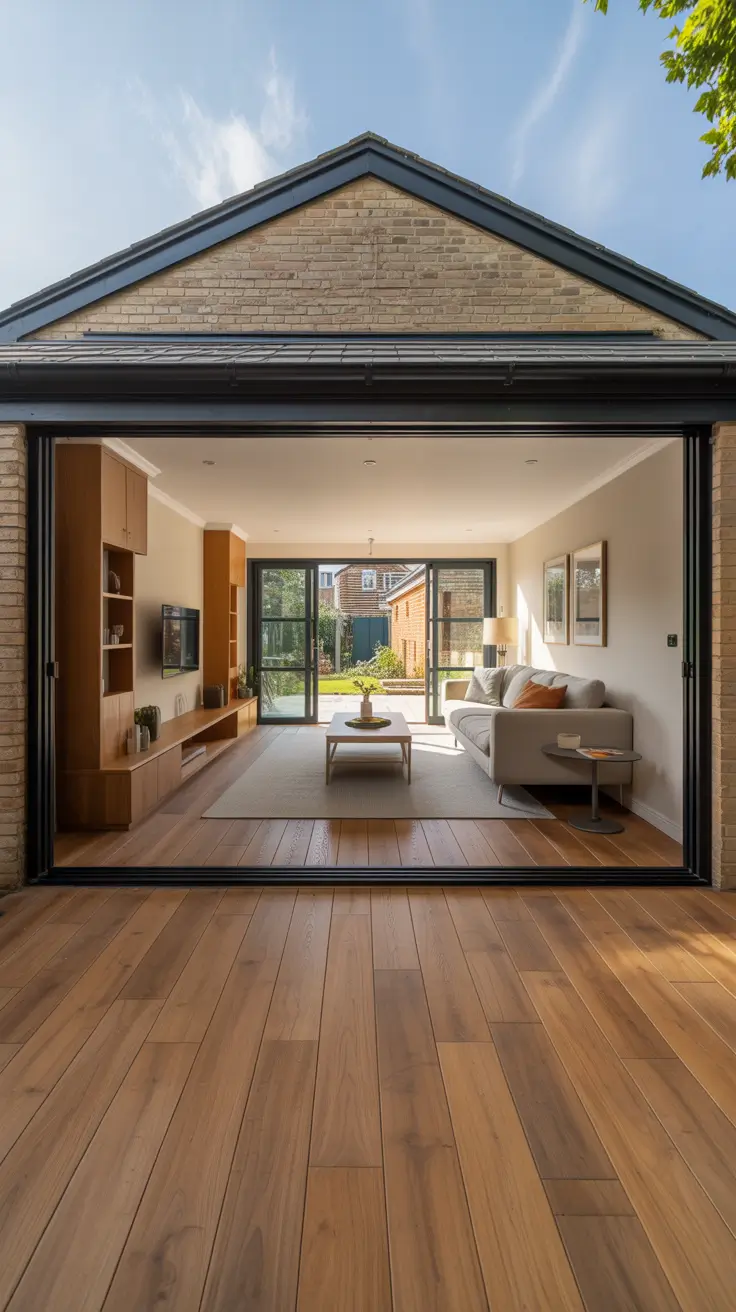
Furniture choices lean low and relaxed: modular sofas, soft armchairs, and natural textures that echo the garden outside. I love how linen upholstery, oak side tables, and woven rugs ground the space and make it feel lived-in rather than staged. These choices work because they age beautifully and don’t fight with changing light throughout the day.
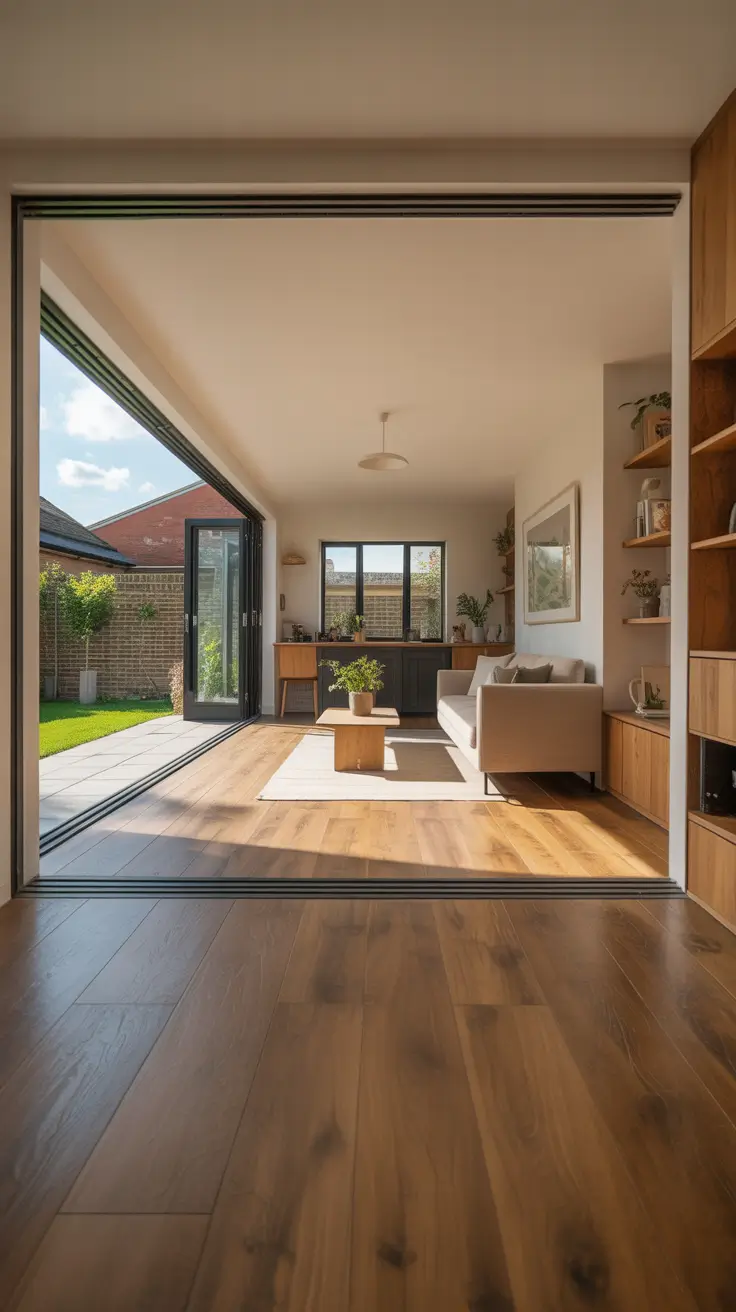
Personally, I think the key trend here is restraint. When the architecture and light are strong, the interior doesn’t need to shout — it just needs to support how you actually live.
Garden Room Extensions Sunroom Living Spaces
The garden room extensions sunroom concept is becoming more refined and more comfortable. Instead of feeling like a conservatory add-on, these rooms now read as proper living spaces filled with light. Full-height glass, slim black or bronze frames, and pale flooring create that airy, almost vacation-like atmosphere I keep craving.
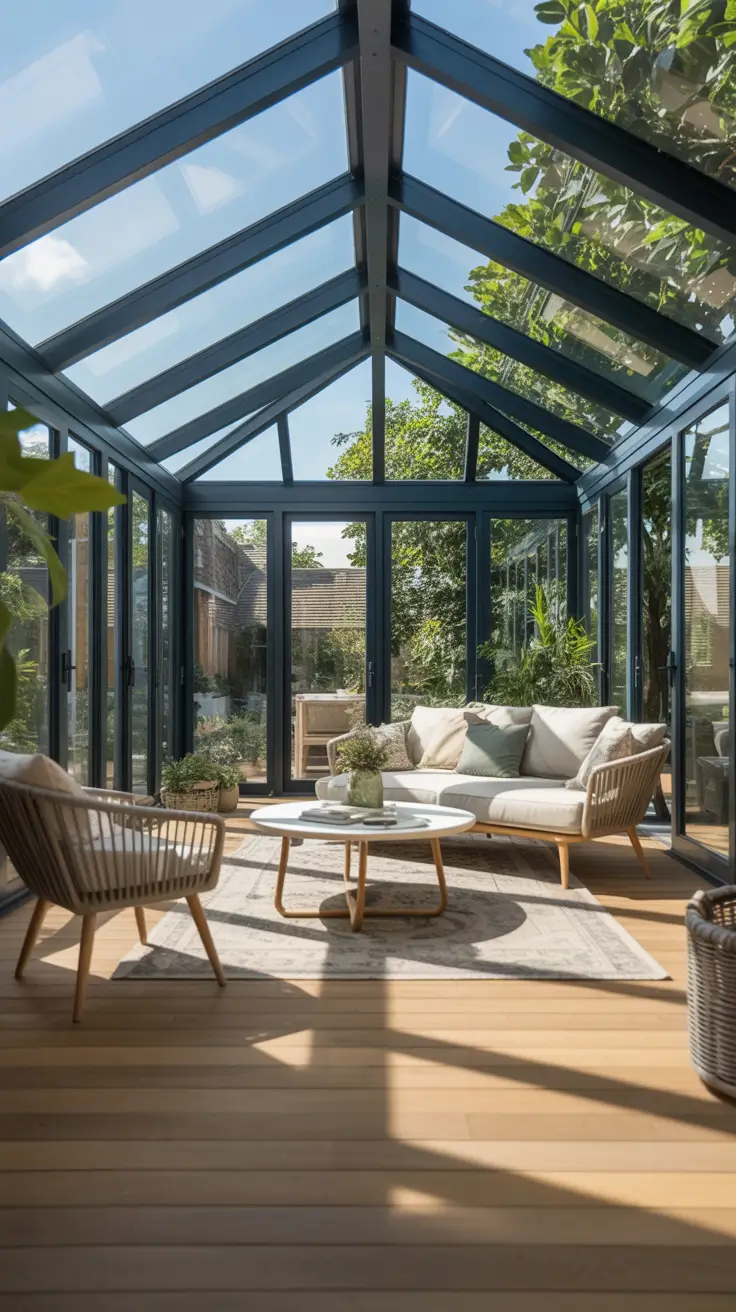
Furniture here is all about balance: deep sofas with outdoor-friendly fabrics, light wood coffee tables, and layered textiles that stop the room from feeling cold. I often recommend mixing structured seating with softer elements — cushions, throws, and plants — so the sunroom feels usable year-round, not just on perfect days.
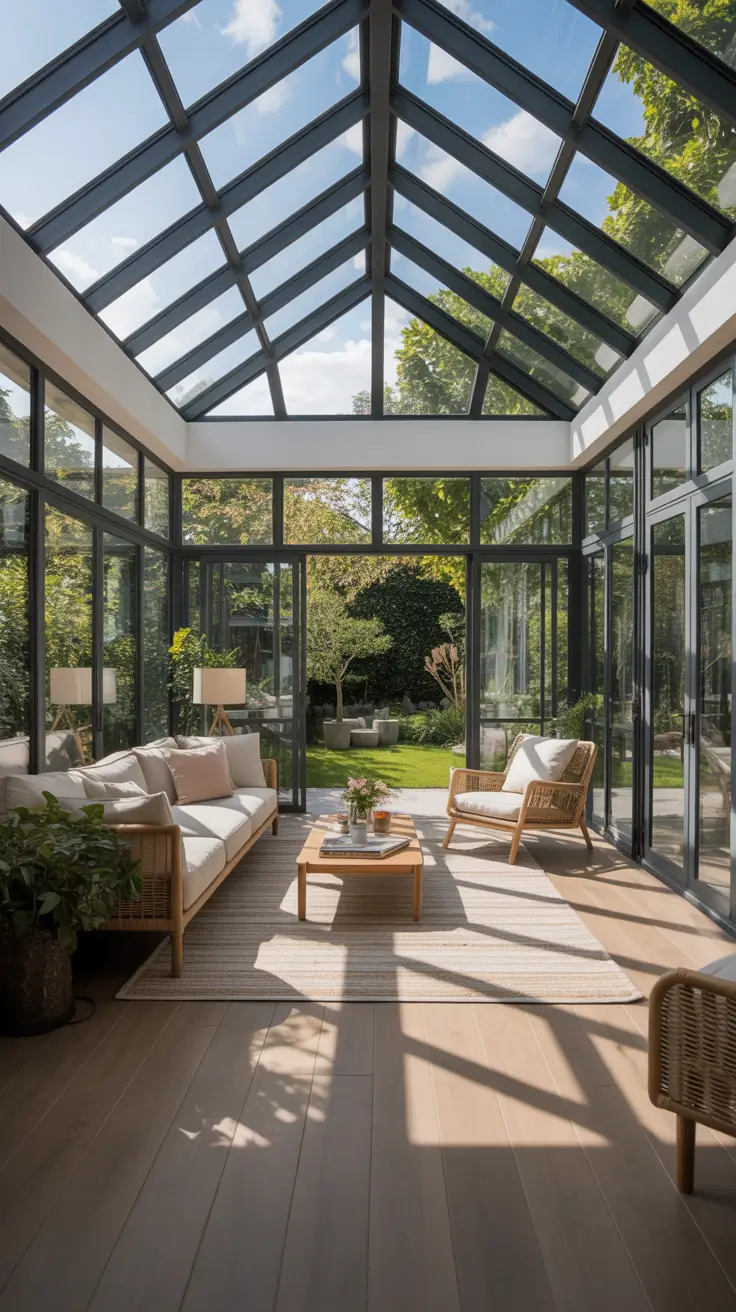
What I love most is how these spaces naturally encourage slower living. Morning coffee tastes better here, and afternoons stretch longer when the garden feels like part of the room.
Garden Room Extensions Indoor Outdoor Lifestyle Concepts
The strongest garden room extensions indoor outdoor designs in 2026 are all about flow. Sliding or folding glass walls erase the boundary between inside and out, turning the garden into an extension of daily life. These rooms often align directly with patios or decks, making movement feel intuitive and effortless.
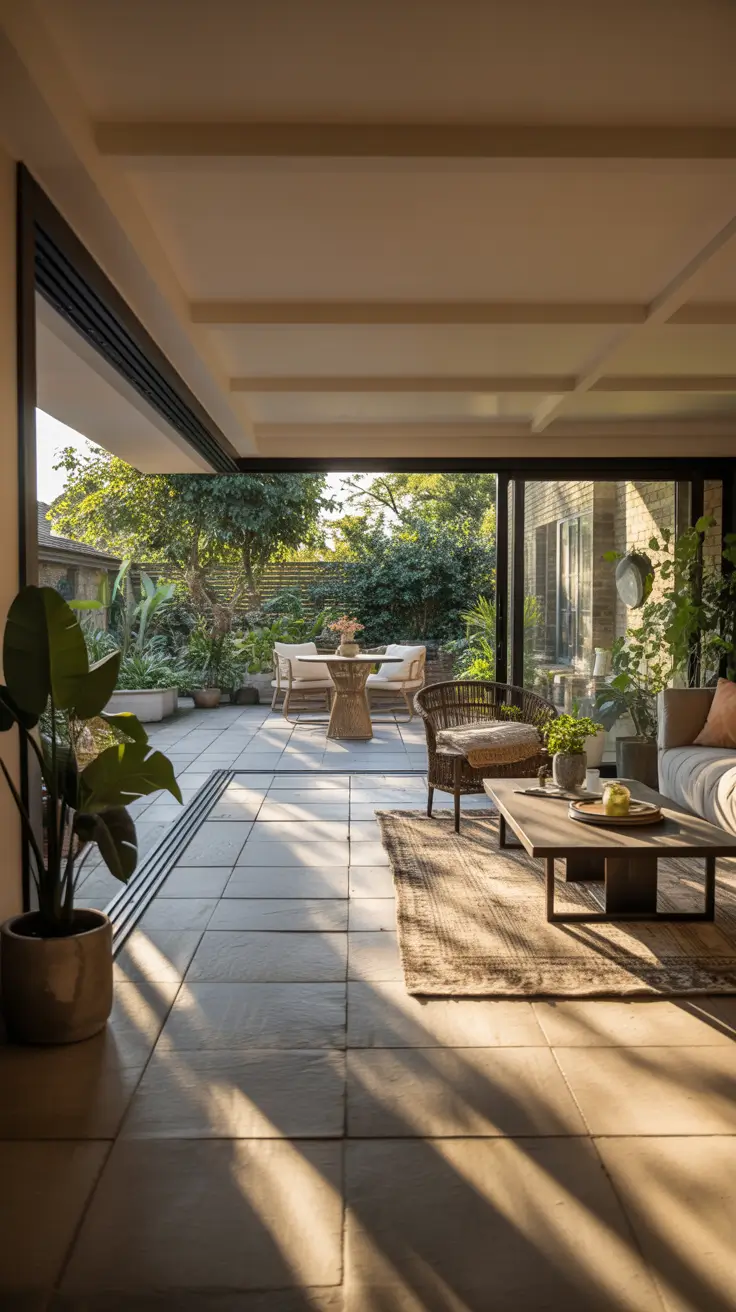
Material continuity is what makes this work in real life. Matching floor tones, repeated wood finishes, and coordinated outdoor furniture help everything feel cohesive. I’m especially drawn to spaces where indoor sofas visually echo outdoor lounge seating — it tricks the eye into seeing one large living zone.
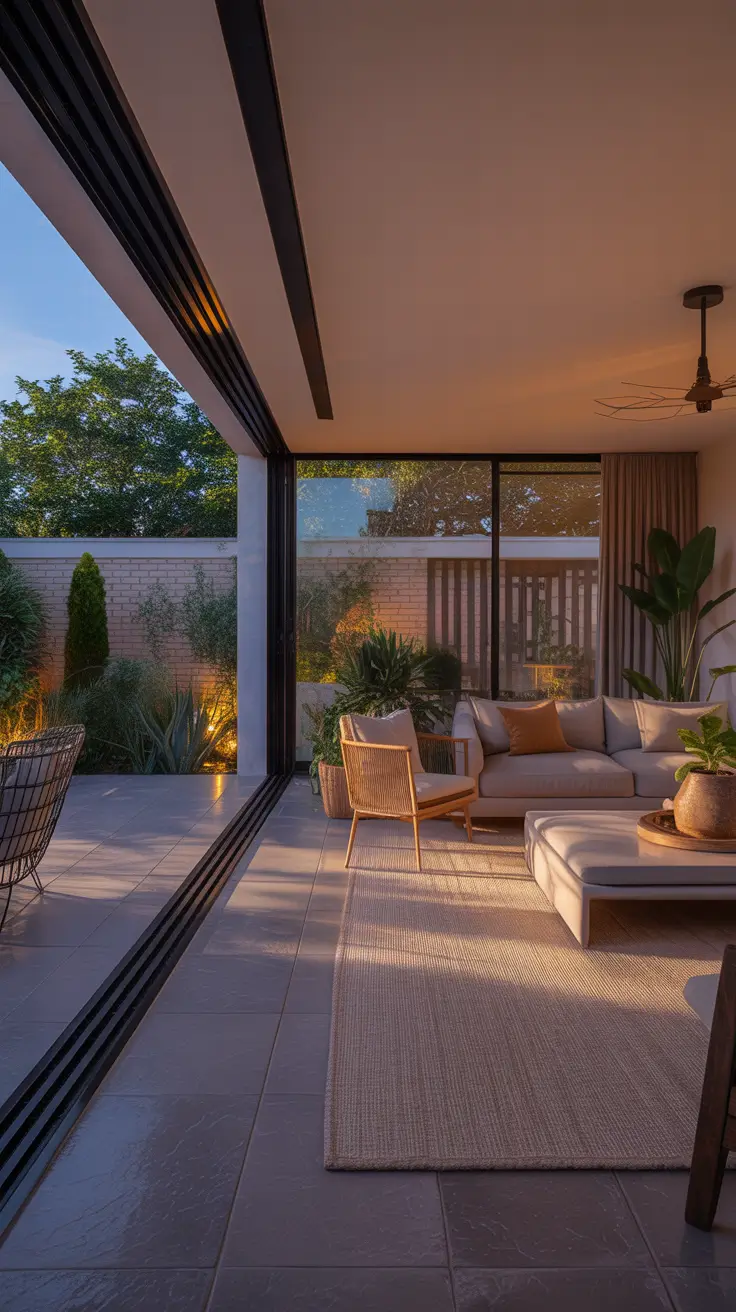
From my experience, adding subtle outdoor lighting and weather-resistant textiles is what really elevates this concept. It keeps the space functional long after sunset and makes entertaining feel effortless rather than staged.
Garden Room Extensions With Log Burner For Year Round Comfort
I always say that garden room extensions with log burner are what truly turn these spaces into year-round living rooms. The atmosphere here is warm and grounding — exposed brick walls, timber beams overhead, and a centrally placed stove that becomes the emotional anchor of the room. Even with large areas of glass, the space feels cocooning rather than cold, especially in autumn and winter.
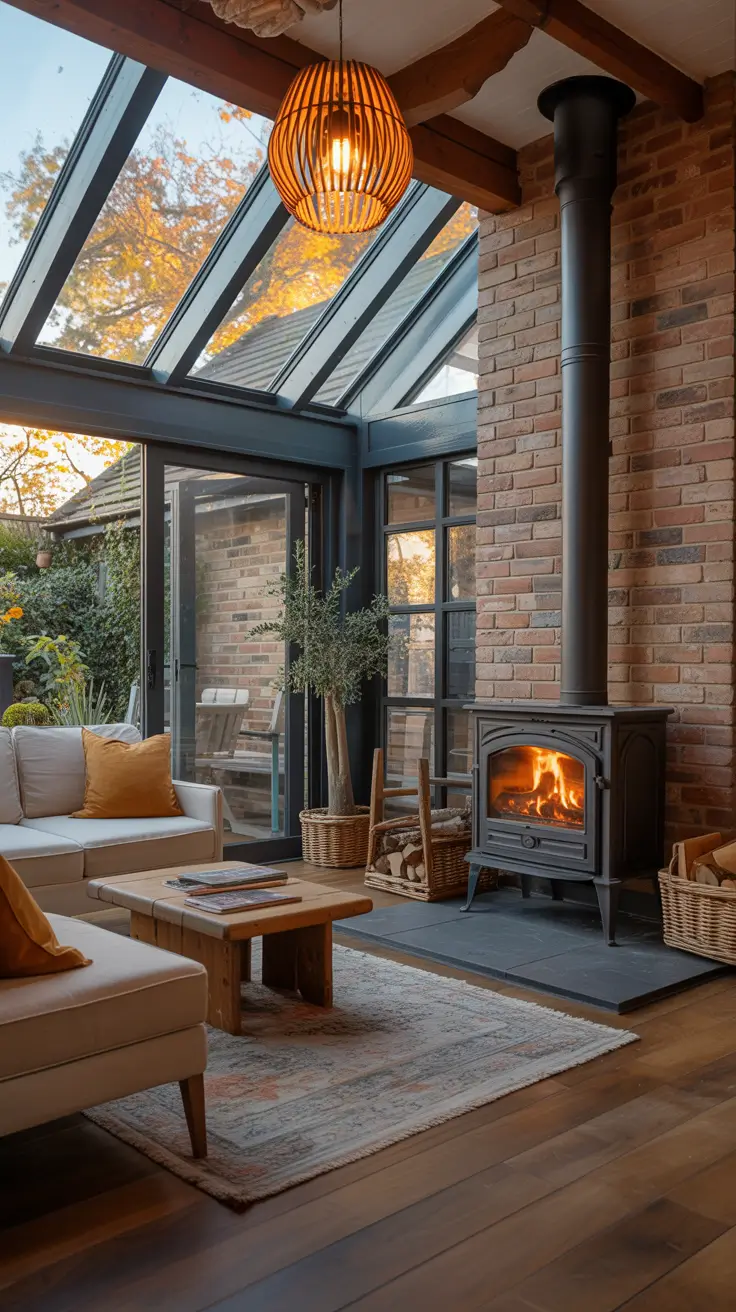
Furniture tends to be soft and inviting: deep sofas, wool rugs, and wooden coffee tables that can handle heat and everyday use. I love seeing baskets of firewood styled as part of the decor — practical, yes, but also beautifully honest. The mix of brick, black metal, and warm textiles works because it balances rustic character with modern comfort.
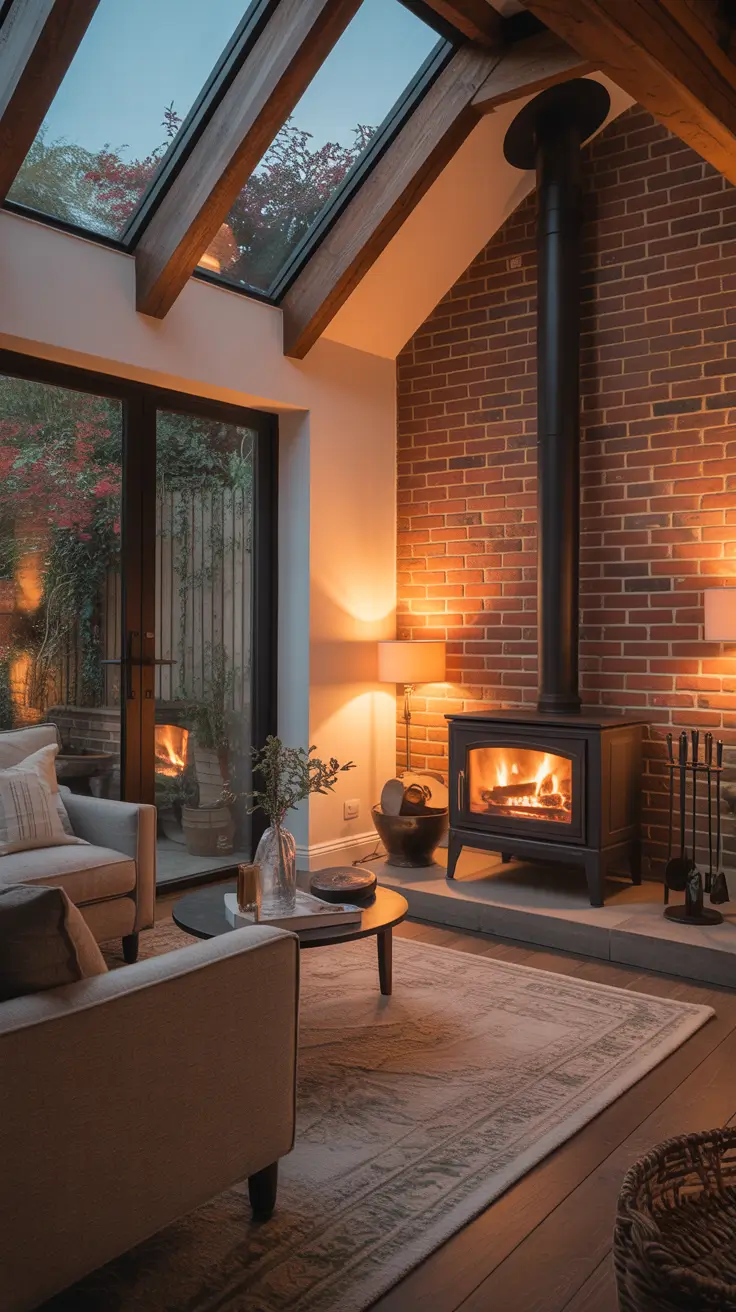
From my experience, adding layered lighting — wall lamps, table lamps, and soft ceiling fixtures — makes these rooms usable long after the fire has burned low. It’s comfort that feels intentional, not seasonal.
Garden Room Extensions On Bungalow Homes
Garden room extensions on bungalow homes feel especially natural in 2026. Because these houses already sit low and wide, extensions can stretch outward into the garden without disrupting the original proportions. The result is a space that feels calm, grounded, and visually connected to both house and landscape.
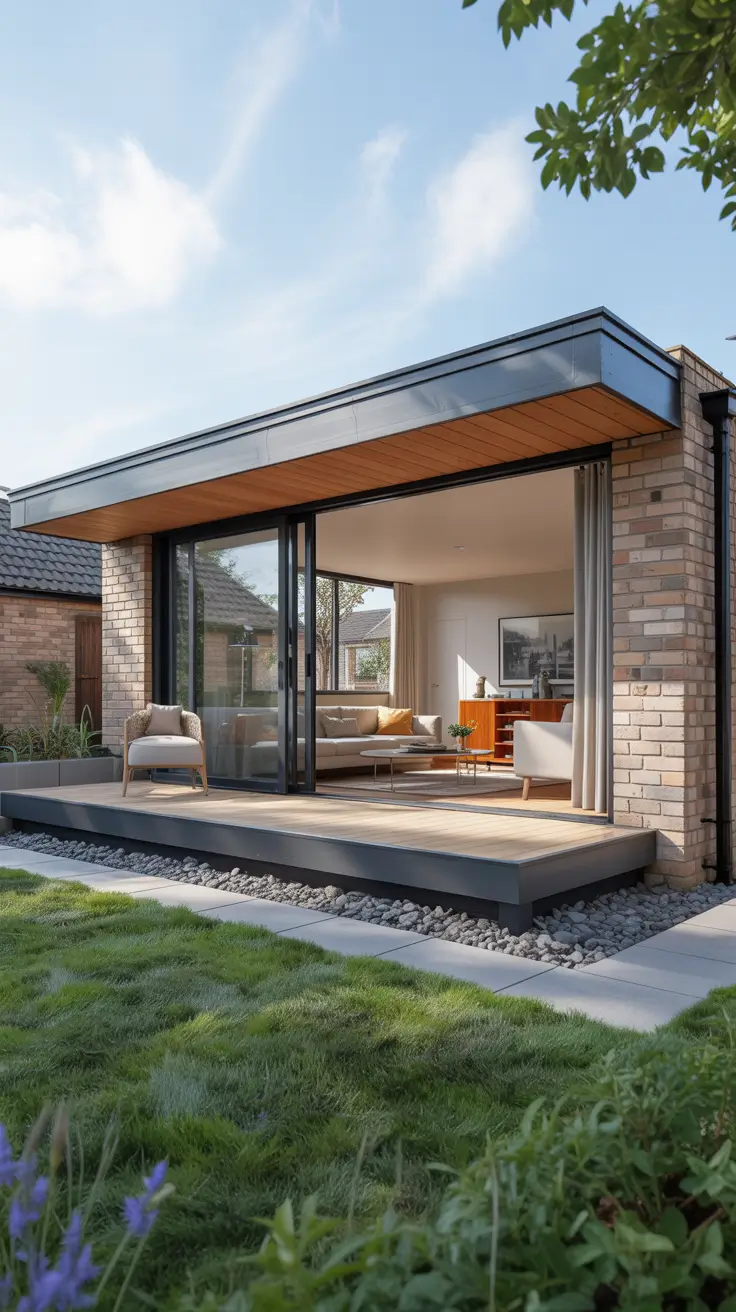
Interiors usually stay simple and elegant — neutral palettes, low-profile seating, and plenty of glazing to pull the garden in. Built-in storage and streamlined furniture are especially important here, helping the room feel open rather than sprawling. These choices work because bungalows benefit from clarity and flow over visual clutter.
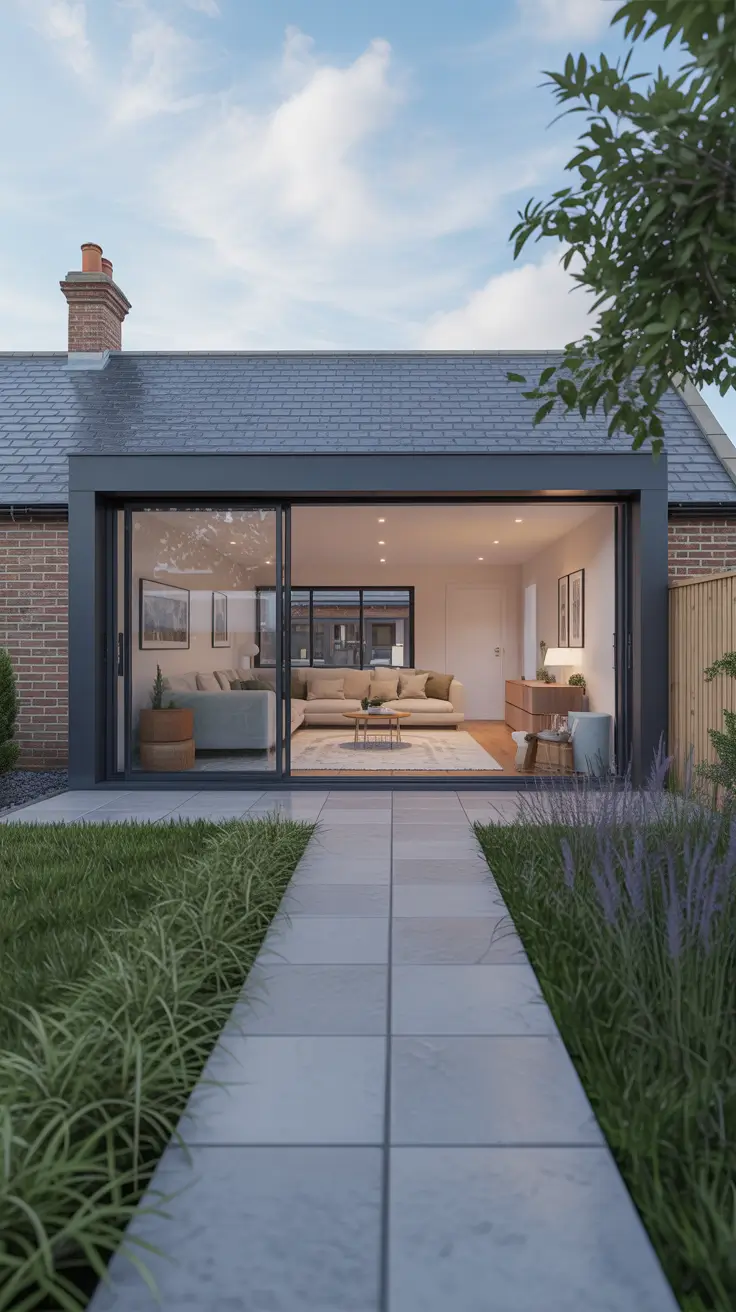
I often recommend treating these extensions as a continuation of the main living space, not a separate zone. When finishes and furniture echo the interior, the entire home feels larger and more cohesive.
Garden Room Extensions Rear Layout Ideas
The most successful garden room extensions rear layouts I’m seeing this year focus on symmetry and flow. Positioned at the back of the home, these rooms open fully onto patios or lawns, creating a natural transition between interior living and outdoor relaxation. The layout usually centers on wide sliding doors and a clear visual axis to the garden.
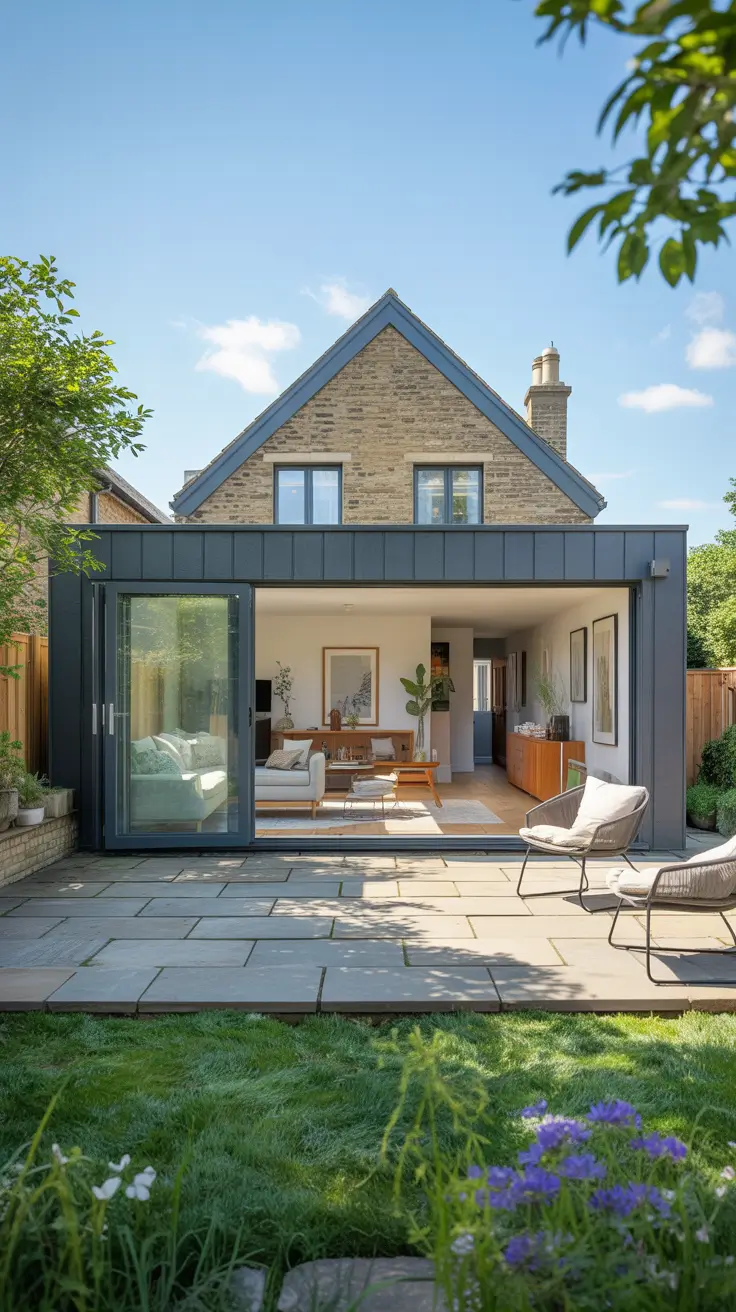
Furniture placement is key here. Sofas face outward, dining tables sit close to the doors, and circulation paths remain unobstructed. I like how this setup supports real life — kids running in and out, summer dinners that drift outdoors, and quiet evenings with the doors partially open.
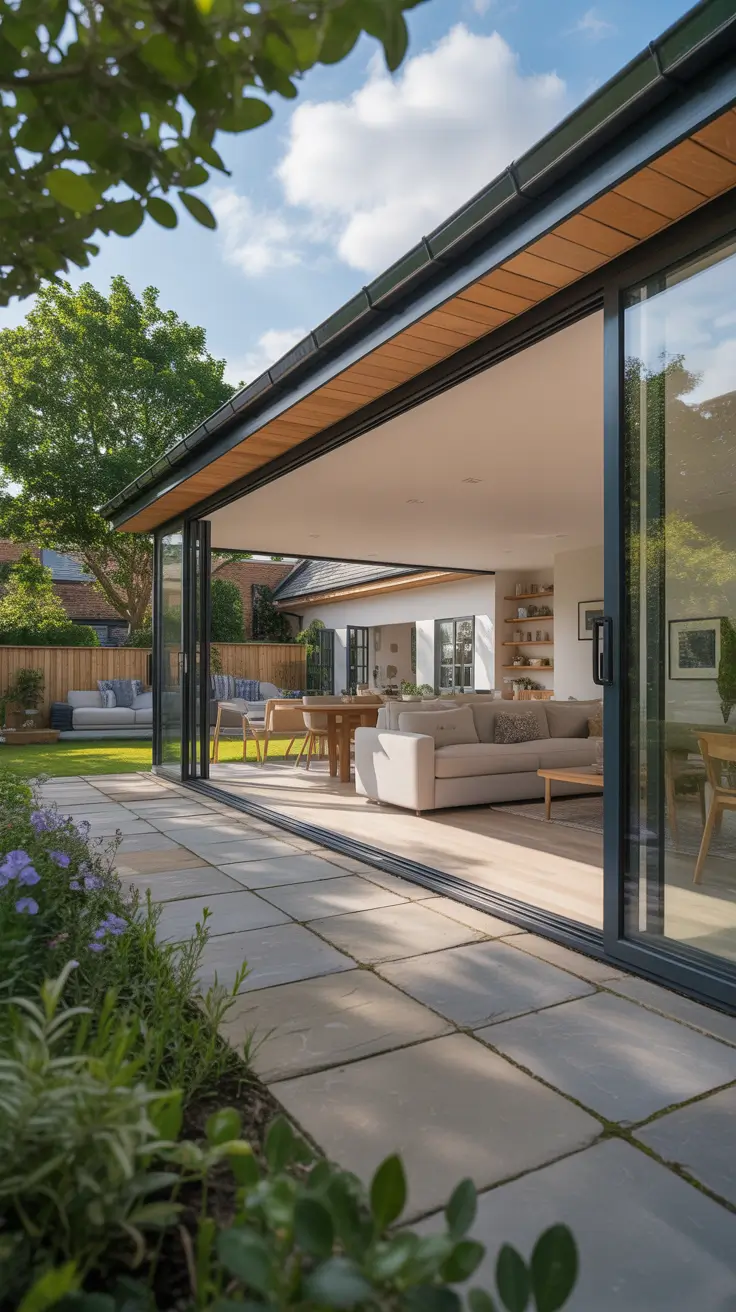
If I were improving this type of space, I’d always add subtle exterior lighting and weather-friendly furniture outside. It extends the usefulness of the room well beyond daylight and makes the rear extension feel purposeful in every season.
Garden Room Extensions Uk Planning And Style Inspiration
When I look at garden room extensions uk, the balance between planning rules and beautiful design is what stands out most in 2026. These extensions often sit neatly behind period homes, respecting existing brickwork and rooflines while introducing modern glazing and clean proportions. The result feels considered, calm, and very British — understated but confident.
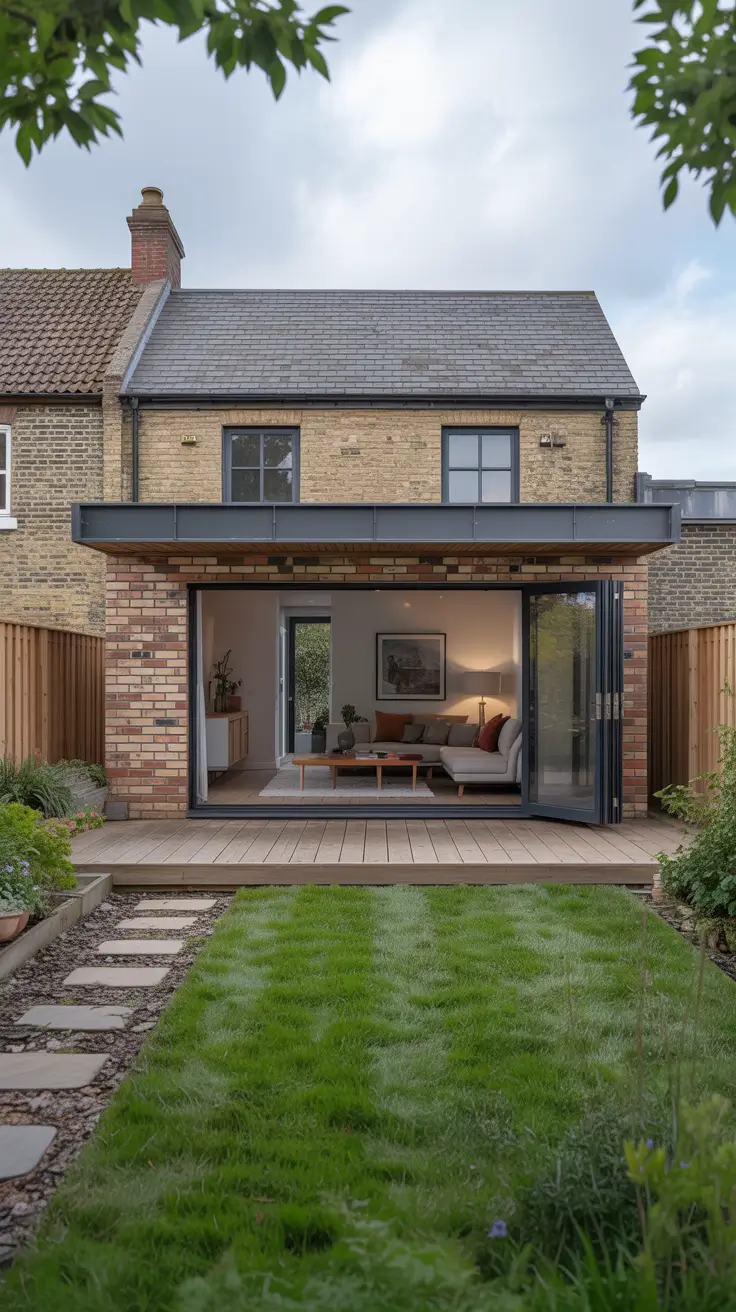
Inside, the styling usually leans warm and timeless. Soft sofas, oak furniture, and subtle color palettes help these rooms blend seamlessly with older homes. I appreciate how this approach works long-term — it doesn’t date quickly and sits comfortably within UK planning expectations.
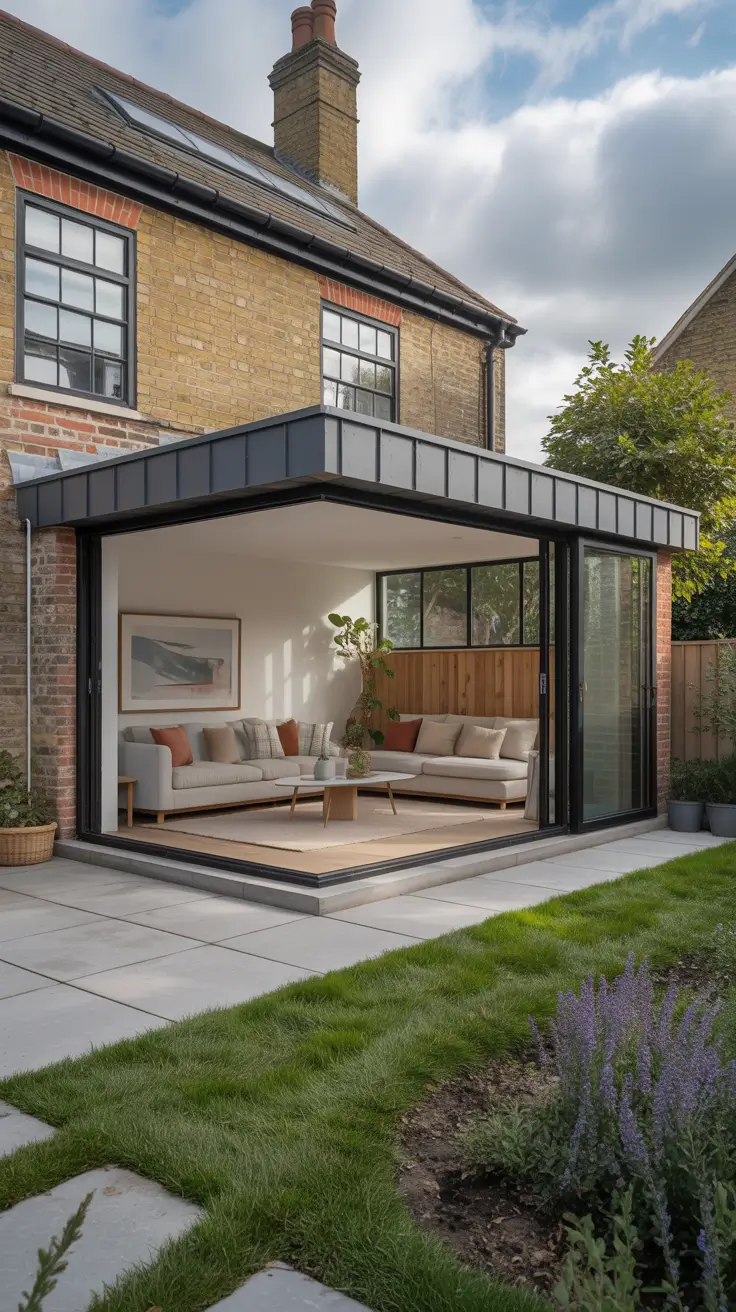
From my perspective, the smartest UK extensions are the ones that don’t try to compete with the original house. They quietly enhance it.
Garden Room Extensions Flat Roof Architecture
Garden room extensions flat roof designs are everywhere this year, and for good reason. The architecture feels crisp and contemporary, with strong horizontal lines and generous overhangs that frame the garden view. These extensions often read as modern pavilions — grounded, elegant, and intentional.
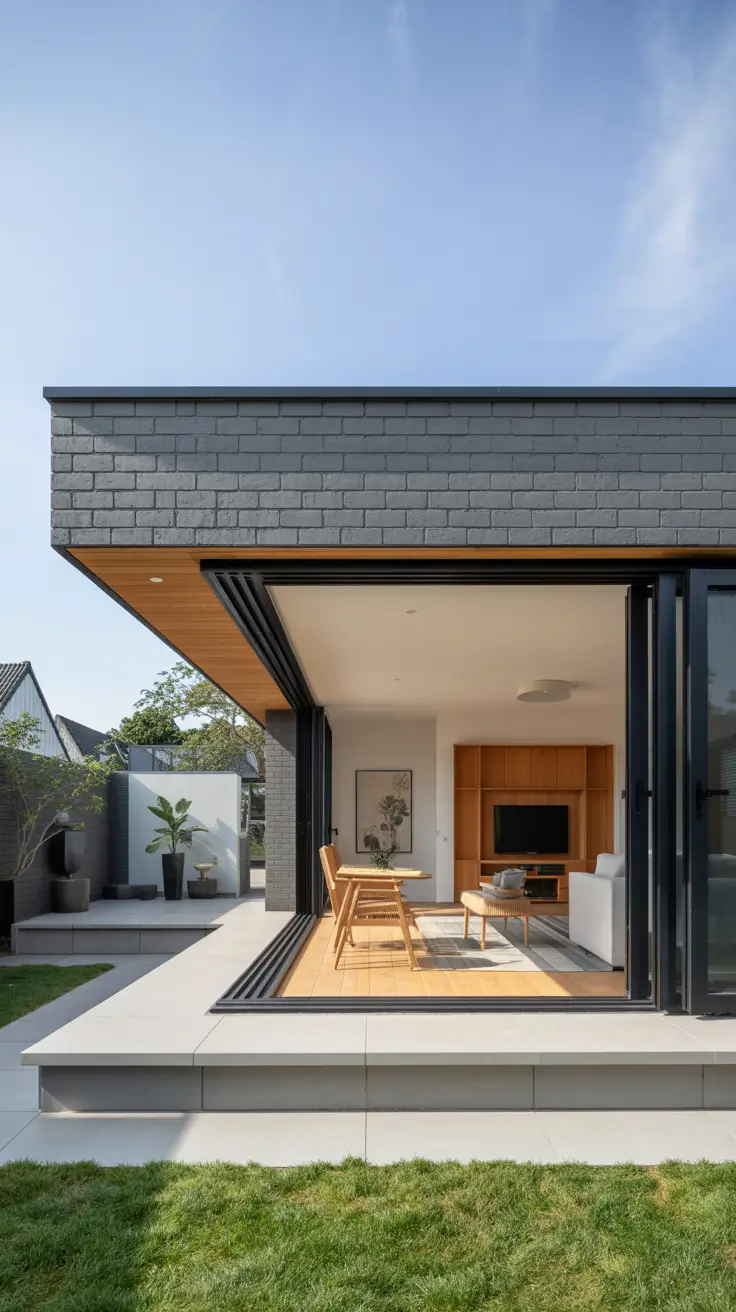
Interiors stay light and minimal, letting structure do the work. Built-in seating, streamlined shelving, and pale wood flooring keep everything feeling open. I love how flat roof designs allow for larger sliding doors, making the modern indoor outdoor connection feel effortless.
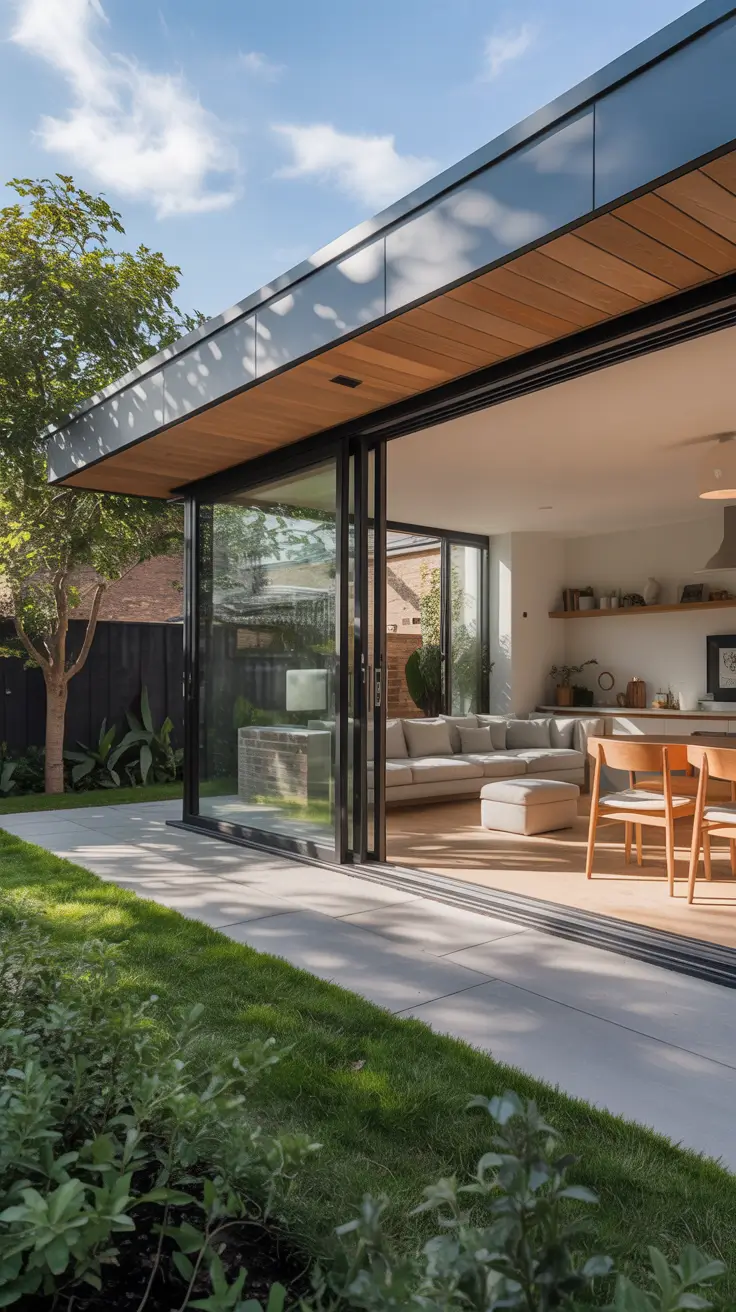
If there’s one upgrade I always suggest here, it’s integrated lighting under the roof edge. It elevates the whole structure after dark without adding visual clutter.
Garden Room Extensions Diy Projects And Ideas
Garden room extensions diy projects are becoming more ambitious in 2026, especially for homeowners who want hands-on involvement. These spaces tend to feel personal and honest — simple timber frames, practical layouts, and materials chosen for longevity rather than show.
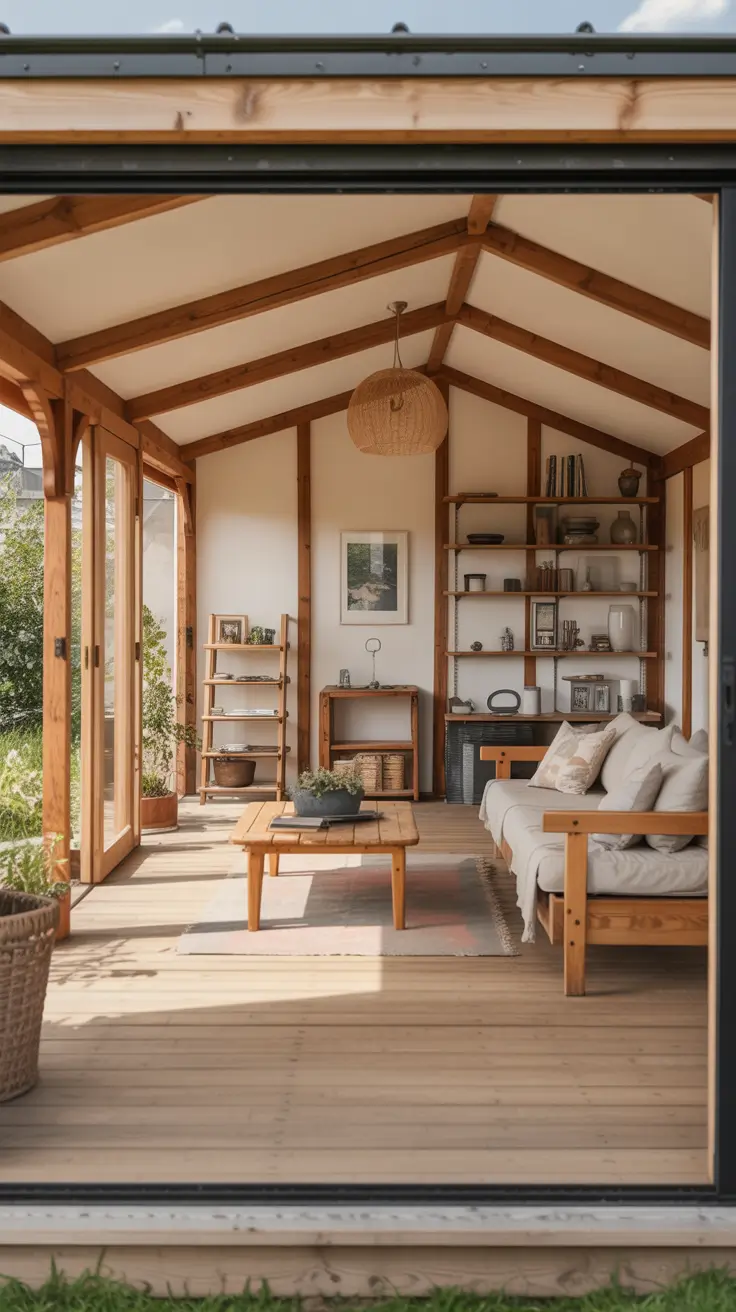
Inside, DIY garden rooms often shine through thoughtful styling: reclaimed wood tables, open shelving, and multifunctional furniture. I love how these choices support real life — whether the room becomes a home office, gym, or relaxed lounge space, it adapts easily.
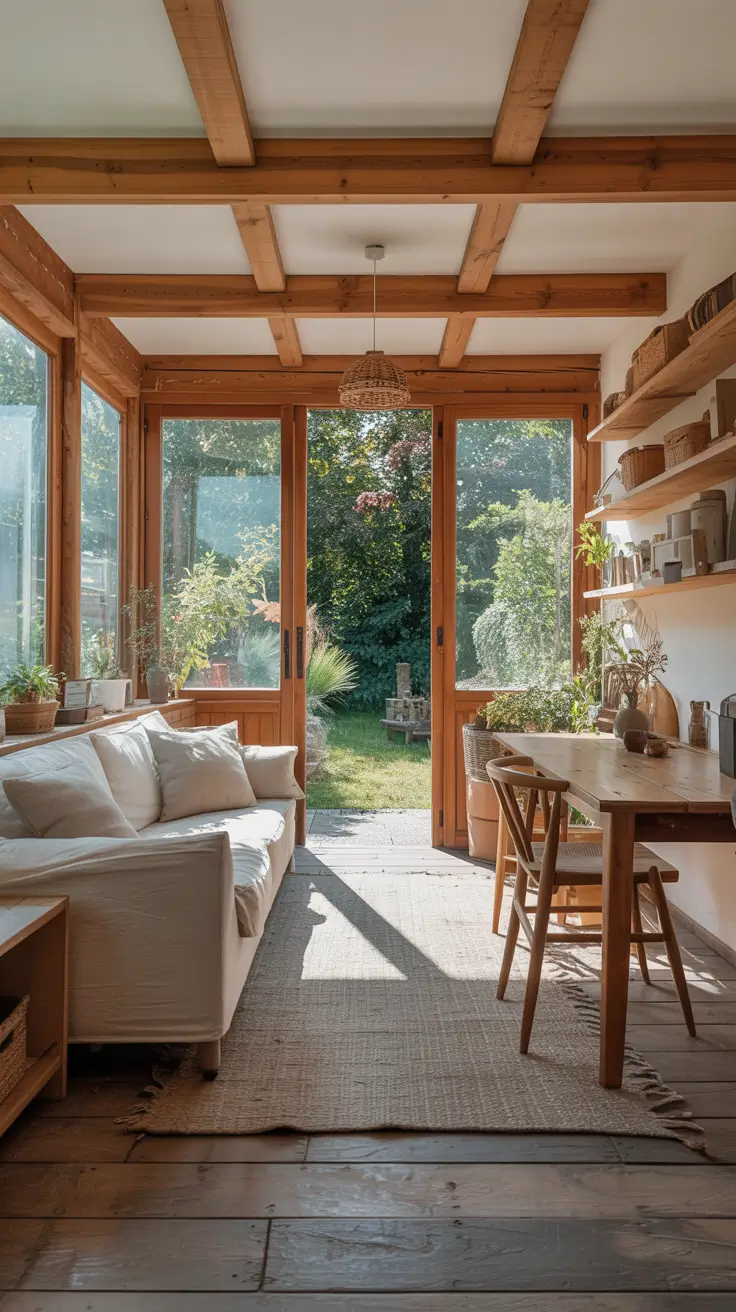
In my experience, the most successful DIY projects focus on insulation, glazing quality, and ventilation first. When those basics are right, everything else — from decor to layout — falls into place naturally.
Garden Room Extensions Green And Sustainable Design
In 2026, garden room extensions green design is no longer a niche — it’s the expectation. The most thoughtful spaces use natural ventilation, high-performance glazing, and materials that feel honest and long-lasting. Timber frames, recycled brick, and low-impact insulation create rooms that stay comfortable without constant heating or cooling.
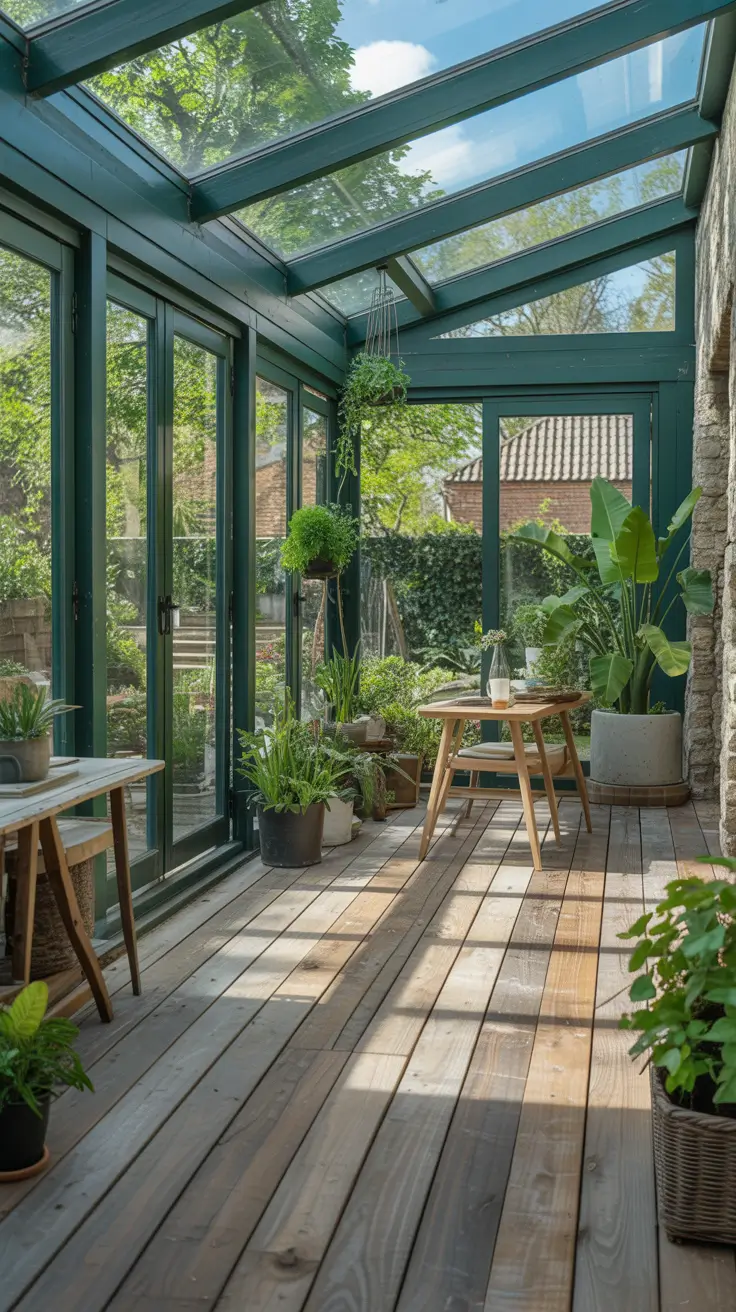
Inside, the look is calm and unfussy. Limewashed walls, solid wood furniture, and plenty of plants soften the architecture and improve air quality at the same time. I love how sustainability here doesn’t feel technical — it feels lived-in, warm, and quietly responsible.
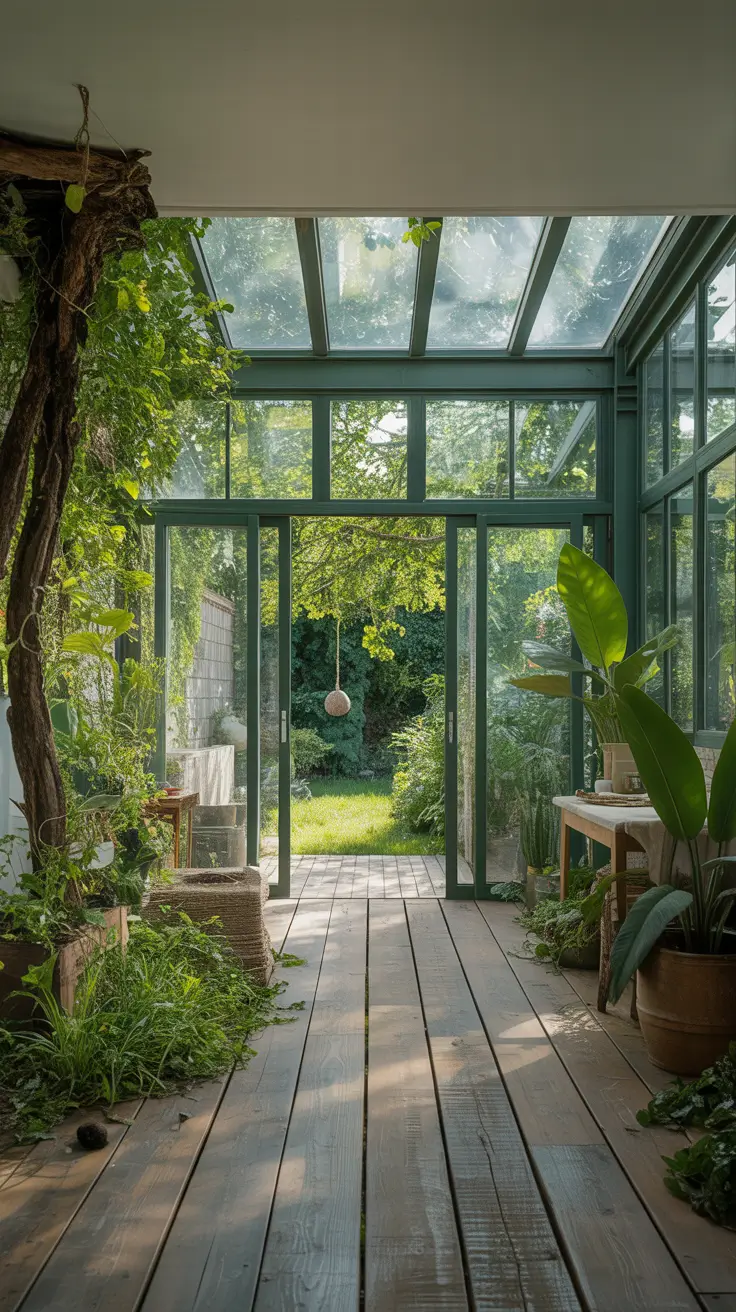
From my perspective, the smartest green extensions are the ones you don’t have to think about every day. They just work better — and feel better — over time.
Garden Room Extensions Decor And Styling Inspiration
When it comes to garden room extensions decor, restraint is what makes a space feel elevated. In 2026, styling leans toward soft layers: textured rugs, neutral upholstery, and artwork that quietly anchors the room. The goal is comfort without clutter, letting light and greenery take center stage.
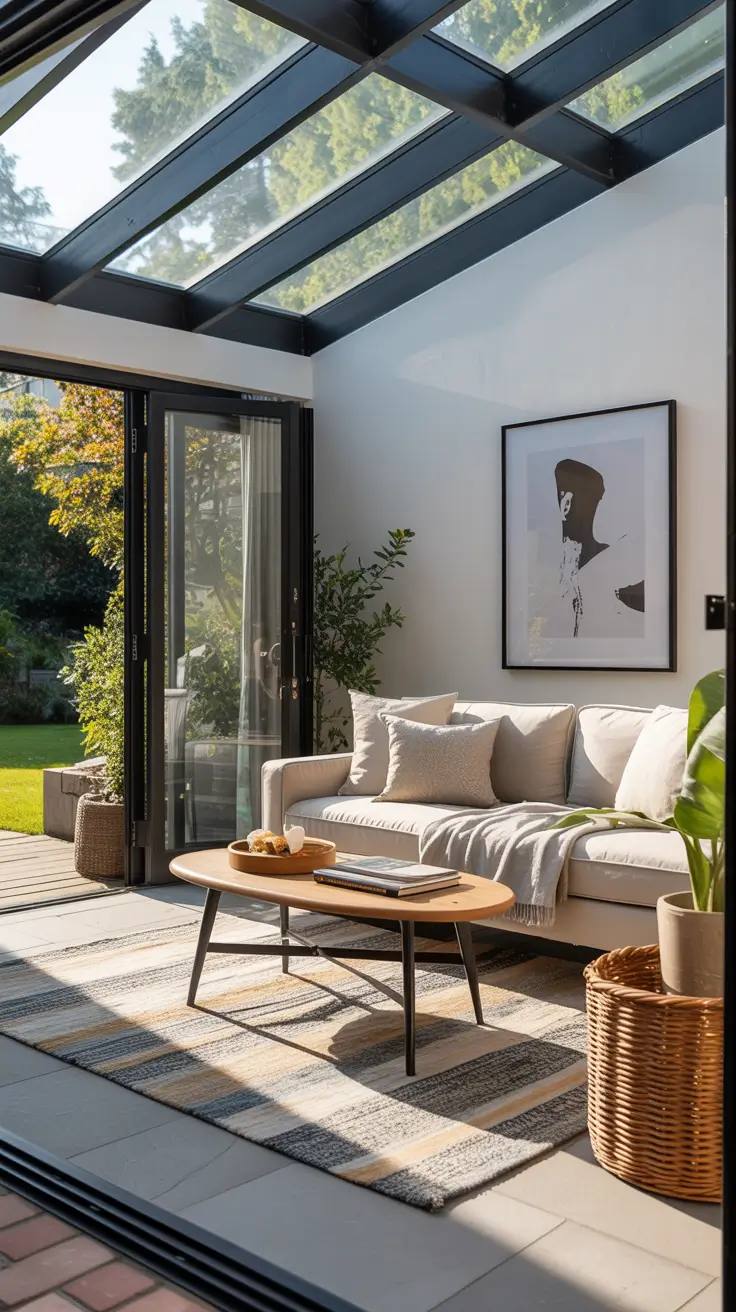
Furniture choices are practical but refined — slim sofas, rounded coffee tables, and accent chairs that can be moved easily. I often see warm accents like clay, muted terracotta, or soft blush tones used sparingly, which adds personality without overwhelming the space.
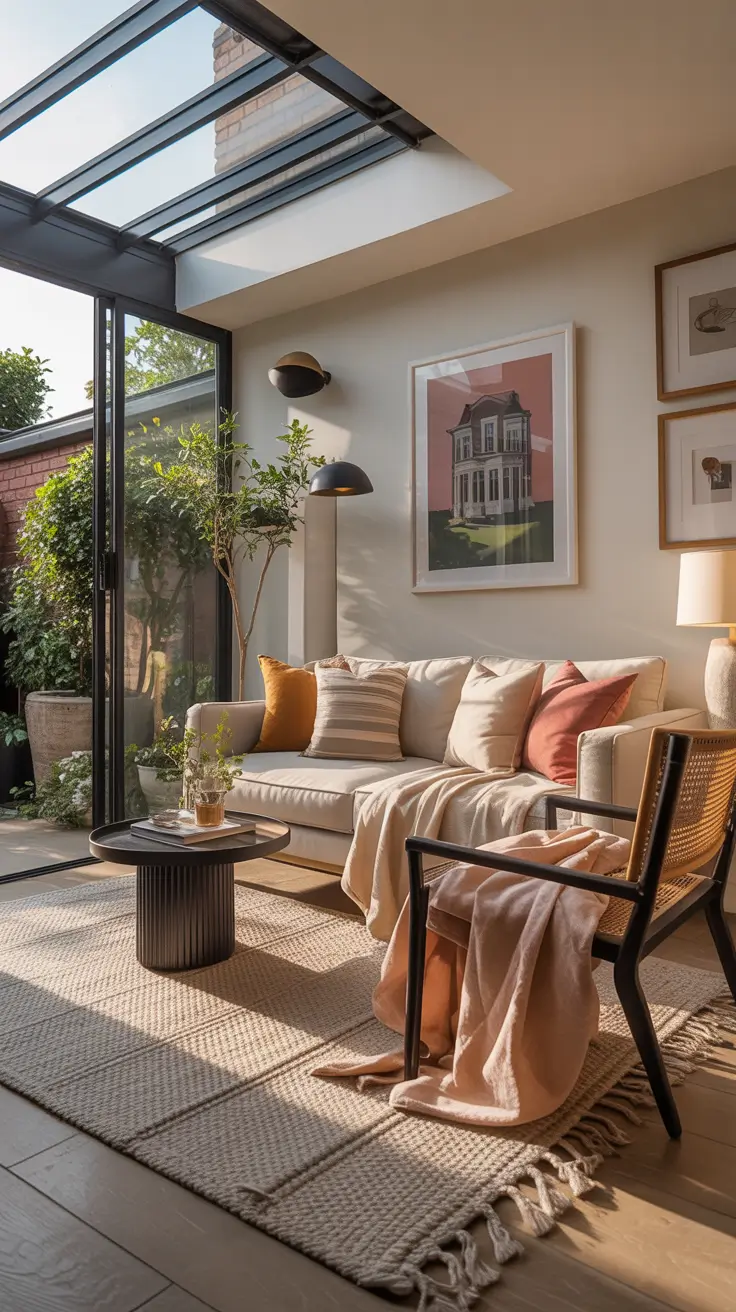
My advice is always to style slowly. Live in the room first, then add pieces that respond to how you actually use it — that’s where real character comes from.
Garden Room Extensions Australia Climate Ready Designs
Garden room extensions australia take indoor–outdoor living to a whole new level. These designs are light, open, and climate-aware, with deep roof overhangs, wide openings, and materials chosen to handle heat and sun. The spaces feel breezy and relaxed, almost like permanent holiday rooms.
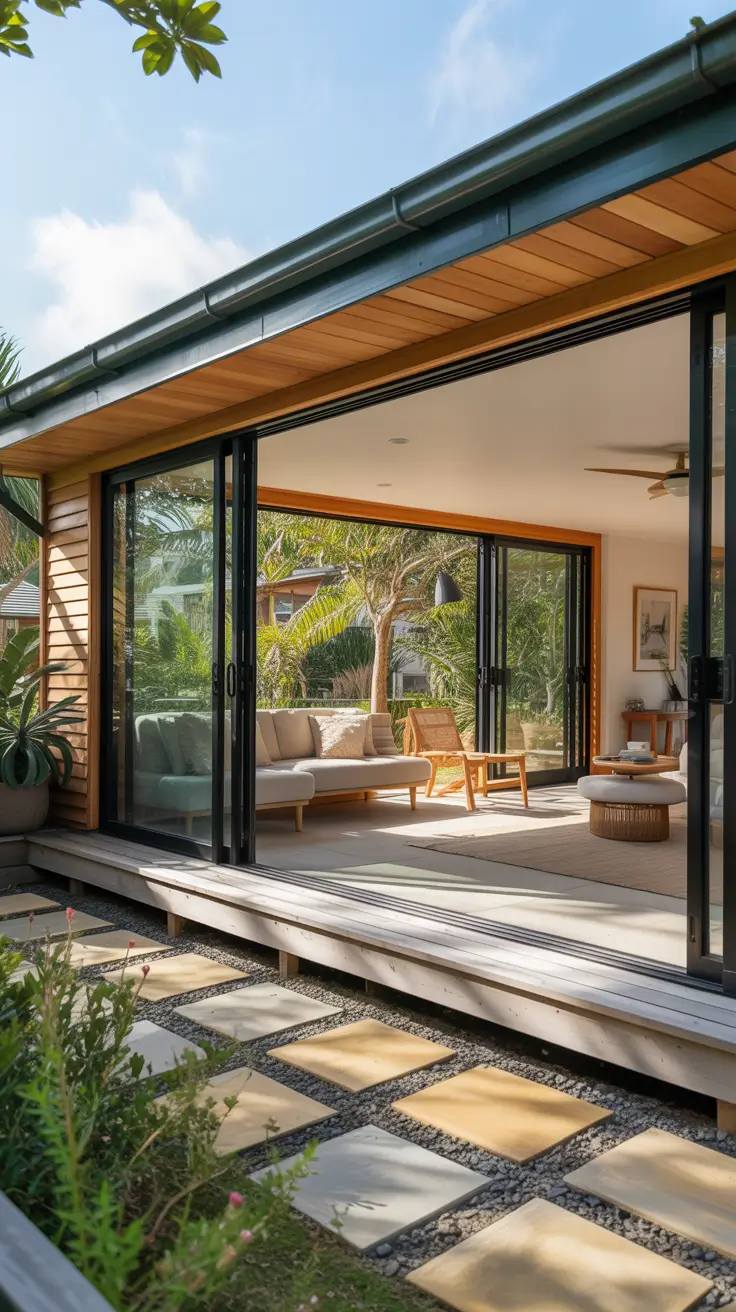
Interiors stay simple and natural: pale wood floors, linen seating, and ceiling fans that keep air moving. Sliding glass walls are essential here, allowing the room to open completely to the garden and blur boundaries throughout the day.
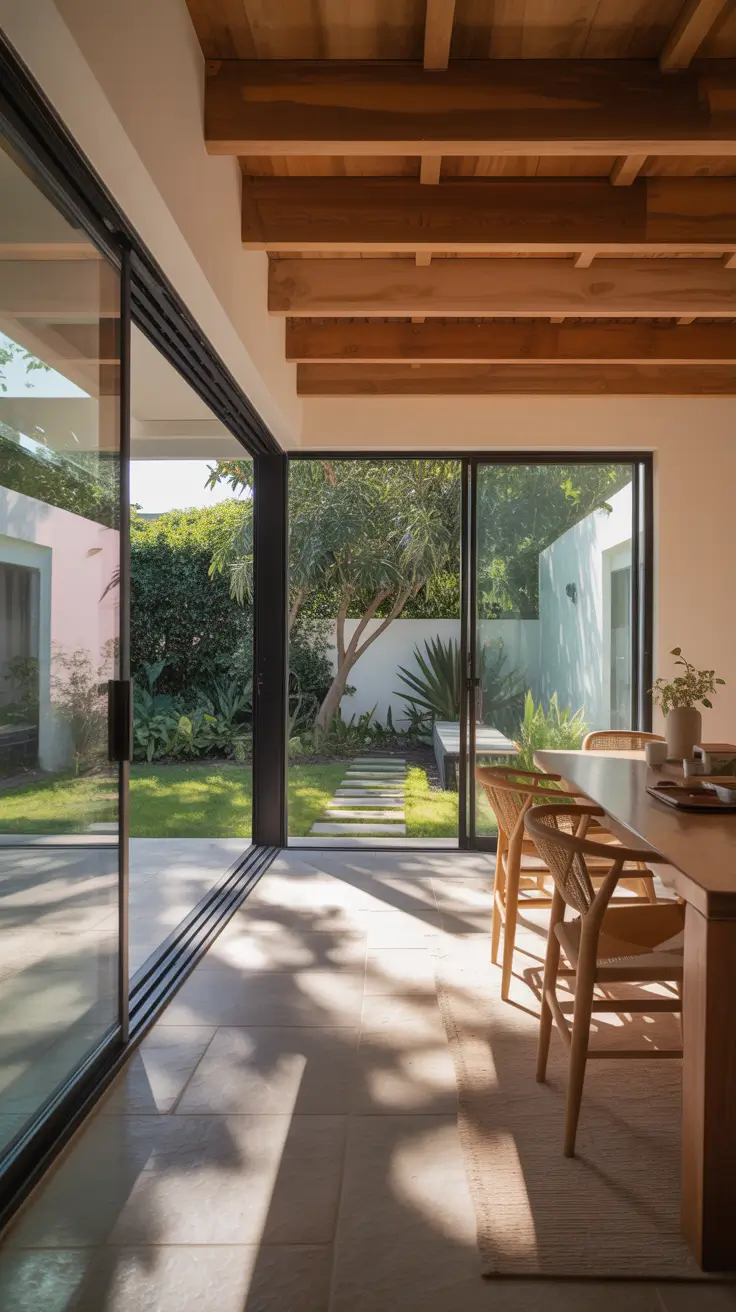
I’m inspired by how effortlessly these spaces handle climate challenges. They prove that good design doesn’t fight nature — it works with it.
Sunroom As A Garden Room Extension
A Sunroom used as a garden room extension feels especially relevant in 2026, when light has become a design priority. These spaces are defined by glass — pitched or flat glazed roofs, slim frames, and walls that dissolve into the garden. The atmosphere is bright, calm, and gently immersive, perfect for everyday living rather than occasional use.
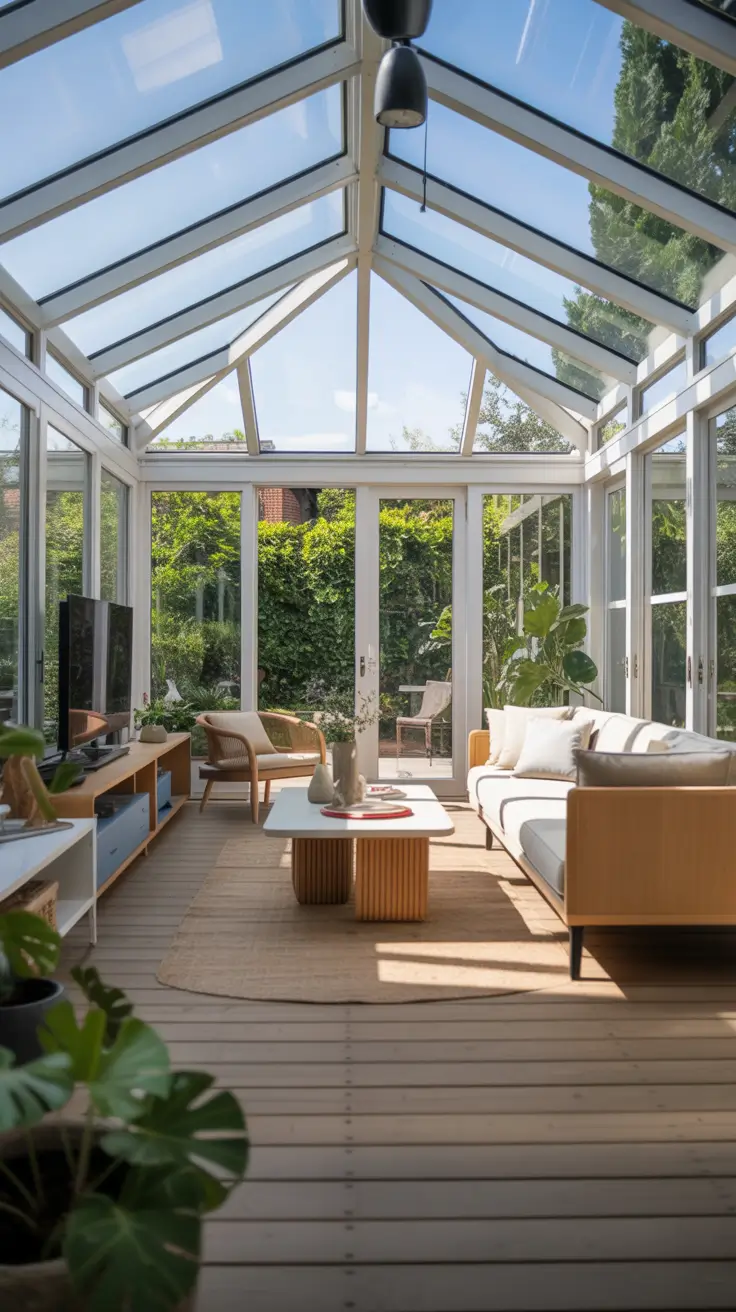
Furniture is usually kept low and relaxed: soft sofas, light wood tables, and breathable textiles that won’t overheat in direct sun. I like how natural fibers and neutral tones help filter the light instead of fighting it, making the room feel balanced throughout the day.
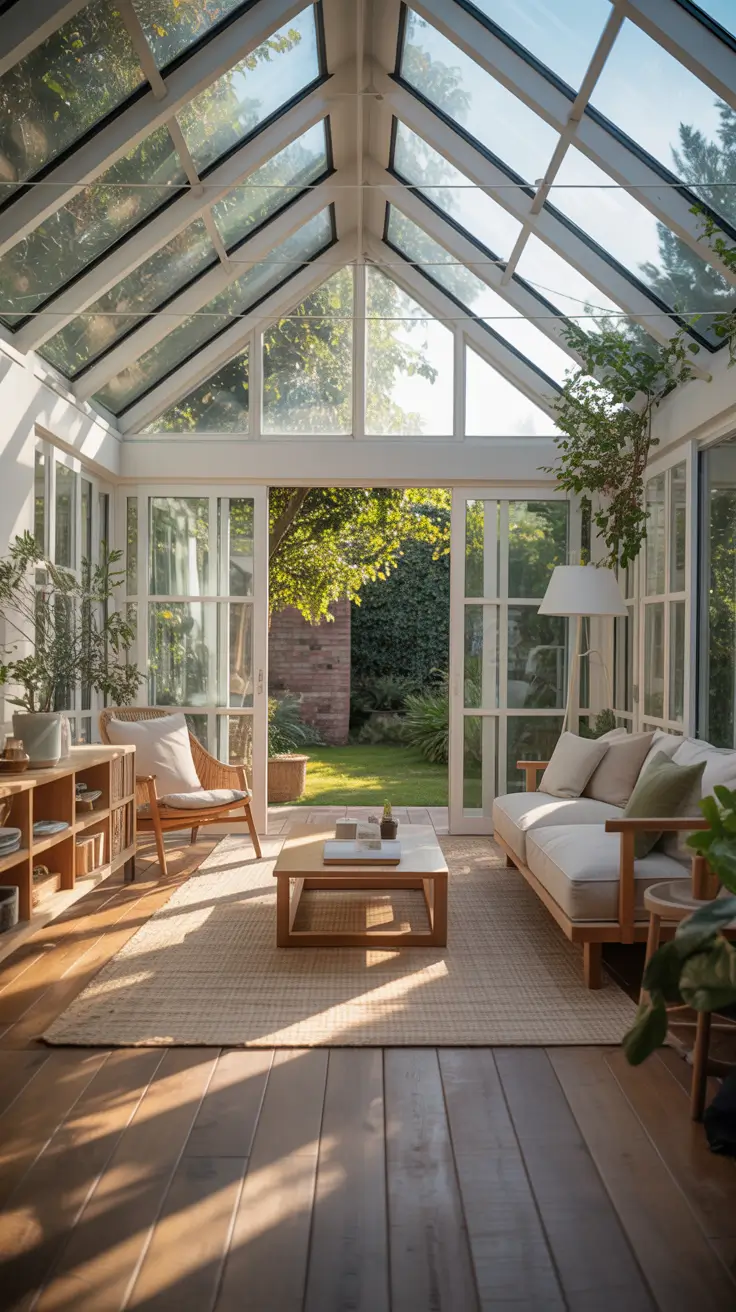
From my experience, the best sunroom extensions feel neither indoor nor outdoor — they sit comfortably in between, offering flexibility that works in every season.
Sunroom Modern Conservatory Concepts
The Sunroom modern conservatory has evolved far beyond its traditional roots. In 2026, these spaces are architectural, minimal, and intentionally styled. Clean lines, high-performance glazing, and subtle structural framing replace the overly ornate look of older conservatories.
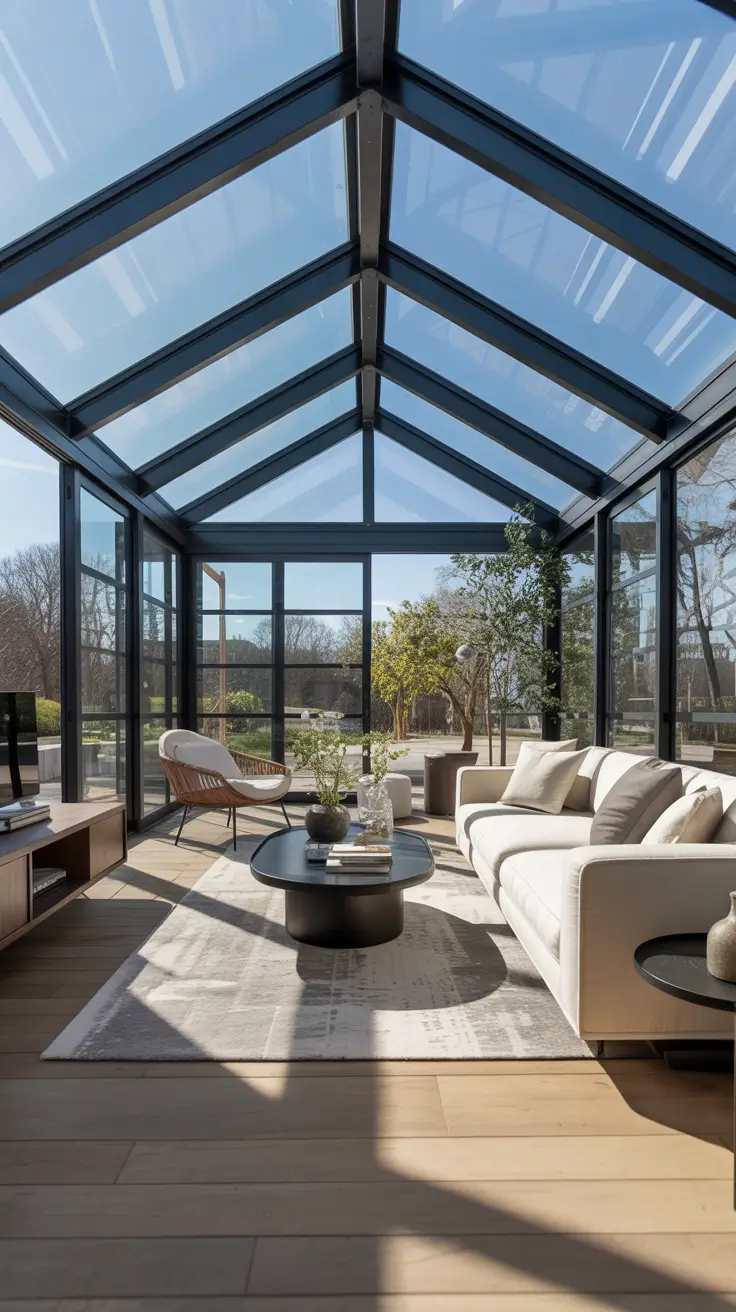
Inside, the focus is on simplicity: sculptural seating, carefully chosen artwork, and a restrained palette that lets the garden stay visually dominant. I’m seeing more designers treat these rooms as true living areas — with rugs, side tables, and layered lighting that make them usable from morning to evening.
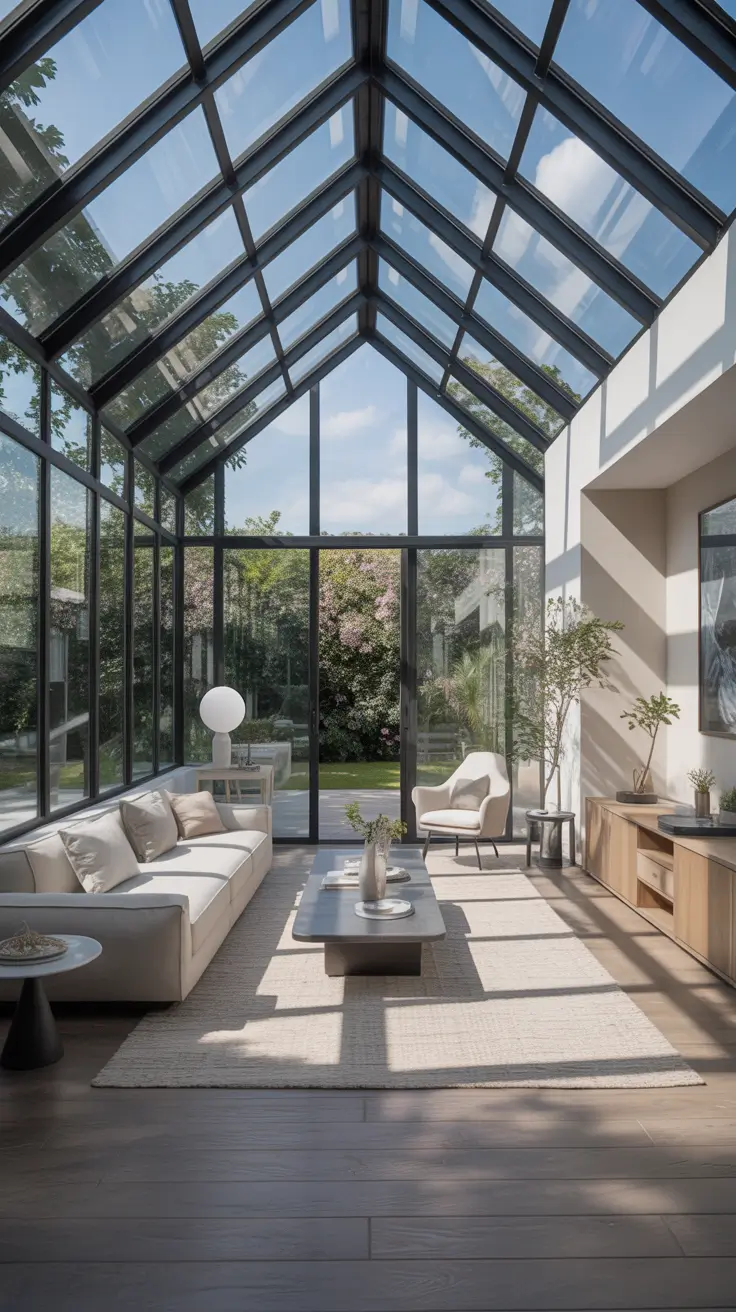
What makes these concepts work is proportion. When the scale feels right, the space feels modern instead of temporary.
Interior Focused Garden Room Extensions
Interior-focused garden room extensions shift the emphasis away from pure glazing and toward comfort. In 2026, these rooms still connect visually to the garden, but they feel more enclosed, insulated, and intentional — almost like a retreat within the home.
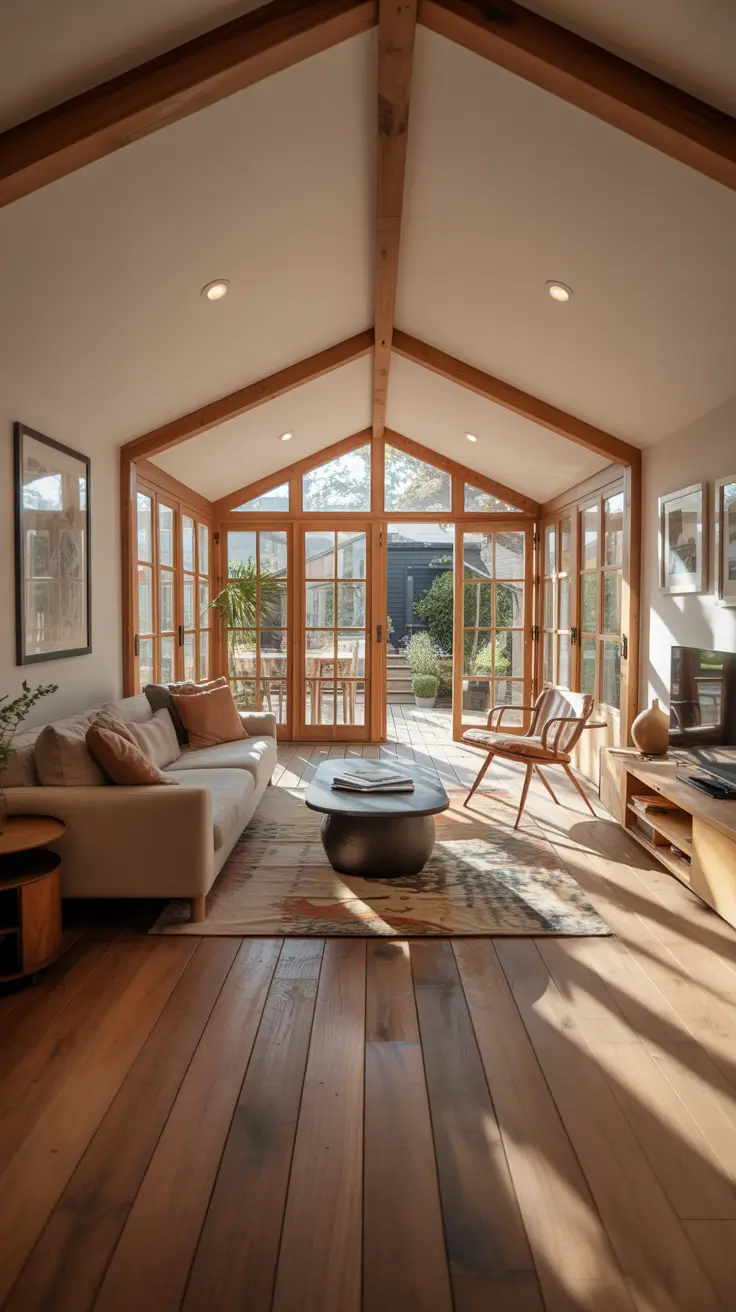
Sofas are deeper, rugs are thicker, and lighting is warmer. Timber ceilings, plastered walls, and framed views replace full-height glass in some areas, making the room feel cozy without losing daylight. I love how this approach supports year-round use, especially in cooler climates.
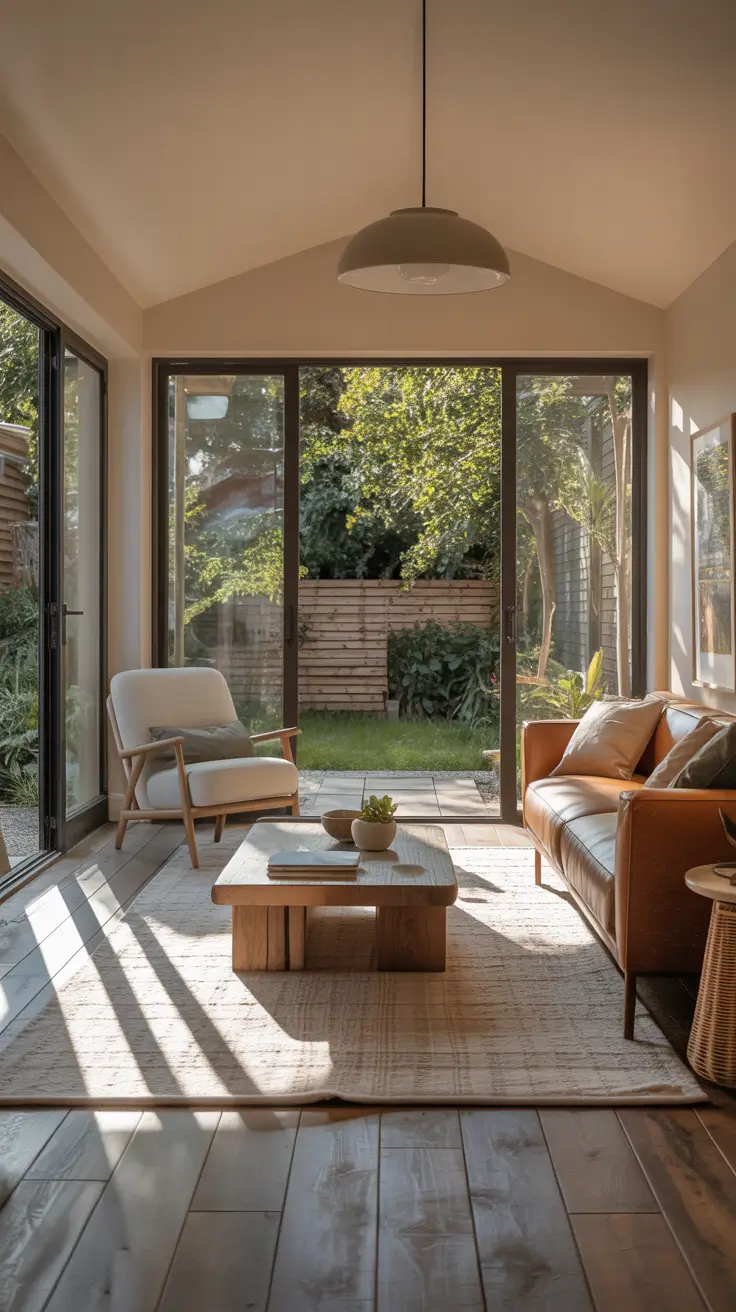
If you want a garden room that truly feels like part of your home rather than an add-on, this interior-first mindset is one of the strongest directions to follow.
Kitchen Integrated Garden Room Extensions
Kitchen-led garden rooms are one of my favorite evolutions for 2026. Kitchen integrated garden room extensions blur daily routines with nature, turning cooking, eating, and gathering into one continuous experience. These spaces feel open and generous, often centered around a large island that visually anchors the room while framing views of the garden beyond.
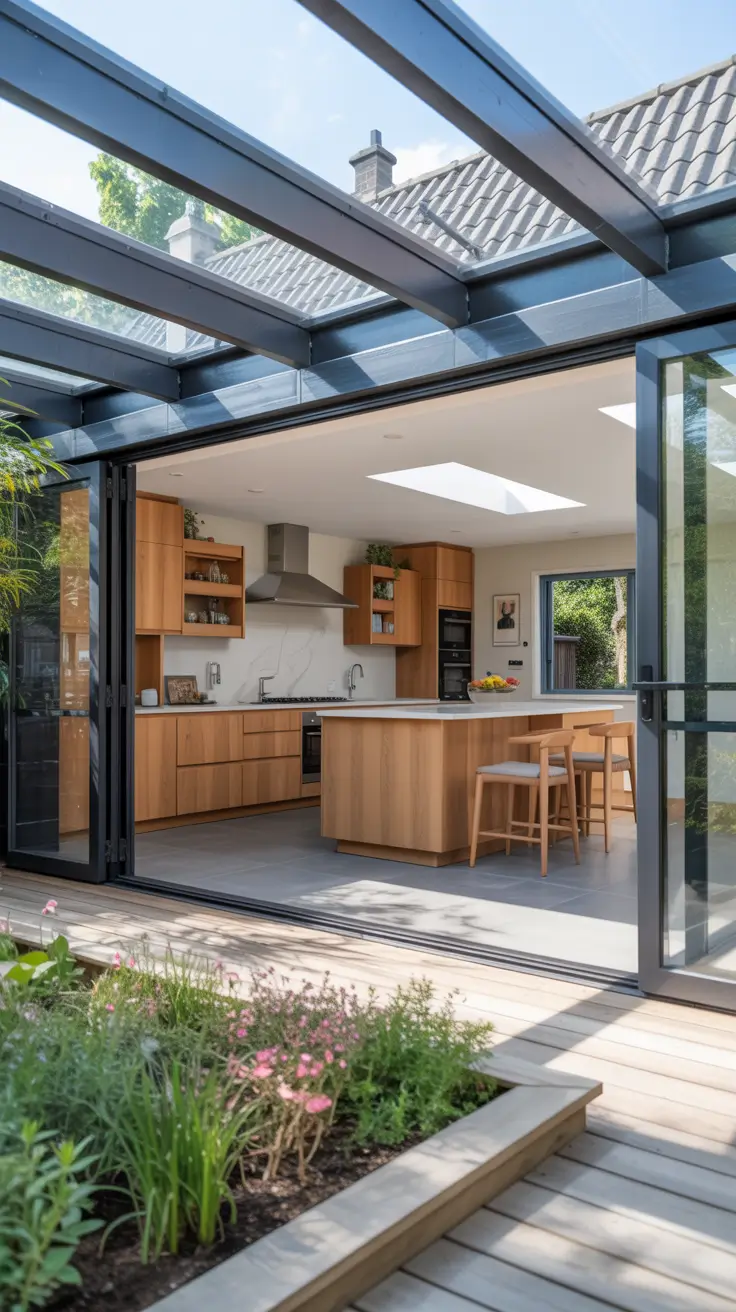
Materials matter here. Warm wood cabinetry, stone or composite worktops, and minimal hardware keep the kitchen feeling calm rather than clinical. I love how bar stools and dining tables are positioned close to sliding doors, allowing meals to naturally drift outdoors on warmer days.
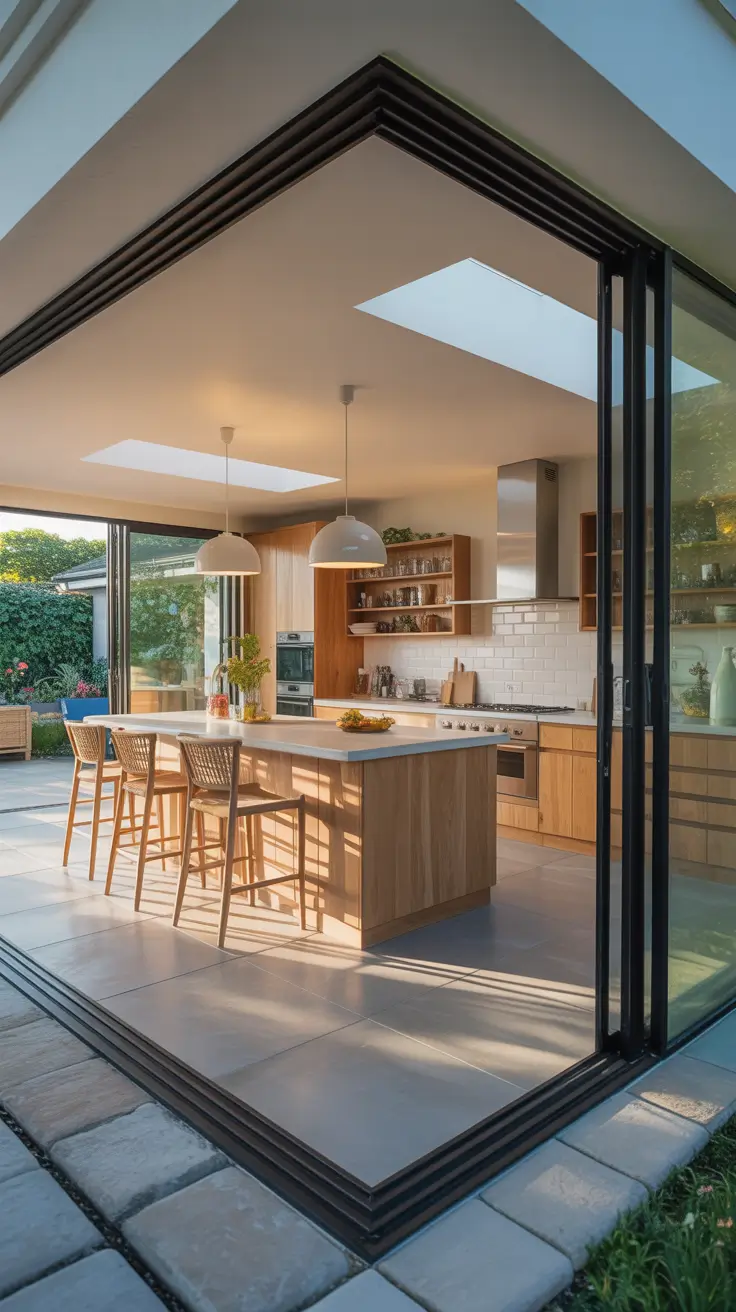
In my experience, the most successful layouts prioritize circulation. When you can move easily between prep, dining, and the garden, the space becomes a joy to use every single day.
Modern Garden Room Extensions With Glass Walls
Nothing defines modern garden rooms quite like glass. Glass wall extensions in 2026 are bold but refined, designed to disappear visually while still offering structure and comfort. Full-height glazing, slim frames, and uninterrupted sightlines make the garden feel like a living artwork.
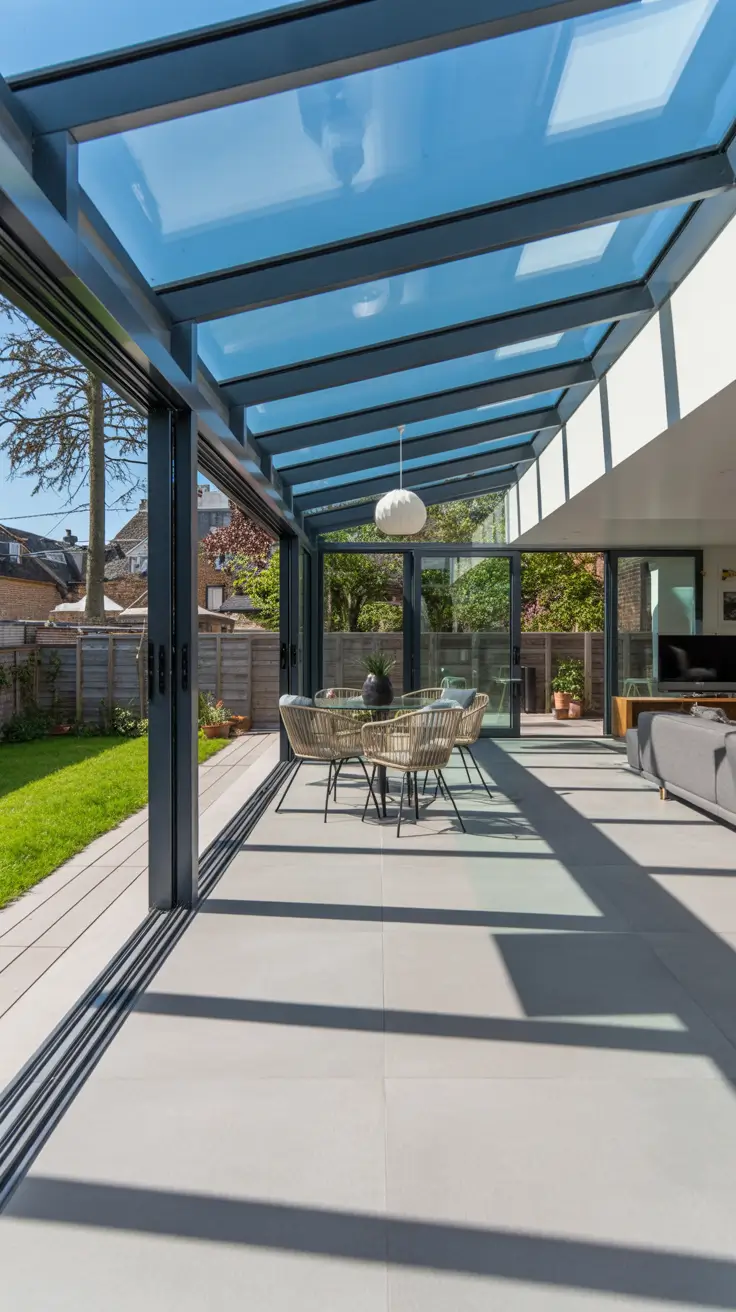
Interiors are intentionally simple to balance all that transparency. Neutral sofas, low-profile tables, and textured rugs stop the space from feeling stark. I often see designers use a single strong element — a sculptural chair or statement artwork — to ground the room visually.
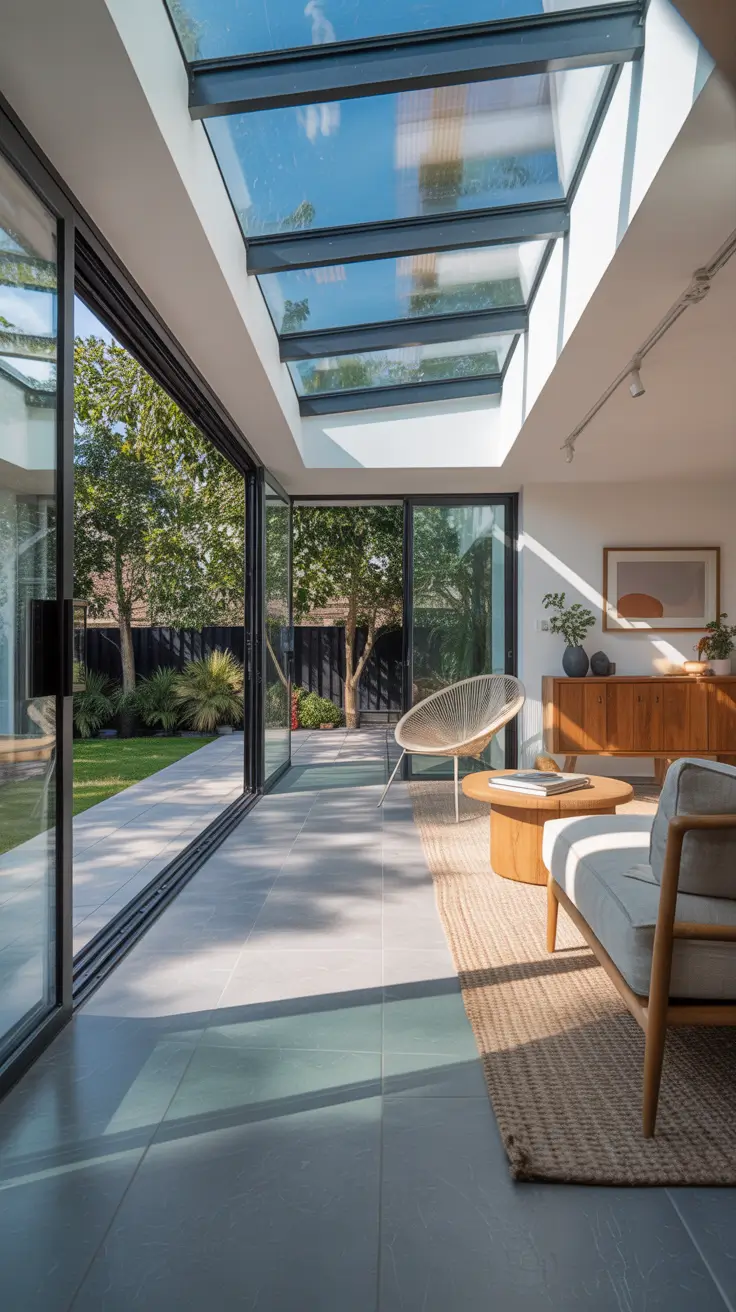
Personally, I think glazing works best when paired with subtle shading or roof overhangs. It keeps the room comfortable without sacrificing the drama of all that light.
Indoor Outdoor Garden Room Extensions For Entertaining
When entertaining is the goal, indoor outdoor garden room extensions truly shine. These spaces are designed to open wide — sliding or folding doors create a seamless flow between lounge, dining, and garden areas. The atmosphere feels relaxed, social, and effortlessly generous.
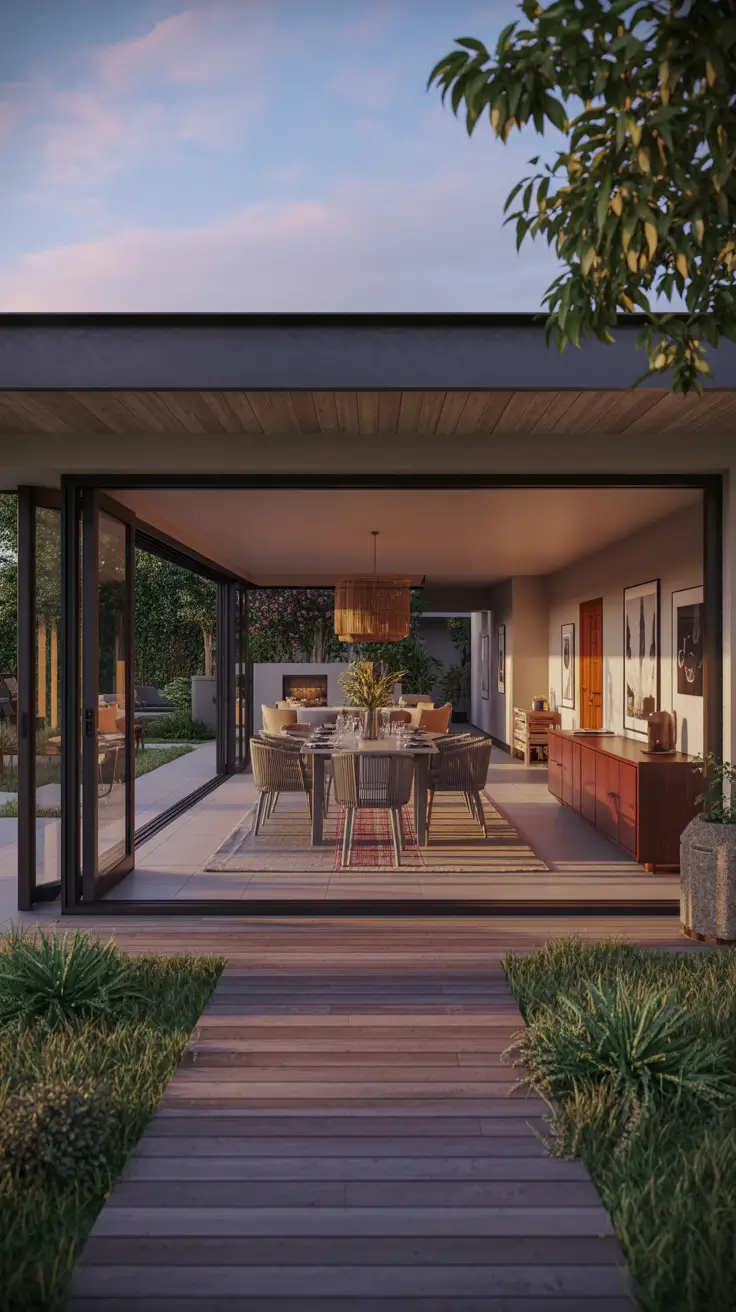
Furniture is flexible and welcoming: large dining tables, comfortable seating, and durable finishes that handle both indoor and outdoor use. I love seeing rugs used to define zones, making gatherings feel intimate even in open layouts.
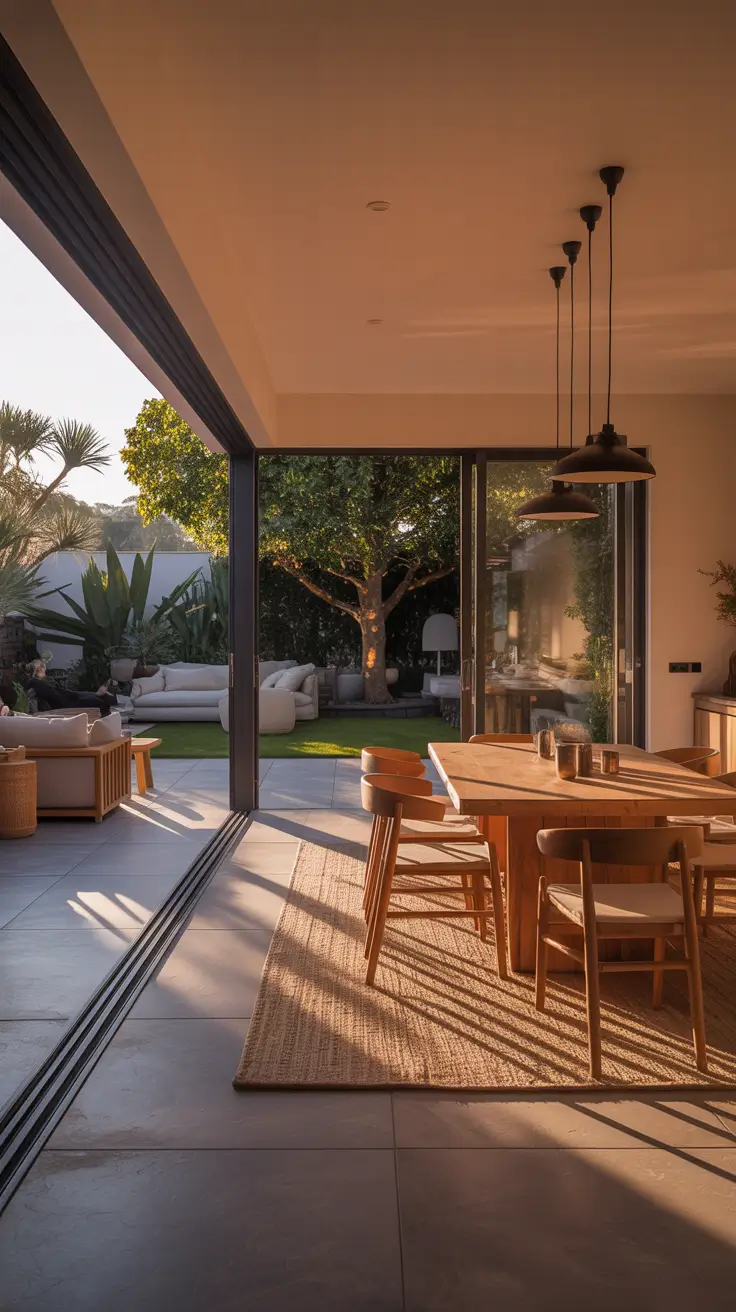
If there’s one thing I always recommend, it’s lighting. Soft exterior lights and warm interior fixtures extend the party into the evening and make the entire space feel intentional, not temporary.
Garden Room Extensions With Pitched Timber Ceilings
There’s something deeply grounding about garden room extensions with pitched timber ceilings. In 2026, these spaces feel like a return to craft — exposed beams, warm wood tones, and proportions that make the room feel taller, calmer, and more intentional. The ceiling becomes the star, shaping the entire mood of the space.
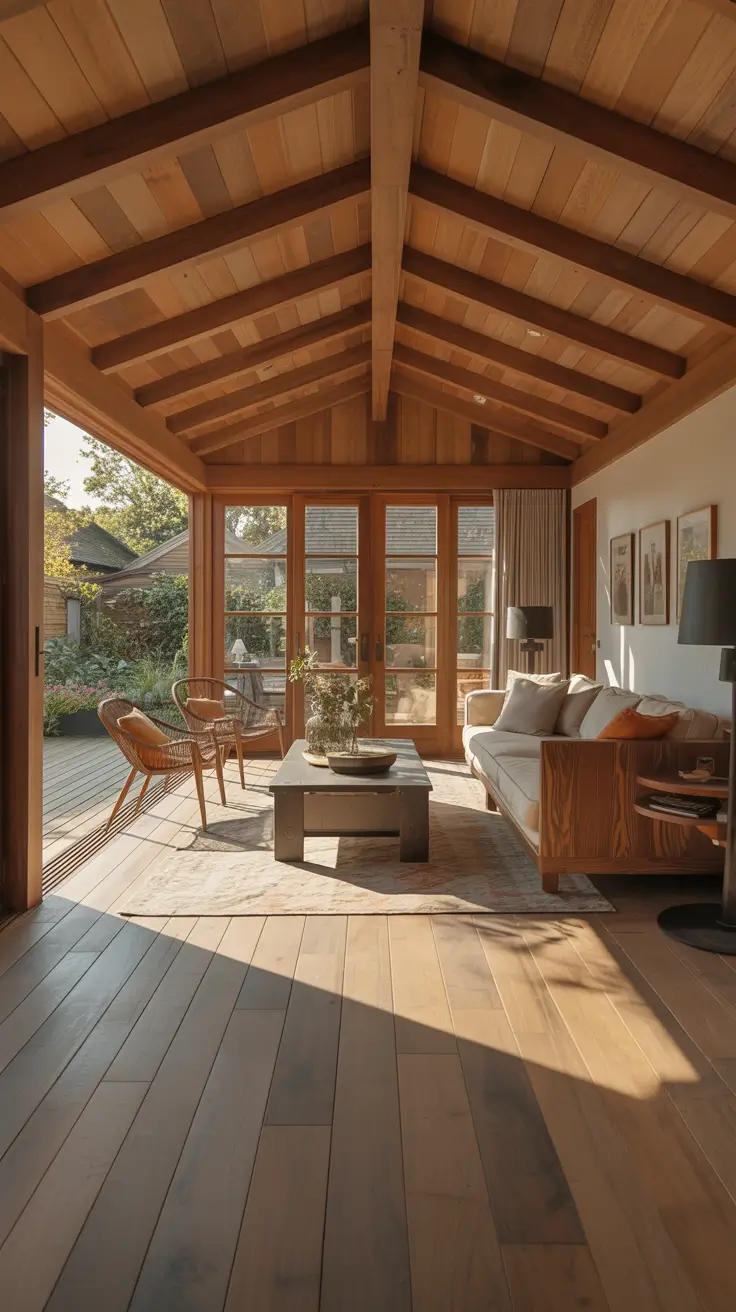
Furniture works best when it’s understated: low sofas, natural wood tables, woven chairs. I love how sunlight moves across the beams during the day, adding rhythm and warmth without any extra decor. These rooms feel peaceful in a way that’s hard to replicate with flat ceilings.
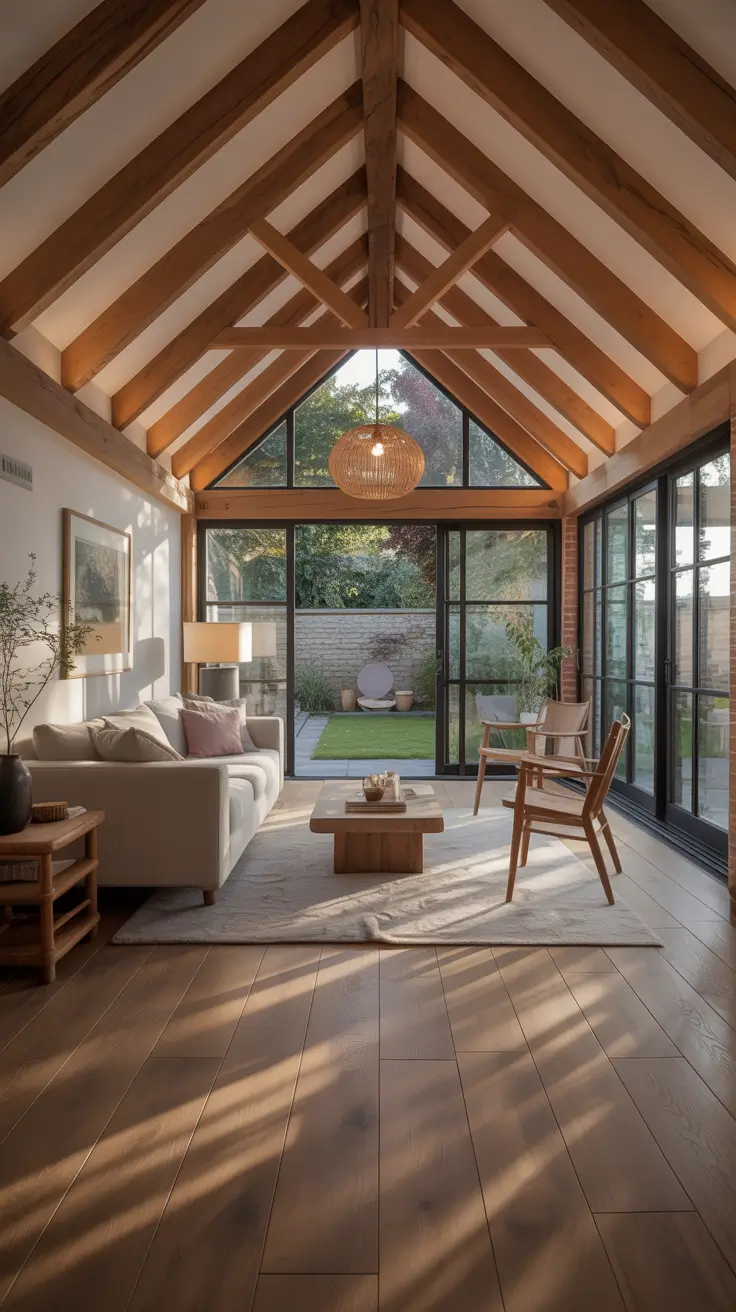
If you’re after a space that feels architectural but still emotional, this ceiling style is a timeless choice.
Garden Room Extensions With Fireplace And Brick Features
A fireplace instantly changes how a garden room is used. In 2026, I’m seeing more extensions that combine modern glazing with brick walls and wood-burning stoves, creating spaces that feel warm, grounded, and usable all year. The contrast between glass and brick adds character without feeling heavy.
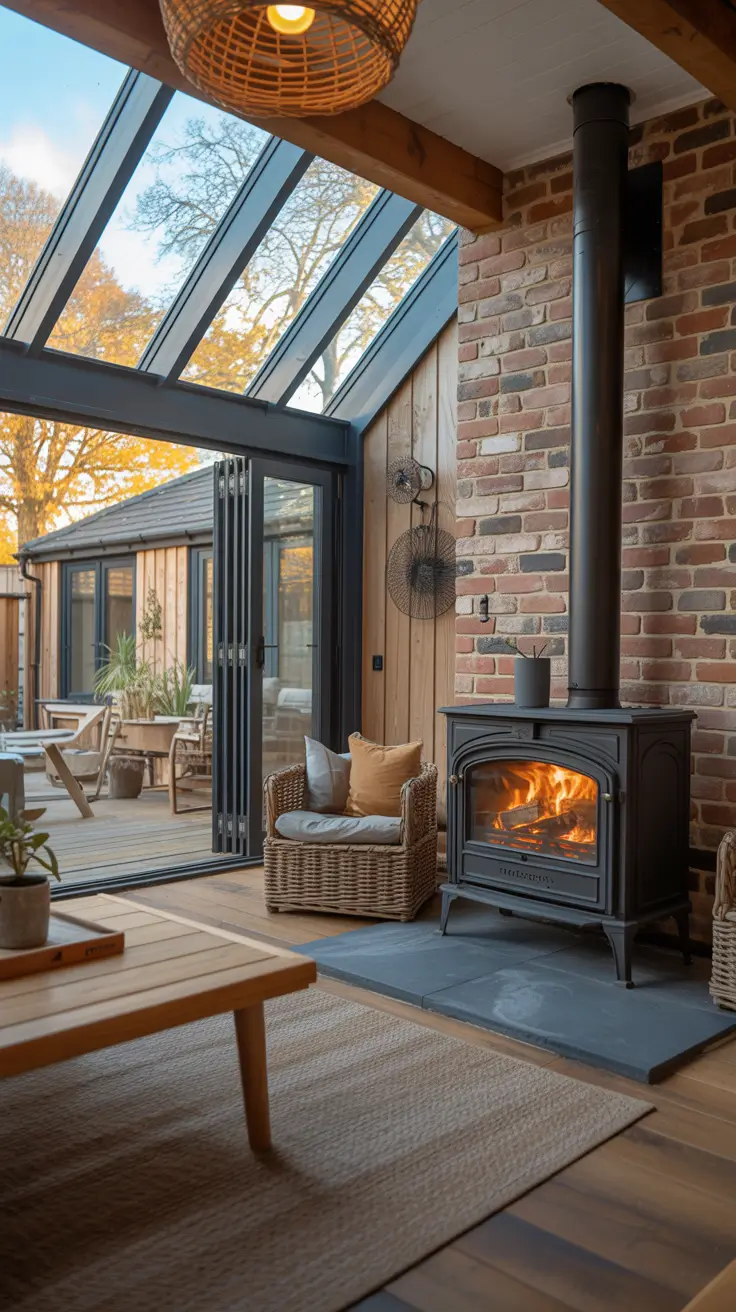
These rooms naturally become gathering points. Armchairs are pulled closer, rugs are thicker, and lighting is softer. I especially like how the fire visually anchors the room, giving it a clear focal point even when the doors are wide open to the garden.
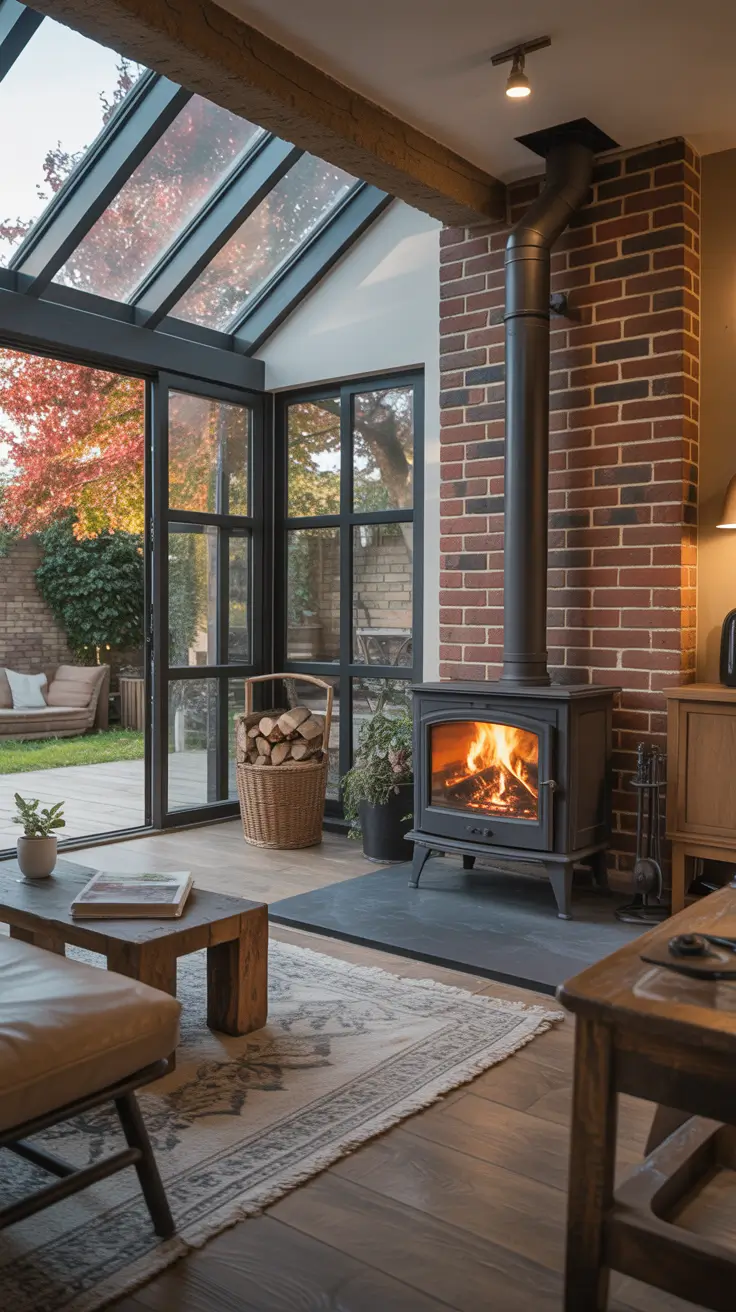
For cooler climates, this combination is hard to beat — it balances openness with real, lasting comfort.
Small Garden Room Extensions With Smart Layouts
Small garden room extensions prove that size isn’t everything. In 2026, compact designs are smarter than ever, using careful layouts, sliding doors, and built-in furniture to make every square meter count. These rooms feel light and intentional rather than limited.
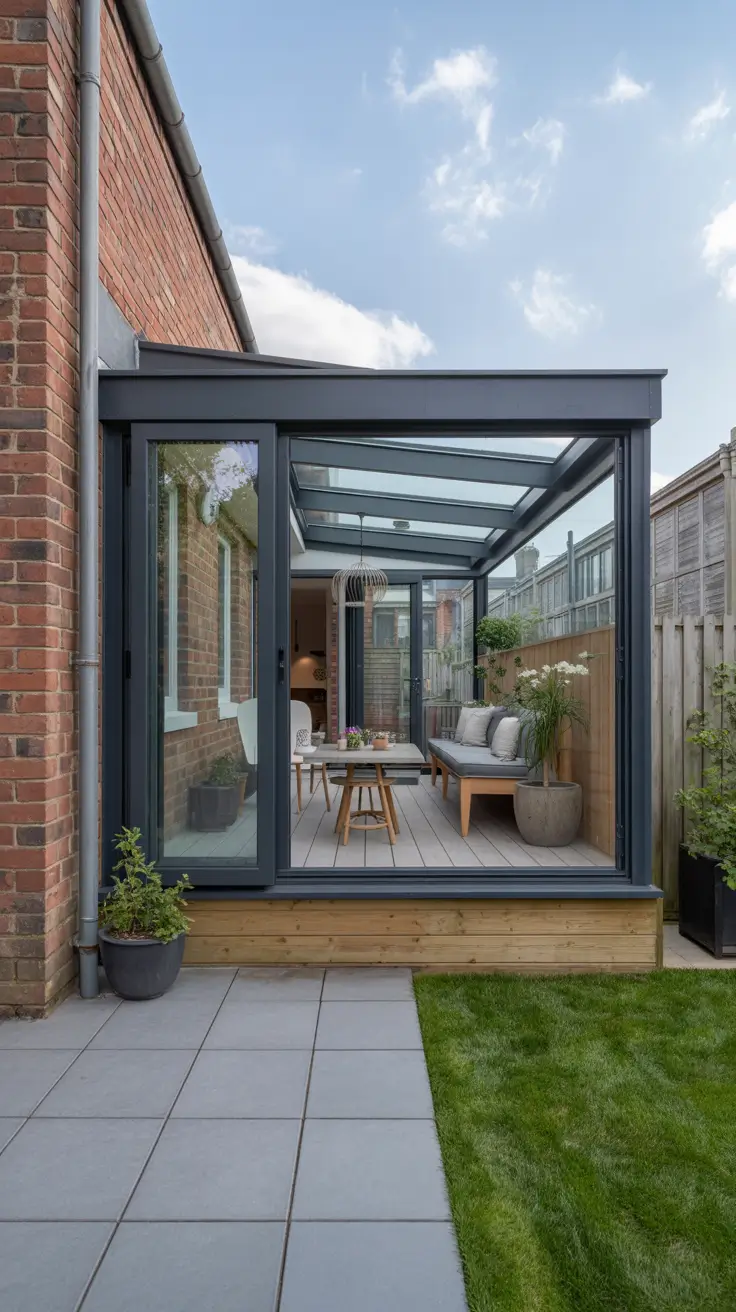
Neutral palettes, leggy furniture, and clear sightlines help visually expand the space. I often see these rooms used as reading lounges, dining nooks, or quiet workspaces that still feel connected to the garden.
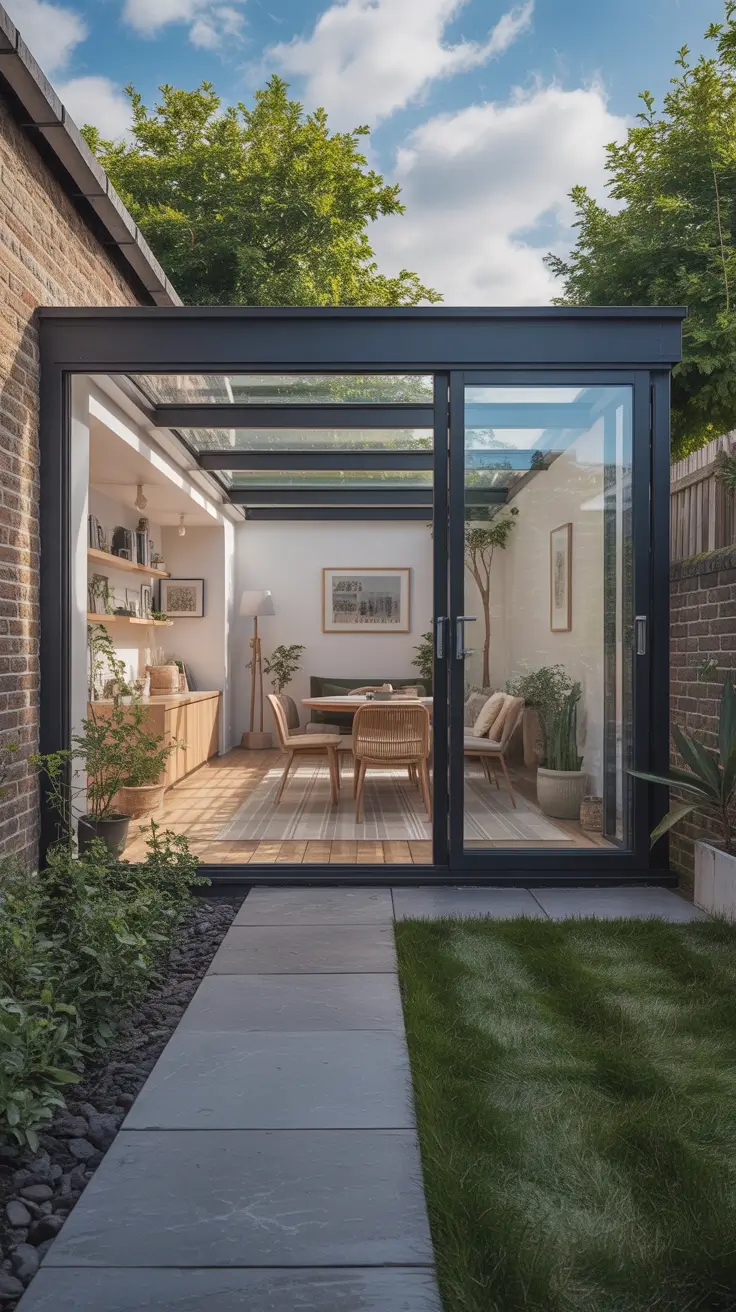
My takeaway? When the layout is right, a small garden room can feel just as special — and sometimes even more considered — than a large one.
Traditional Garden Room Extensions With Cottage Charm
Traditional garden room extensions with cottage character feel especially comforting in 2026. These spaces lean into warmth rather than minimalism — pitched roofs, painted timber frames, and classic French or casement doors that open straight onto the garden. The atmosphere is soft, familiar, and quietly nostalgic.
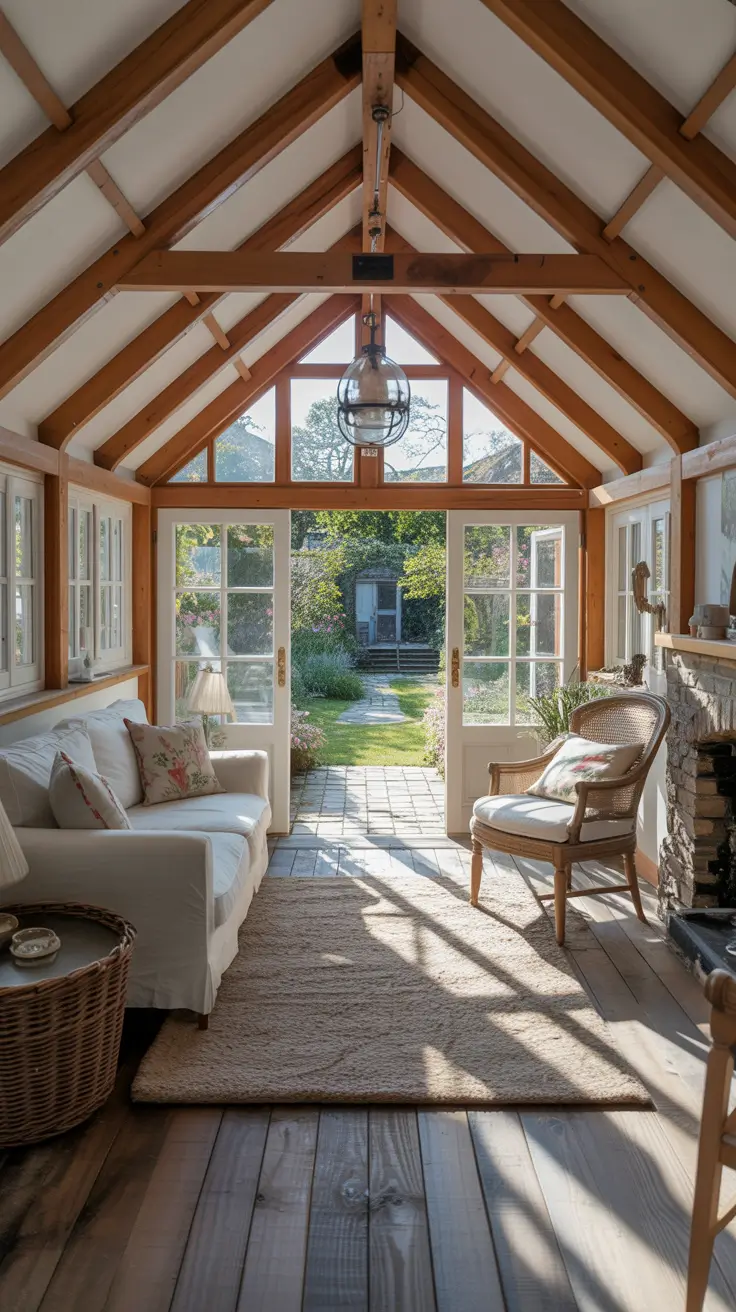
Inside, comfort leads the way. Upholstered sofas, woven chairs, and layered rugs make the room feel lived-in from day one. I love how these interiors welcome imperfection — natural wood grain, gentle patina, and curated collections that grow over time.
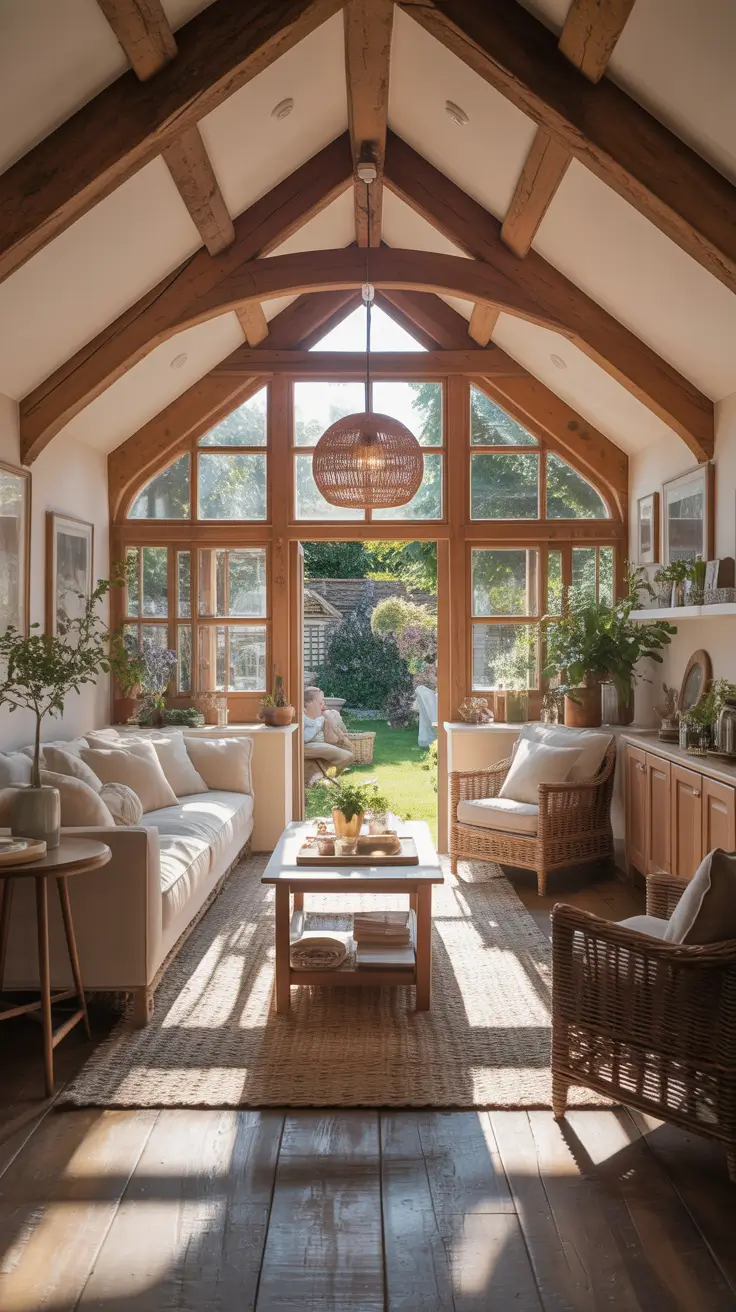
If your home already has character, this style doesn’t try to reinvent it. It simply extends the story outward into the garden.
Garden Room Extensions With Skylight Roofs
A skylight roof changes how a garden room feels throughout the day. In 2026, these extensions use clean-lined rooflights to pull daylight deep into the space, even when full-height glazing isn’t possible. The result feels bright, calm, and quietly architectural.
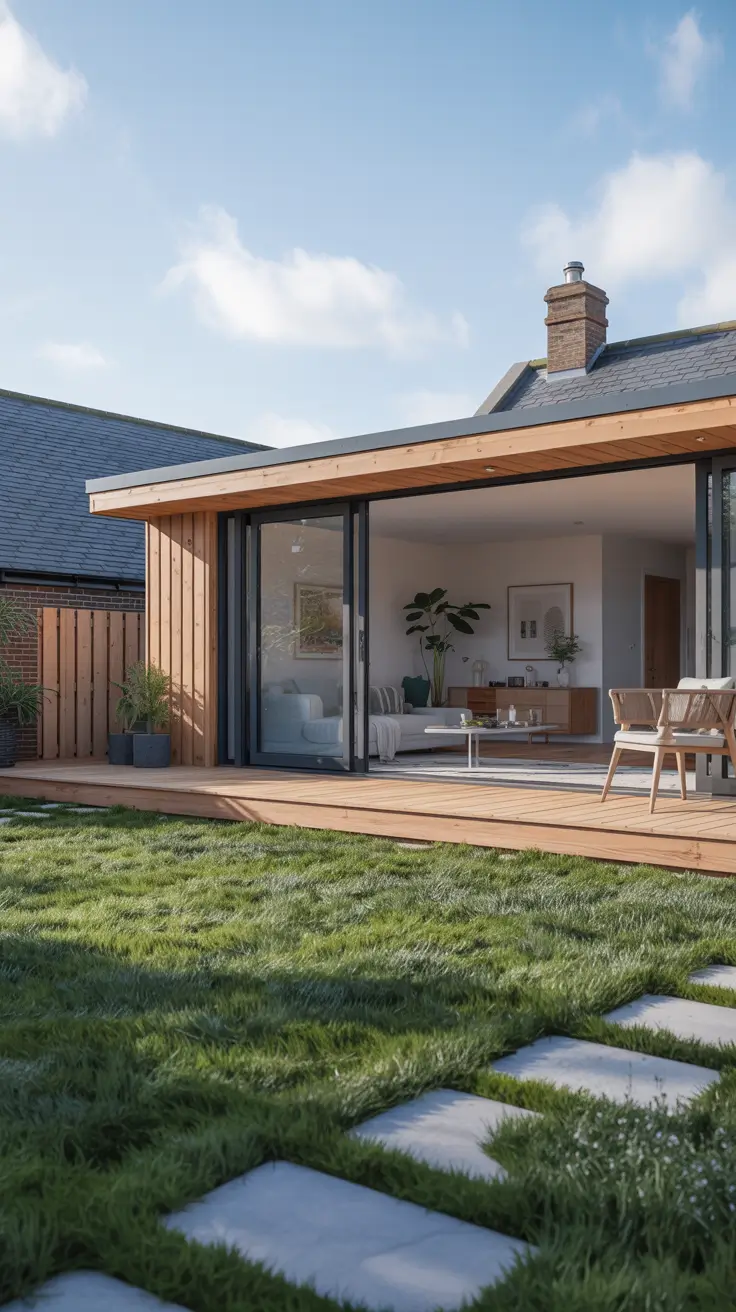
Skylights work beautifully over seating areas, dining tables, or walkways, creating moving patterns of light as the sun shifts. I find these rooms feel especially balanced — protected from glare at eye level while still connected to the sky above.
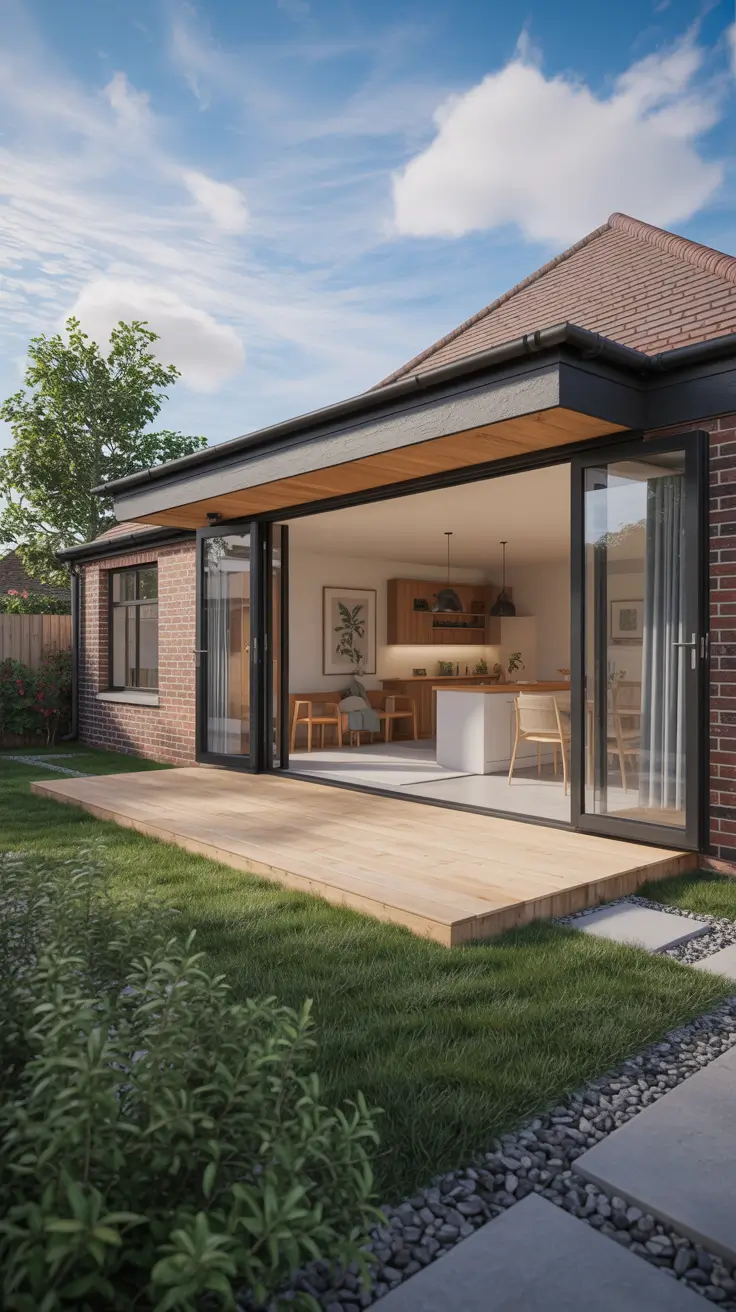
For homes with privacy constraints or close neighbors, this is one of the smartest ways to add brightness without overexposing the space.
Minimal Garden Room Extensions For Modern Homes
Minimal garden room extensions feel confident in their restraint. In 2026, these designs focus on proportion, light, and material quality rather than decoration. Flat roofs, clean frames, and uninterrupted surfaces create spaces that feel calm and intentional.
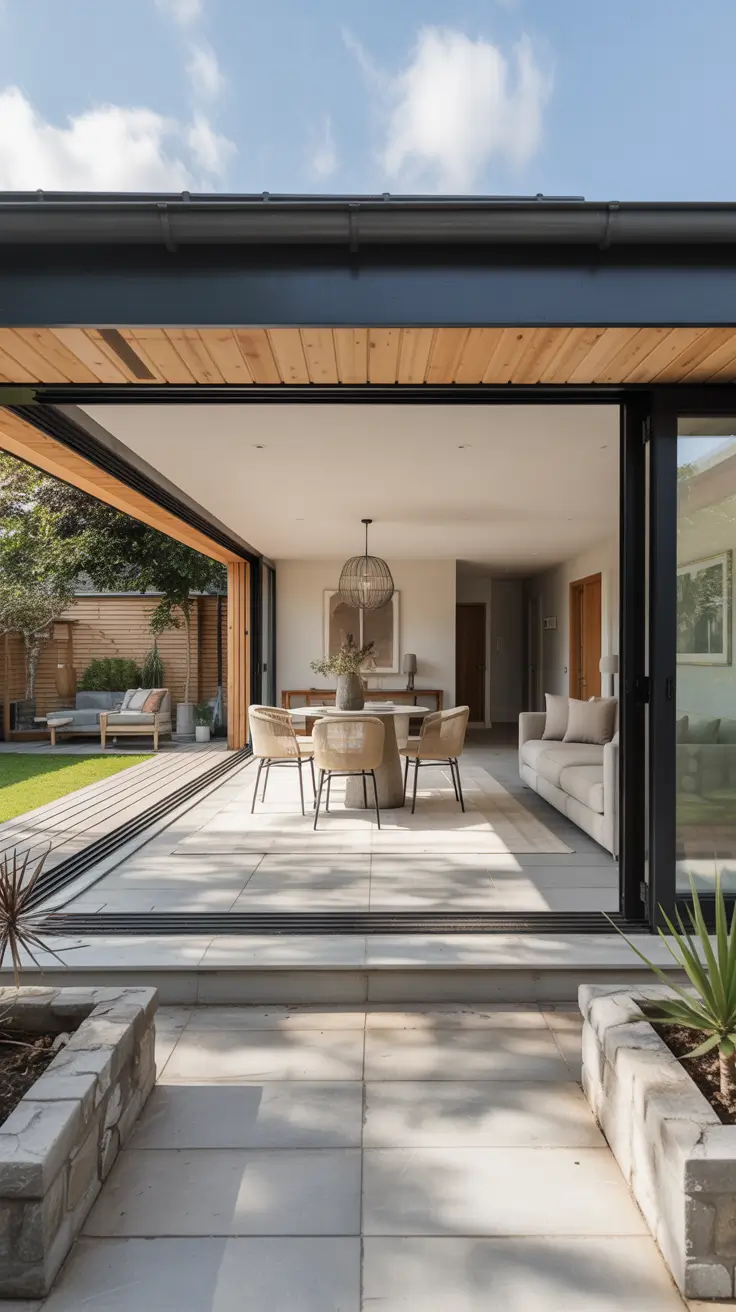
Interiors are deliberately simple: neutral seating, low tables, and just enough texture to keep things warm. I love how these rooms allow the garden to act as the main visual feature, with greenery replacing the need for excess decor.
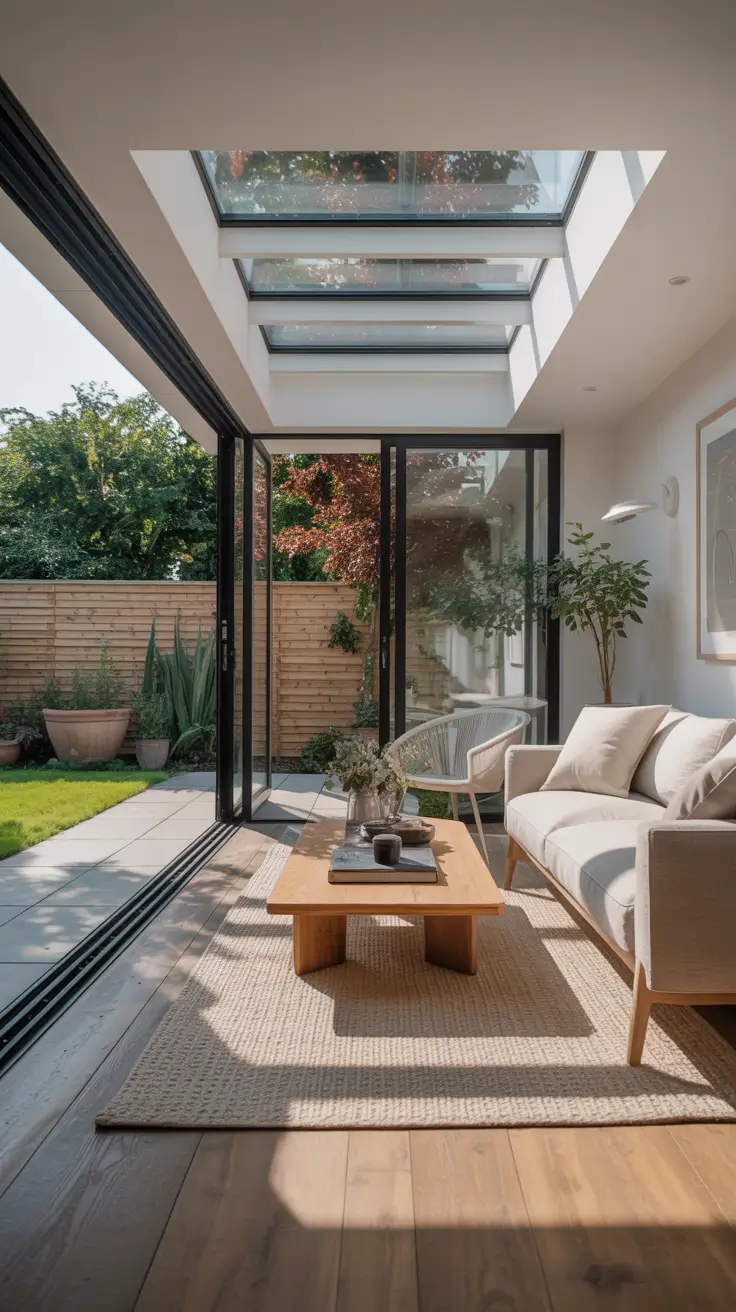
When done well, minimal doesn’t feel cold — it feels thoughtful, calm, and perfectly suited to modern living.
Garden Room Extensions With Covered Outdoor Zones
Covered garden room extensions feel like the sweet spot between indoor comfort and outdoor freedom. In 2026, these designs often combine deep roof overhangs, timber soffits, or glazed canopies that create shaded zones just outside the main living space. It’s a subtle move, but it completely changes how the room is used.
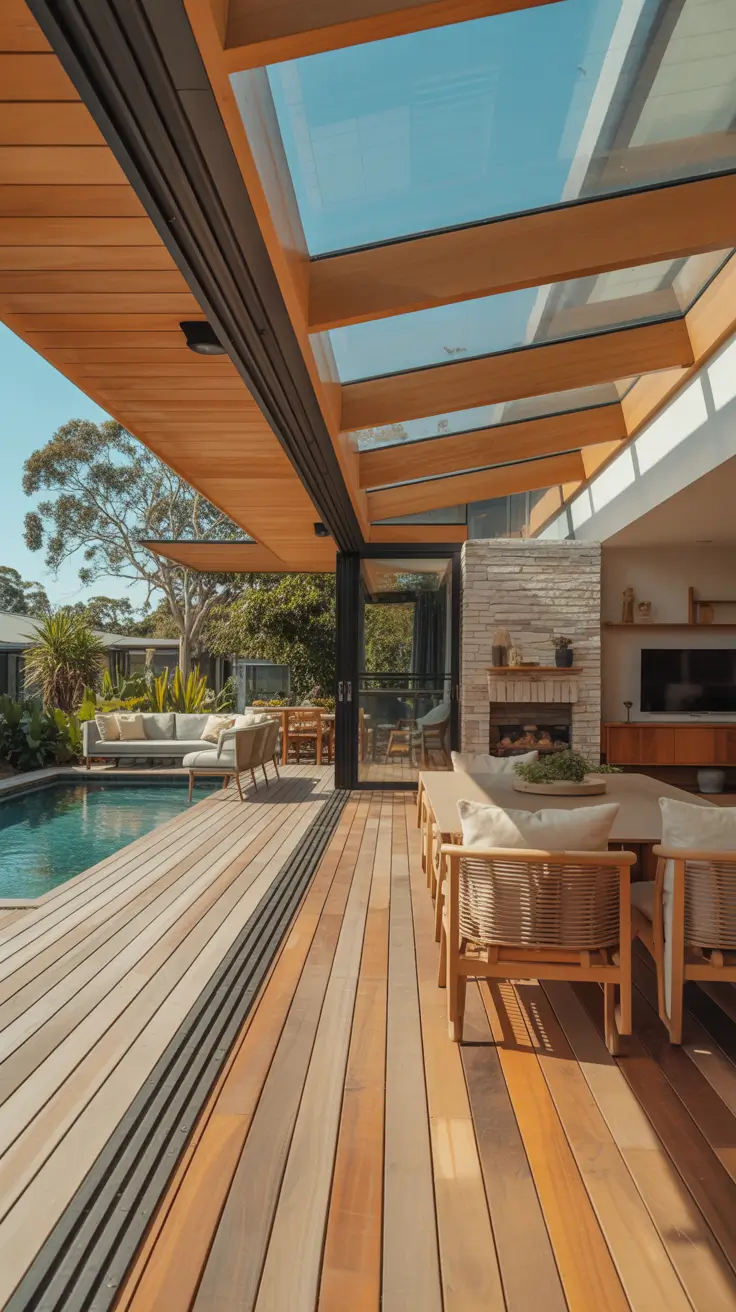
These areas naturally become lounge or dining spillover spaces — protected from harsh sun or light rain, yet still connected to the garden. I love how the transition feels gradual, not abrupt, making the entire extension feel larger and more flexible.
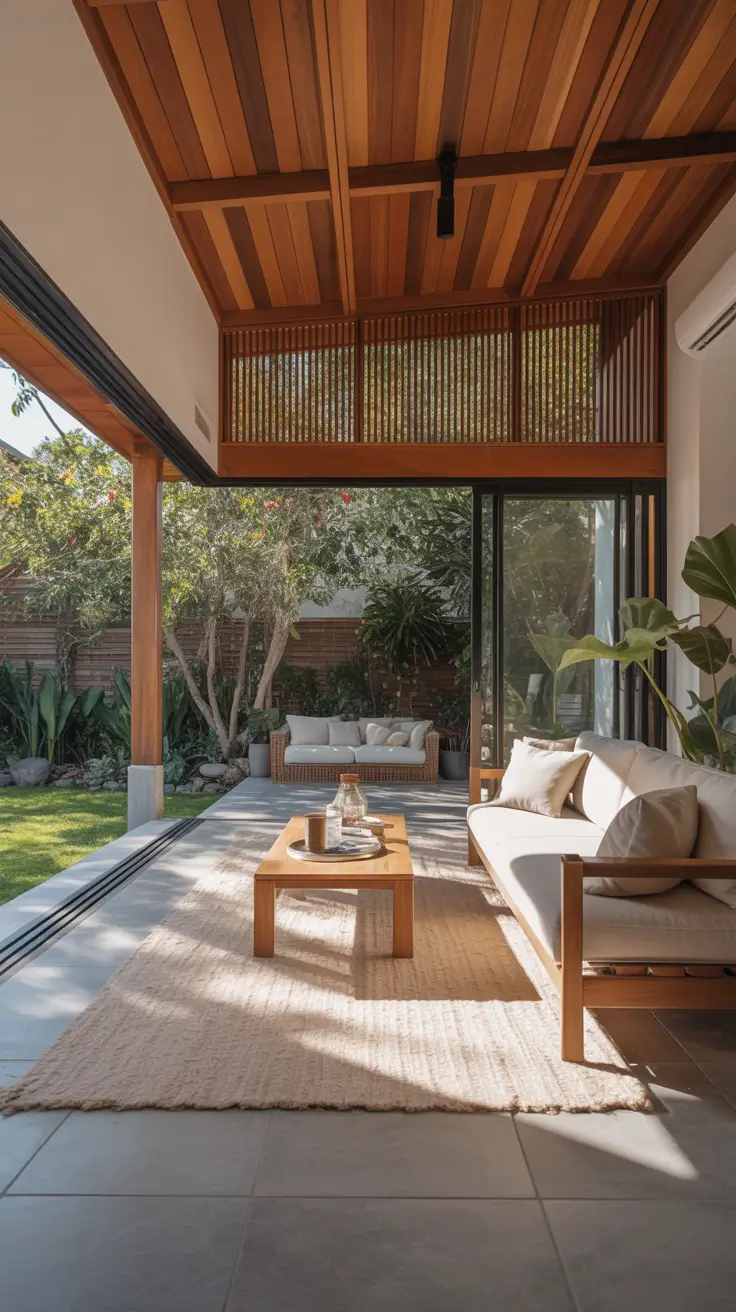
For anyone who actually wants to use their garden room most days of the year, this detail makes a real difference.
Contemporary Brick Garden Room Extensions
Brick garden room extensions are having a quiet resurgence in 2026. Clean-lined brickwork paired with large glazing creates a look that feels solid, architectural, and deeply rooted in the home’s original structure. It’s modern, but never cold.
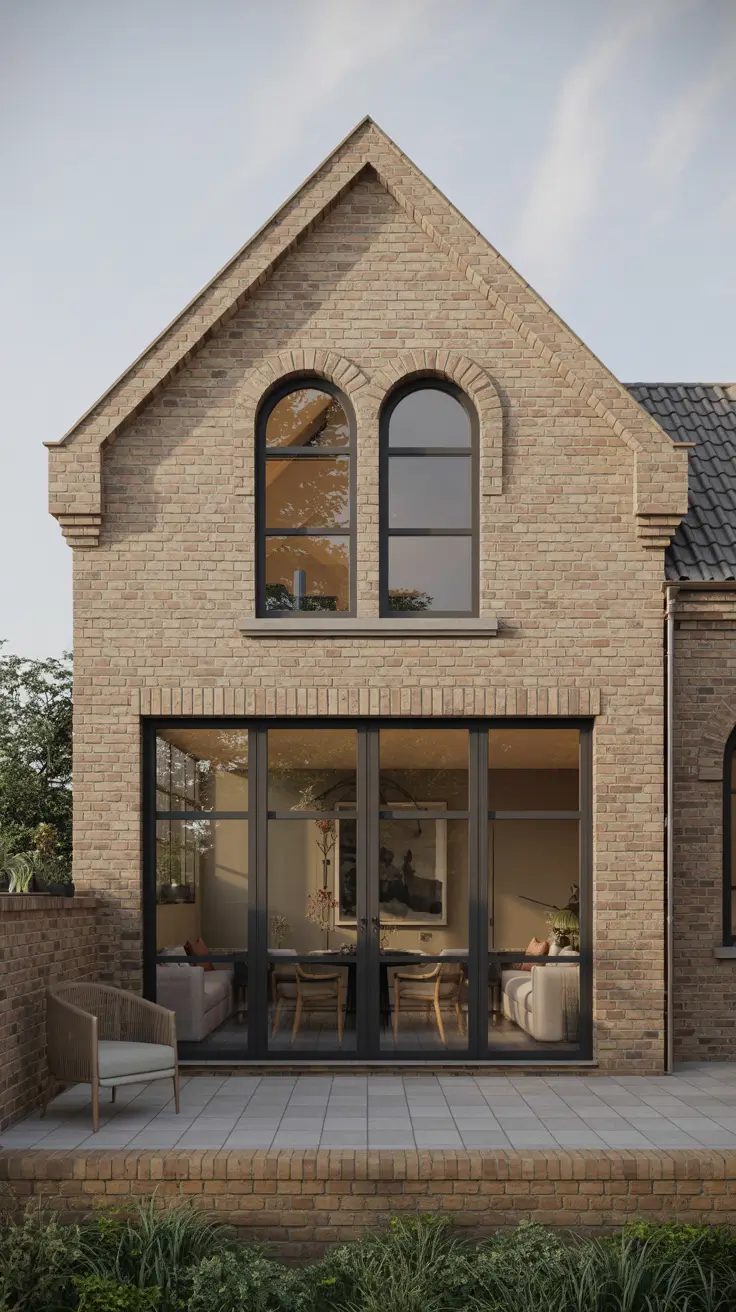
Inside, these spaces often feel calm and grounded. Soft furniture, warm lighting, and natural textures balance the weight of brick beautifully. I’m especially drawn to how brick extensions age — they don’t just hold up over time, they gain character.
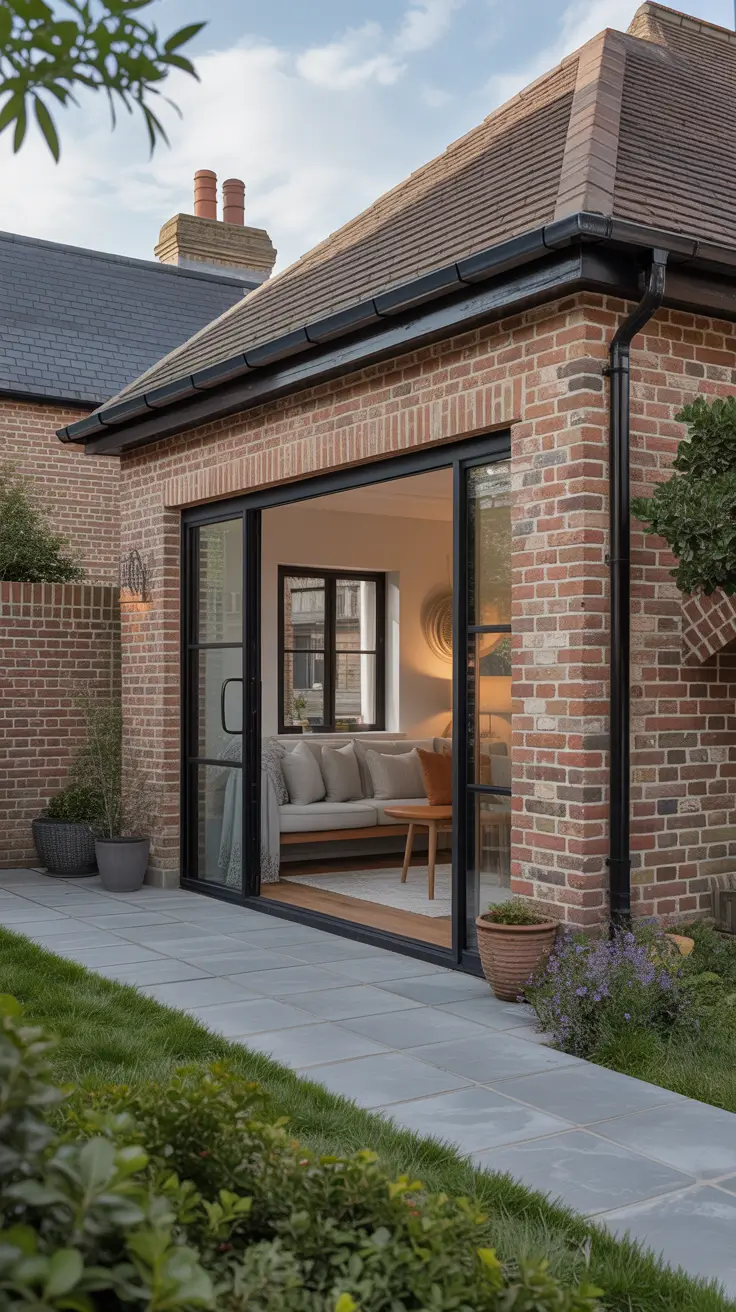
If you want something timeless that still feels current, brick is a confident choice.
Fully Glazed Garden Room Extensions With Framed Views
Fully glazed garden room extensions are all about perspective. In 2026, these designs are less about maximum transparency and more about framing views intentionally — using structure to highlight trees, lawns, or architectural features outdoors.
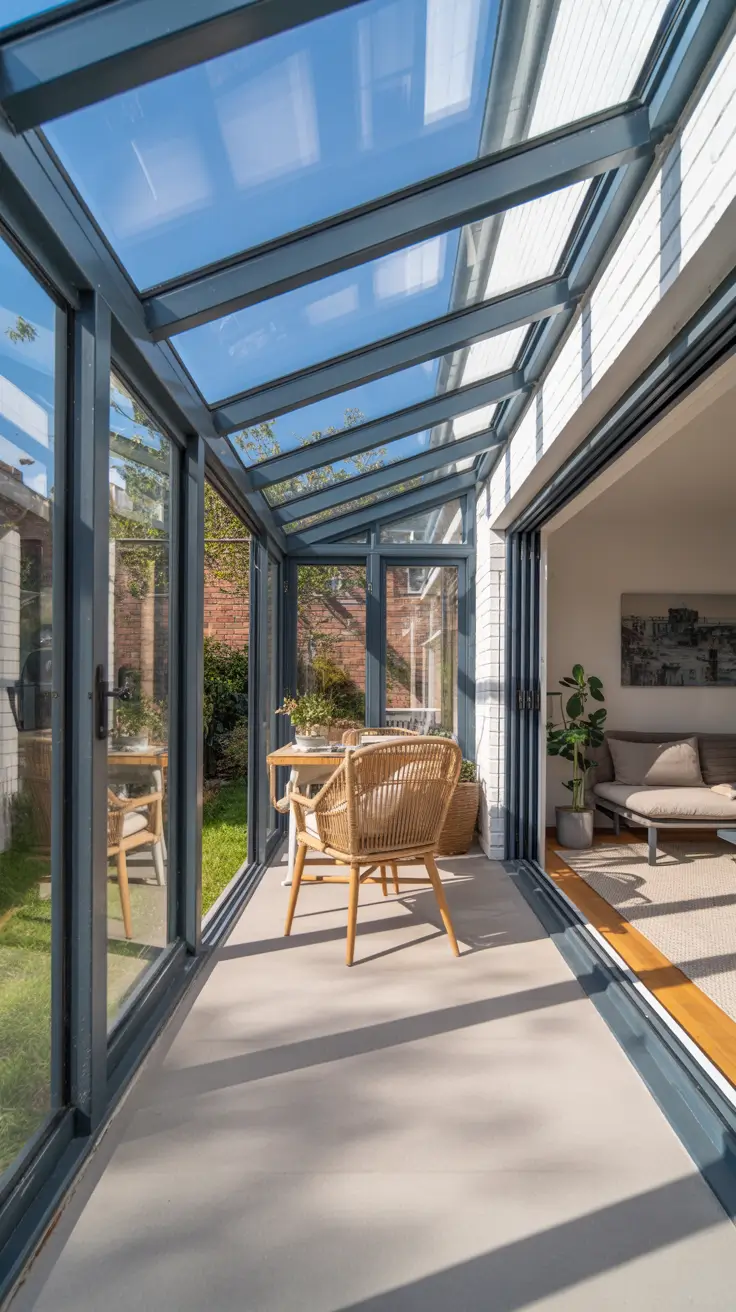
The best examples feel almost gallery-like. Furniture is positioned to face outward, sightlines are deliberate, and the garden becomes part of the interior composition. I find these rooms especially calming — they encourage you to slow down and simply look.
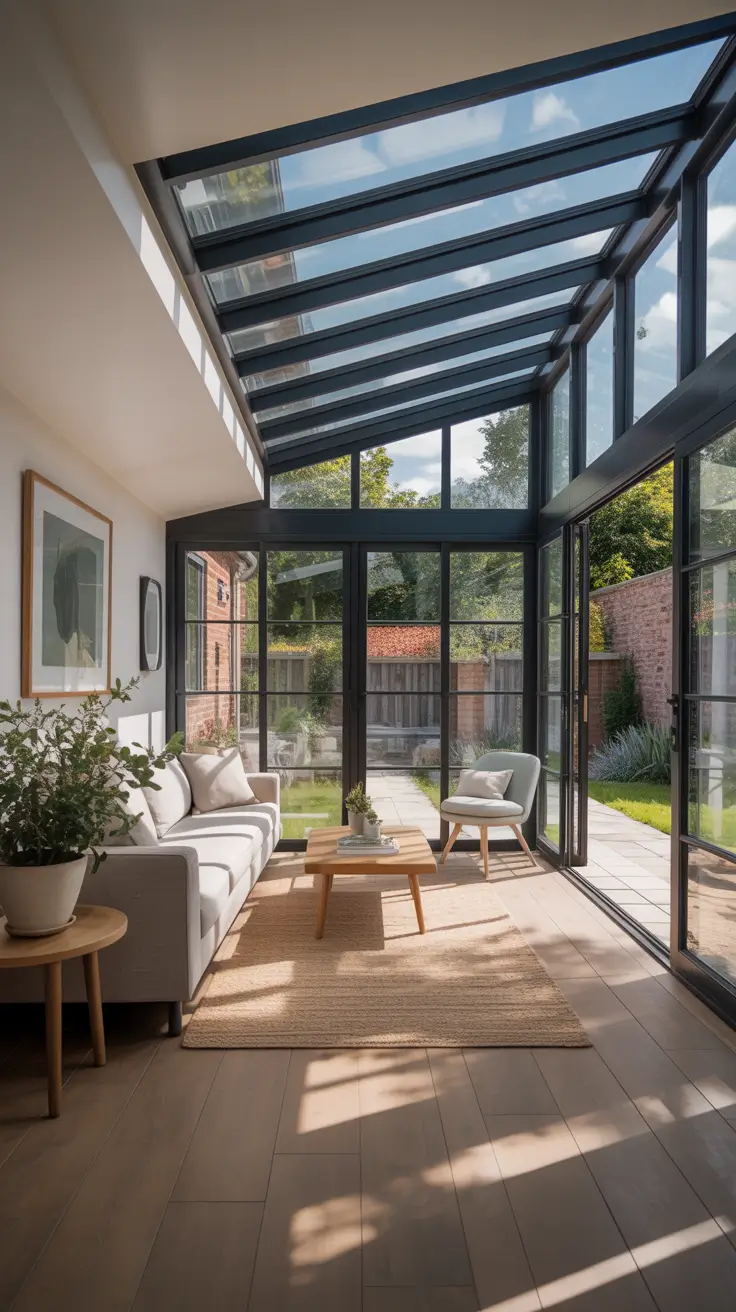
When glass is treated as a design tool rather than a feature on its own, the result feels thoughtful and refined.
Conclusion
Garden room extensions in 2026 are no longer about adding space for the sake of it — they’re about shaping how we live, move, and slow down at home. Whether you’re drawn to timber ceilings, brick textures, skylit roofs, or seamless indoor-outdoor transitions, the most successful designs feel intentional, personal, and deeply connected to their surroundings.
For me, the magic is in choosing an extension that doesn’t just look beautiful, but genuinely changes how you experience your home every single day.