What makes a home feel truly open, breathable, and connected to the outside world in 2026? Is it architecture, materials, or the way spaces flow together?
In this article, I explore how indoor outdoor living room ideas are evolving into thoughtful, functional environments that balance comfort, aesthetics, and lifestyle. From indoor-outdoor living room design to layouts that open fully to nature, I’ll walk through the concepts shaping modern homes and show how indoor and outdoor spaces are becoming one continuous experience.
Indoor–Outdoor Living Room Ideas That Define 2026 Living
I see 2026 as the year when the indoor/outdoor living room stops being a luxury concept and becomes a standard expectation. The defining feature of these spaces is intention: layouts that invite light, air, and movement while remaining practical for everyday life. Instead of treating outdoor areas as separate zones, I design living rooms that naturally extend outward, often open to garden or terrace spaces, creating a sense of freedom without sacrificing comfort.
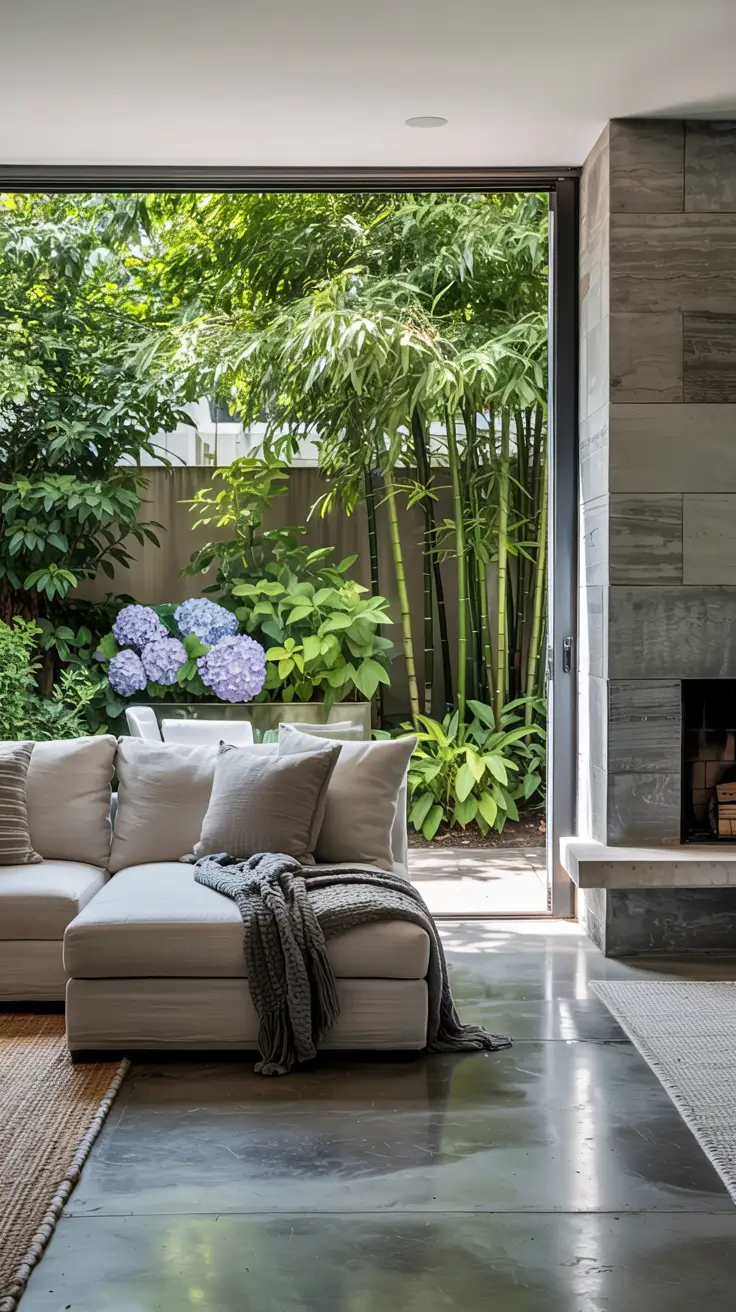
Furniture placement plays a major role here. I focus on flexible seating, low-profile sofas, and materials that feel equally at home indoors and outdoors. Natural textures like wood, stone, and linen help soften transitions, while neutral color palettes keep the space cohesive. These indoor-outdoor ideas work because they prioritize how people actually live — entertaining, relaxing, and moving easily between zones.
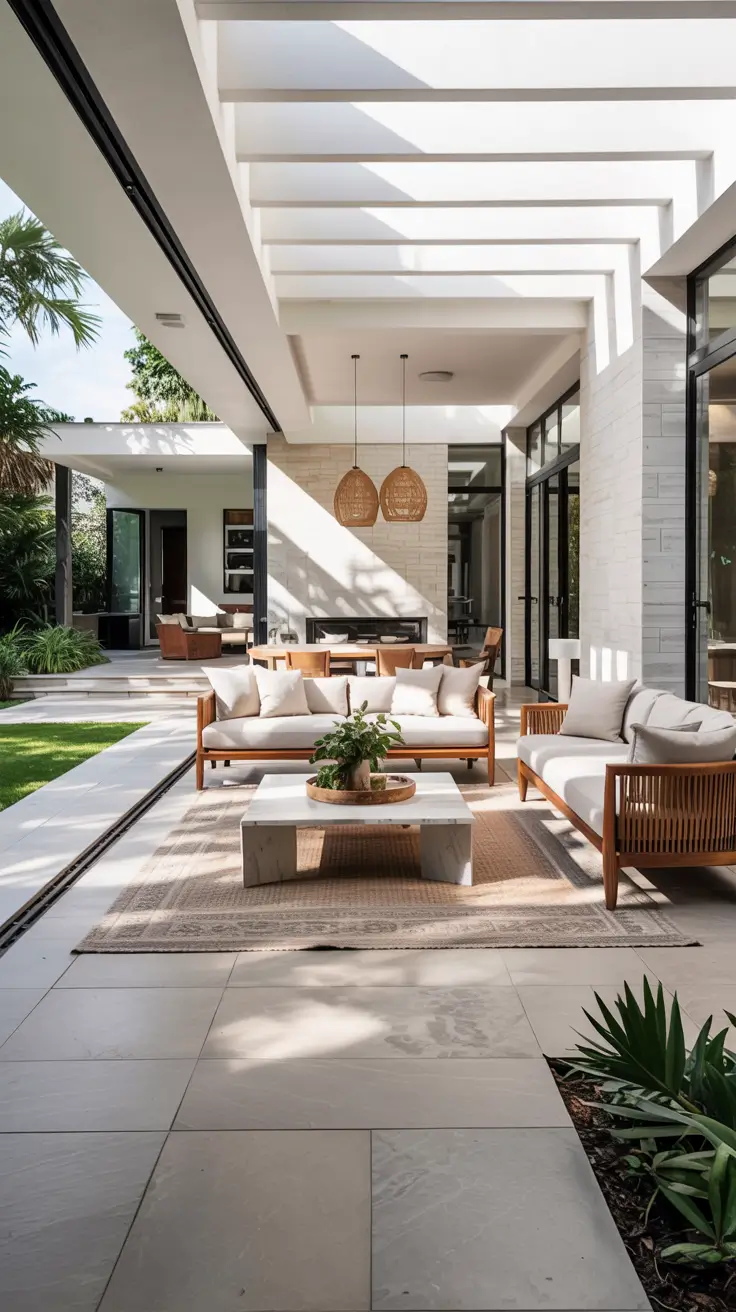
From my experience, the most successful spaces avoid visual clutter. Designers featured in Architectural Digest often emphasize restraint, and I agree: fewer, better-chosen elements create a calmer, more expansive feeling. What’s often missing in early designs is shade control, so I always recommend integrated pergolas, retractable awnings, or sheer curtains to make the space usable throughout the day.
The New Indoor–Outdoor Living Room Design Philosophy
The philosophy behind indoor-outdoor living room design in 2026 is all about continuity. I approach these spaces as one complete environment rather than two areas stitched together. Flooring that runs from inside to outside, aligned ceiling heights, and consistent color schemes help reinforce that seamless connection.
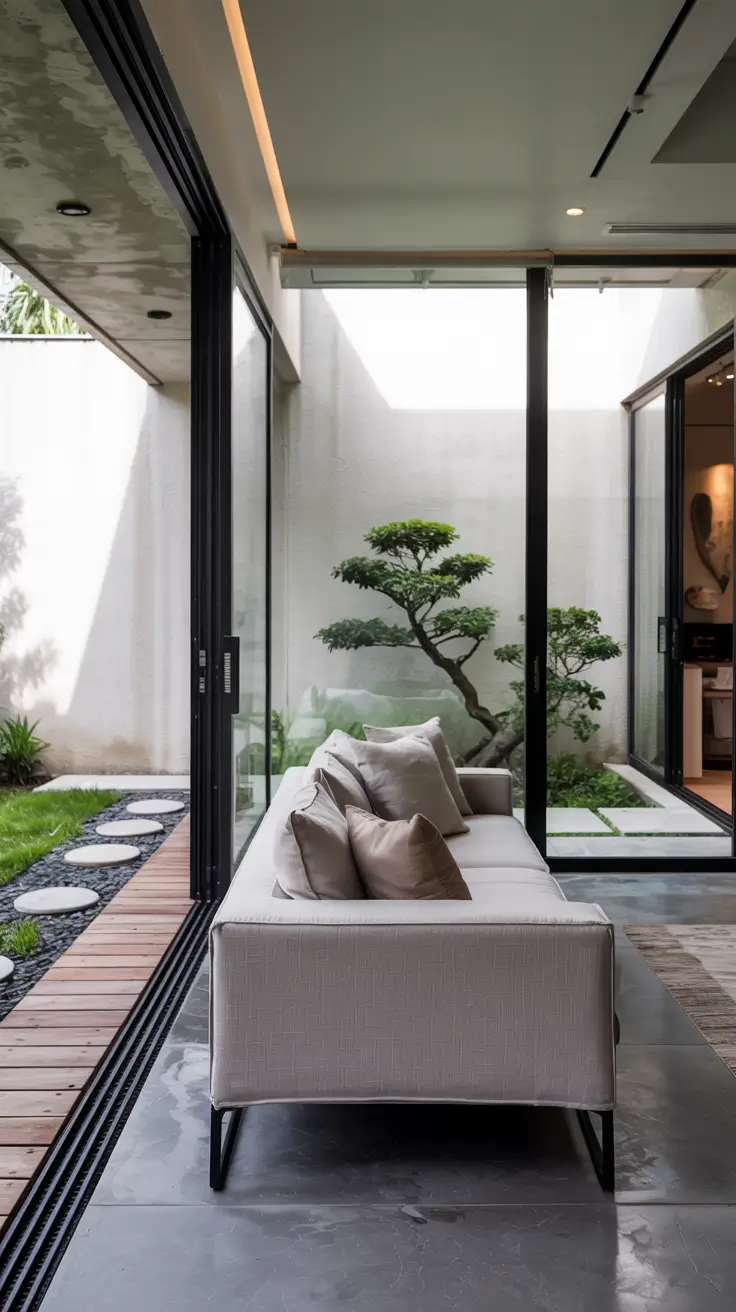
Design-wise, I prioritize architecture first. Large openings, structural beams, and framed views define how the room feels before any furniture is added. When the structure is right, everything else falls into place. This is where Design, not decoration, does the heavy lifting.
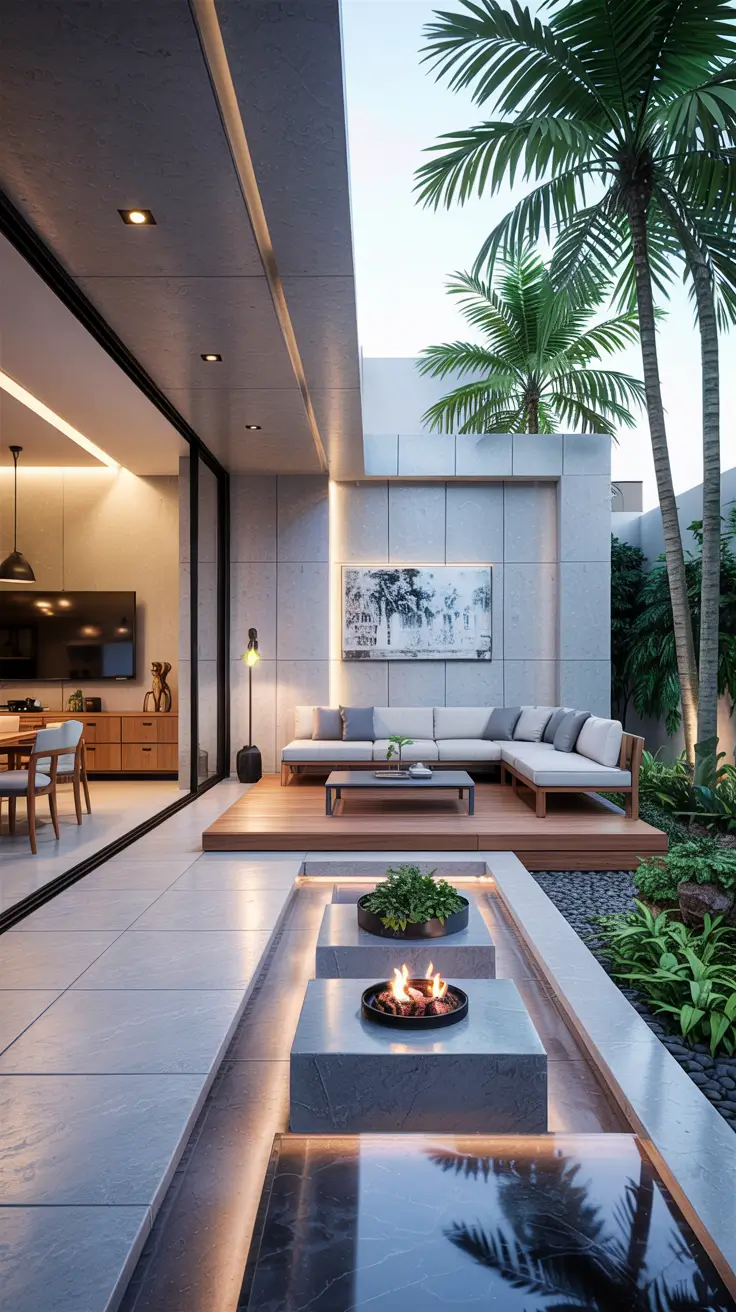
Personally, I’ve learned that the biggest mistake is over-styling. As Elle Decor often notes, indoor-outdoor spaces should breathe. What’s often missing is acoustic comfort — adding soft furnishings, outdoor-rated rugs, and greenery helps absorb sound and makes the space feel more intimate.
How Indoor–Outdoor Flow Shapes Modern Homes
Flow is the invisible force that makes an indoor-outdoor space feel natural rather than forced. I pay close attention to sightlines, walking paths, and how doors align with furniture and focal points. When done right, the transition feels effortless, especially in homes that embrace Indoor-outdoor living as a core concept.
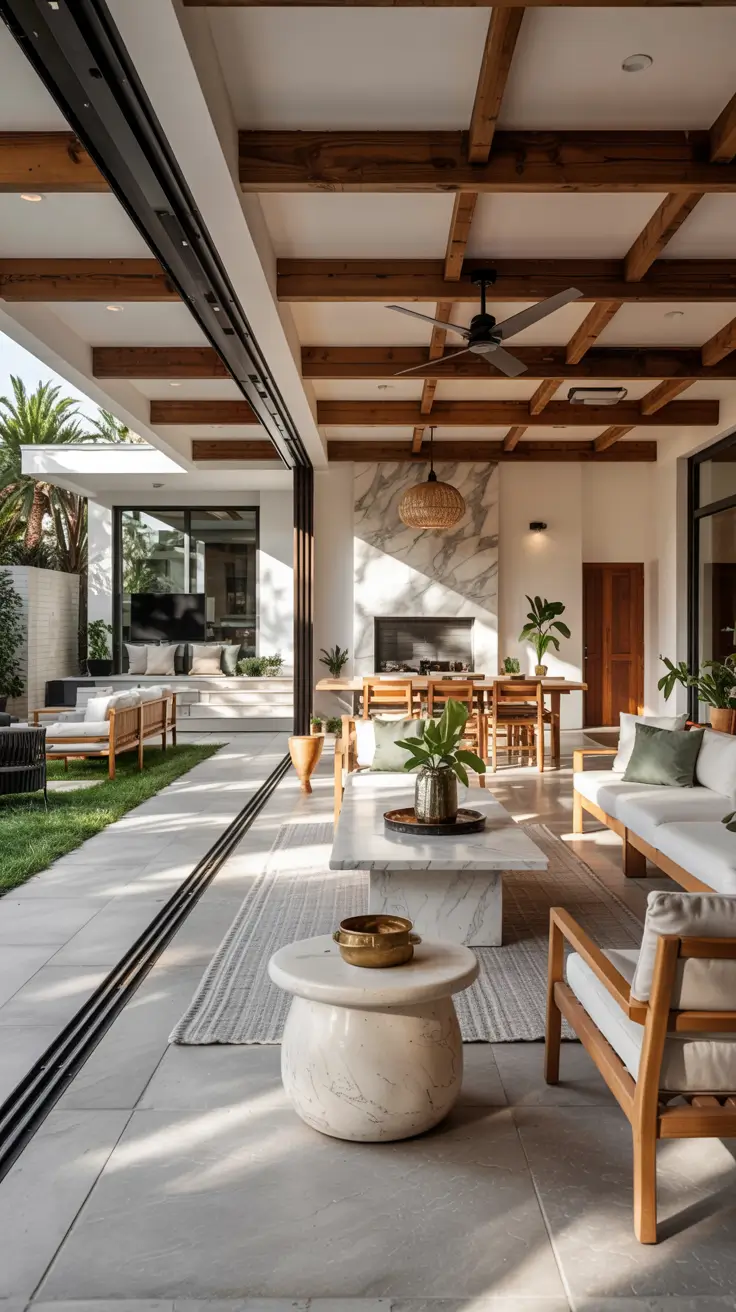
I usually design layouts where the living room anchors the home, acting as a bridge between private interiors and social outdoor zones. Strategic furniture placement ensures movement feels intuitive, not interrupted. This is where Layout becomes just as important as aesthetics.
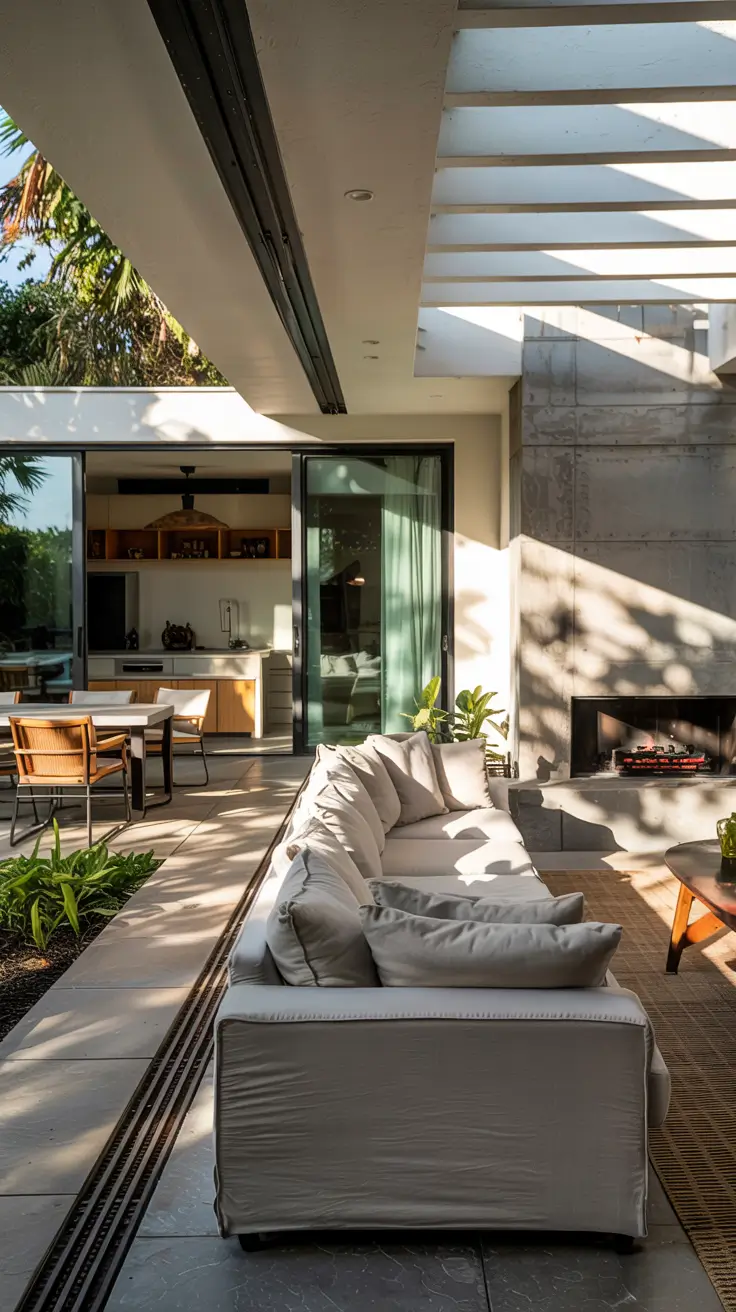
In my own projects, I’ve noticed that flow improves daily habits — people open doors more often, use outdoor areas spontaneously, and feel more connected to their surroundings. Designers like Nate Berkus often highlight emotional comfort in design, and flow is a big part of that. If something’s missing, it’s usually lighting continuity; matching indoor and outdoor lighting temperatures makes transitions smoother after sunset.
Indoor–Outdoor Living Room And Kitchen As One Seamless Space
Combining the indoor outdoor living room and kitchen is one of the most powerful layout decisions for modern homes. I design these spaces to function as a single social hub, where cooking, dining, and relaxing happen without barriers. The key is alignment — kitchen islands facing outdoor seating, dining tables positioned near openings, and clear visual connections.
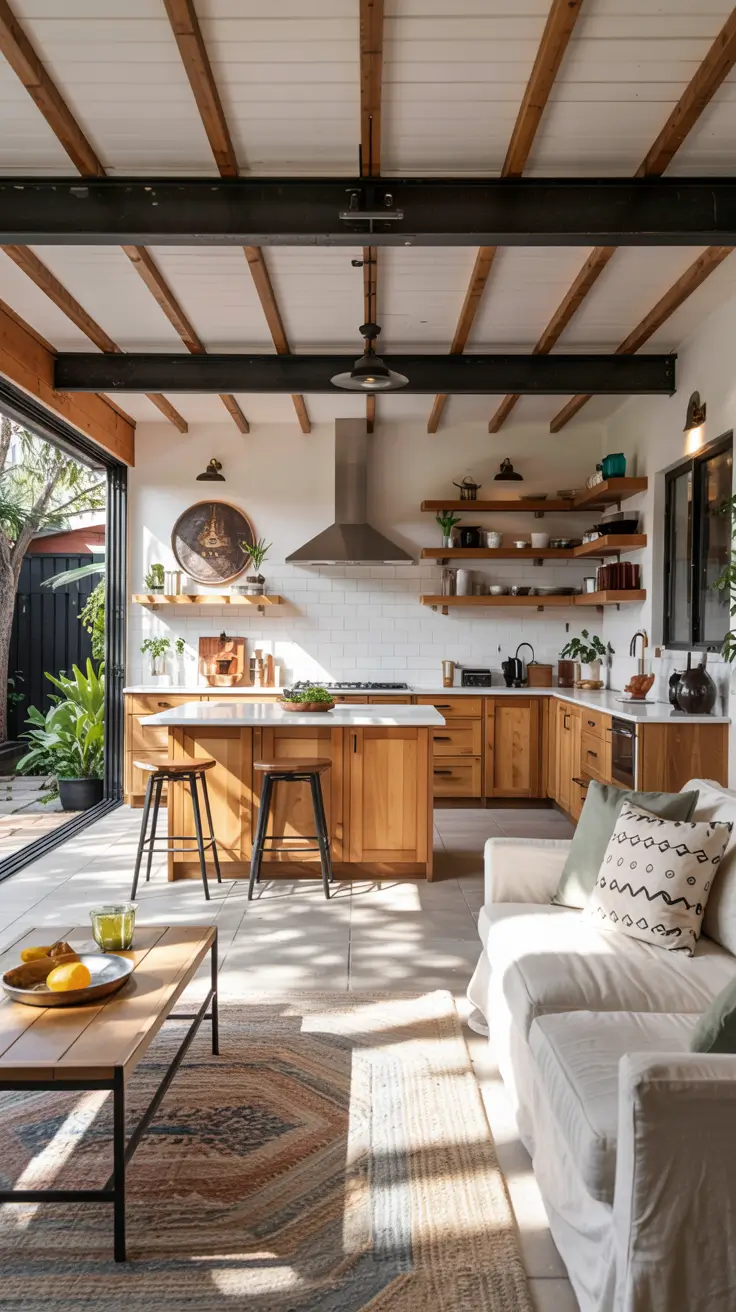
Materials matter here. I often repeat finishes from the Kitchen into the living area: stone countertops echoed in coffee tables, cabinetry tones mirrored in shelving. This visual rhythm keeps the space unified rather than chaotic.
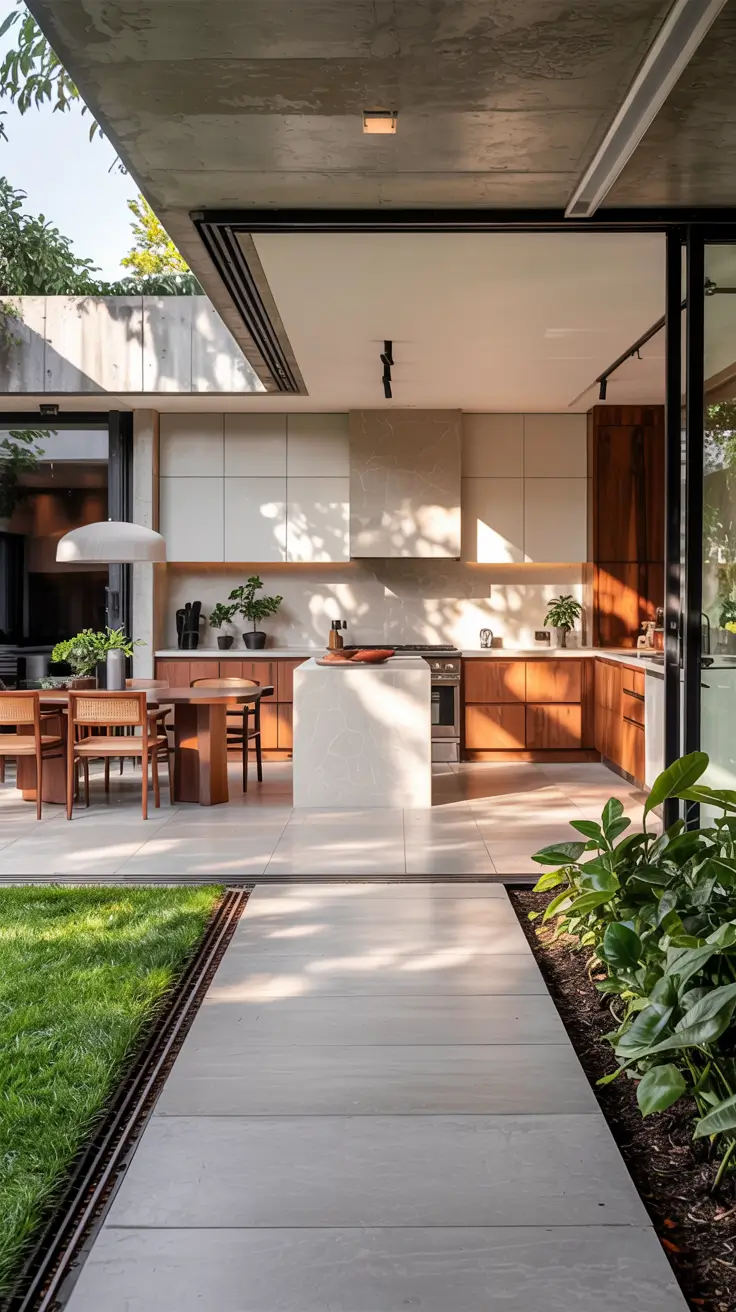
From experience, this setup dramatically improves hosting and everyday life. Better Homes & Gardens frequently highlights open-plan kitchens as lifestyle enhancers, and I agree — but what’s often missing is outdoor storage or prep surfaces. Adding weather-resistant cabinetry outside completes the concept.
Sliding Doors That Blur The Line Between Inside And Outside
Sliding doors are essential to modern indoor outdoor living room sliding doors concepts. I prefer large-format panels that disappear into walls or stack neatly to one side, allowing the living room to fully open. These doors redefine how space is perceived, especially when paired with consistent flooring.
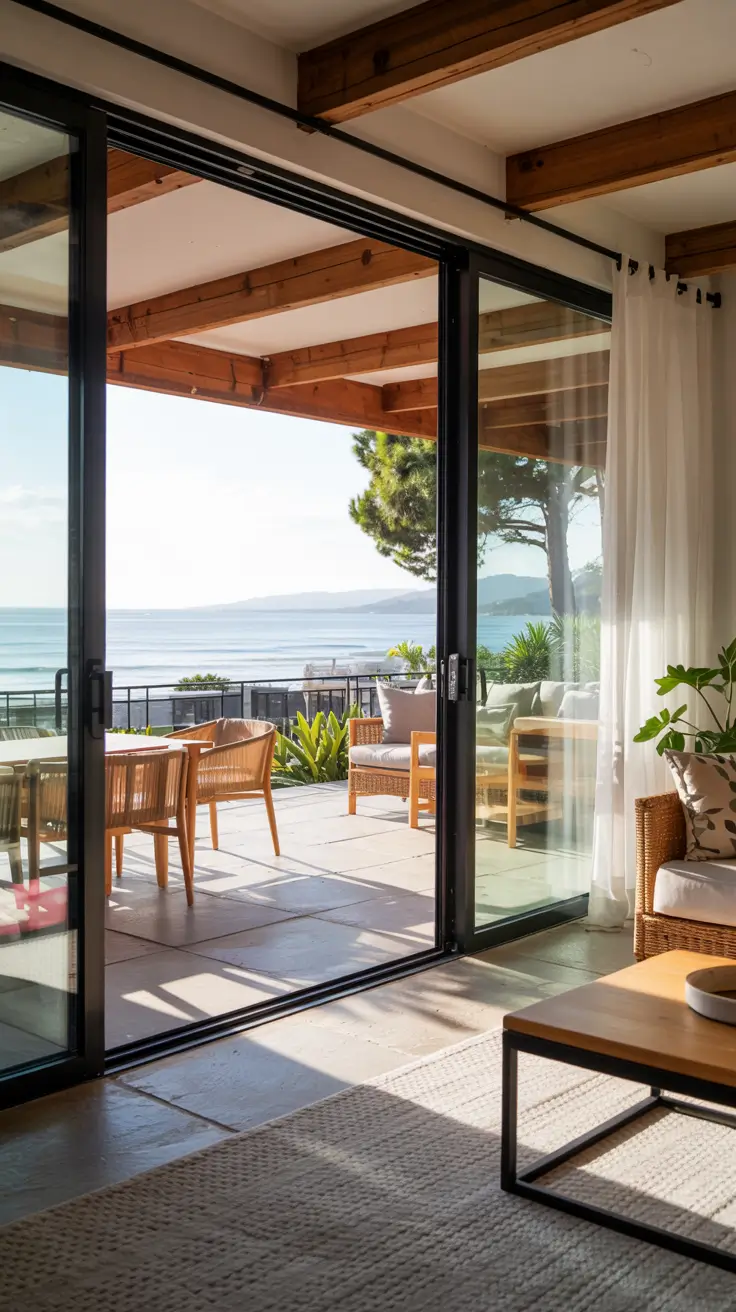
I usually specify slim aluminum or steel frames with high-performance glass. This maintains insulation while maximizing transparency. When closed, the room still feels open; when open, it transforms completely.
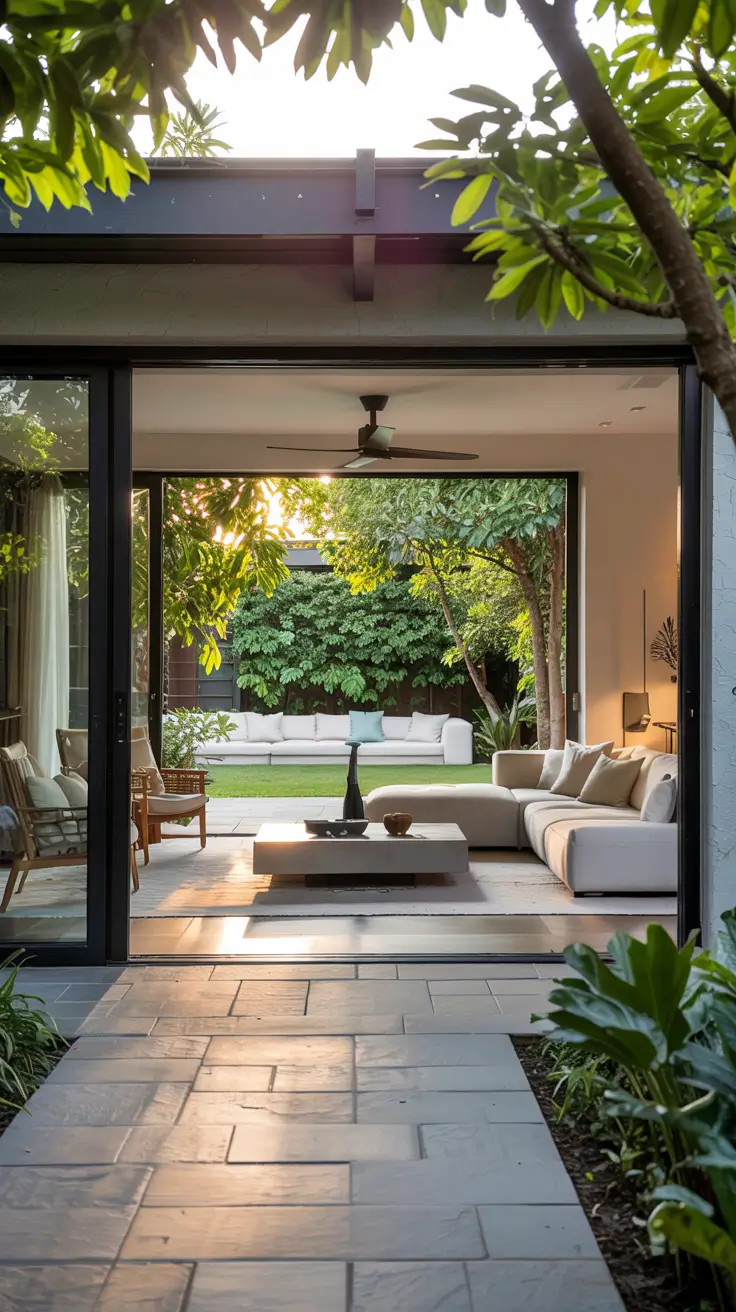
In my opinion, the most overlooked detail is door hardware quality. Architectural Digest often stresses investing in mechanisms that glide effortlessly, and I couldn’t agree more. What’s often missing is proper screening — integrated insect screens ensure usability without compromising the view.
Glass Wall Living Rooms That Open To Nature
A Glass wall transforms the living room into a viewing platform for the outdoors. I design these walls to frame gardens, patios, or landscapes like artwork. Unlike traditional windows, glass walls emphasize openness while maintaining climate control.
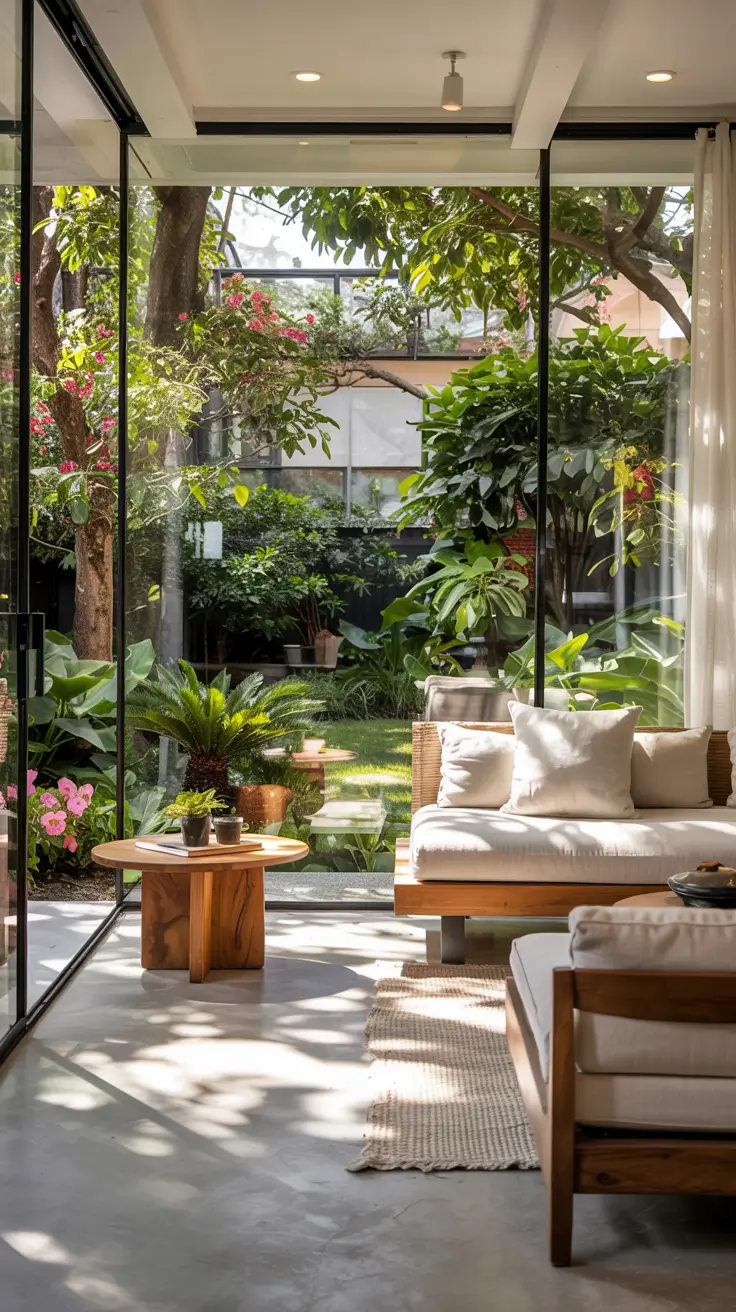
Furniture placement becomes more intentional here. I avoid blocking views, opting for low seating and open shelving. Indoor/outdoor balance is achieved when the exterior becomes part of the interior experience.
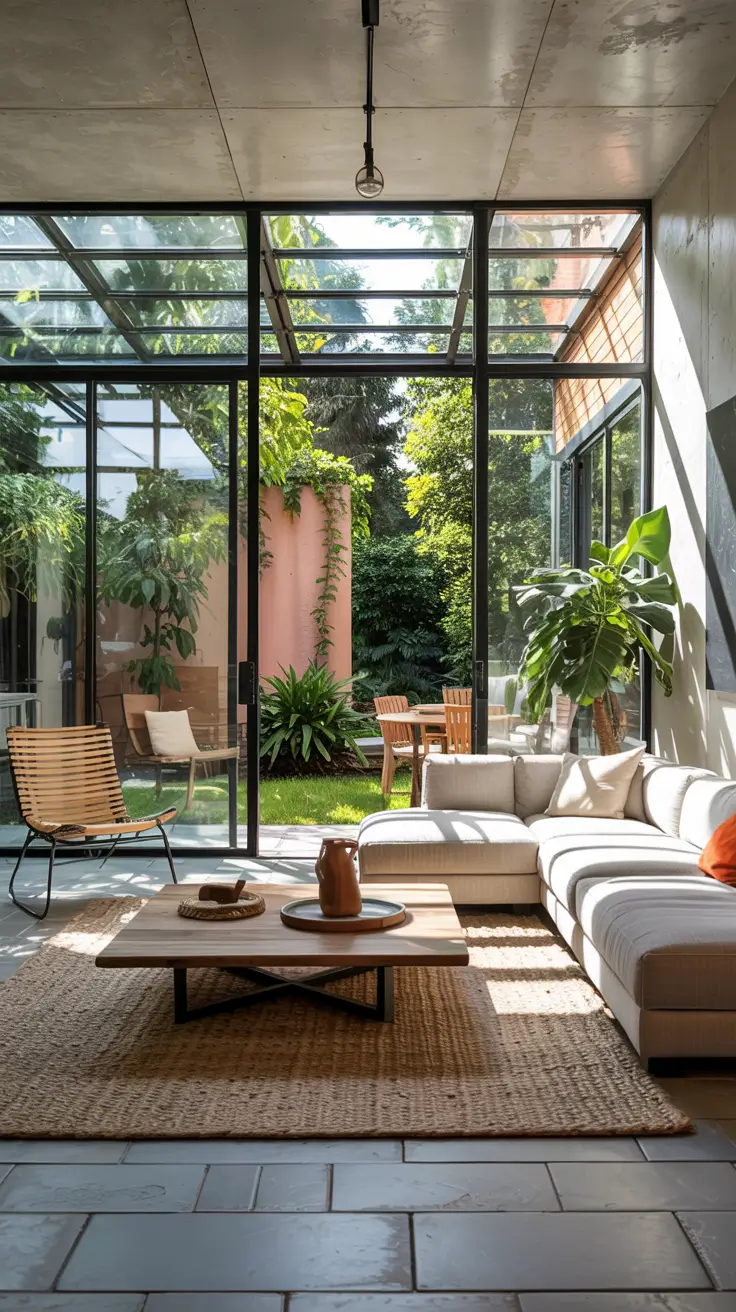
Personally, I’ve found that glass walls change how people interact with their homes — natural light improves mood and reduces the need for artificial lighting. Designers from Dwell often recommend pairing glass walls with deep overhangs, something I always include to manage glare and heat.
Indoor–Outdoor Living Room Layouts That Actually Work
A successful indoor outdoor living room layout prioritizes usability over trends. I start by defining zones: lounging, circulation, and connection points to the outside. Each zone must feel purposeful while remaining visually connected.
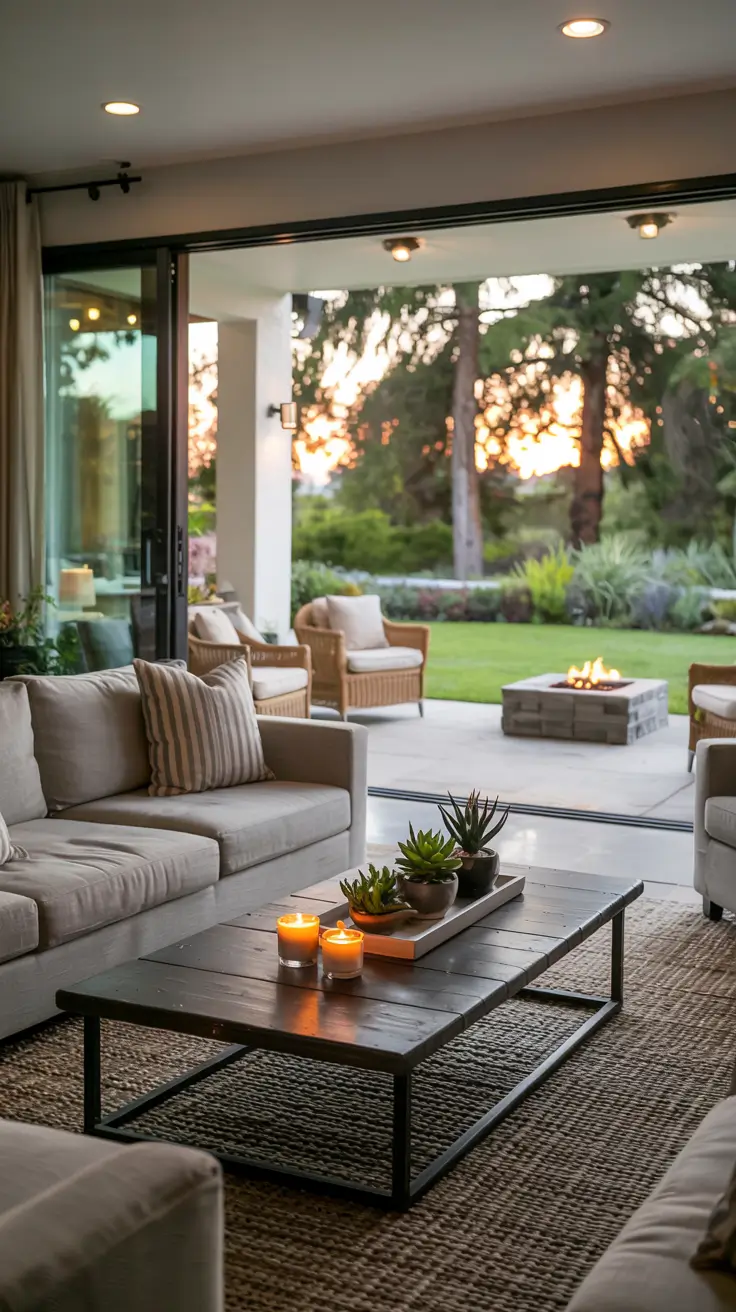
I rely on modular Furniture, layered lighting, and subtle level changes to guide movement without walls. This approach works especially well in homes that are Open to patio or deck areas.
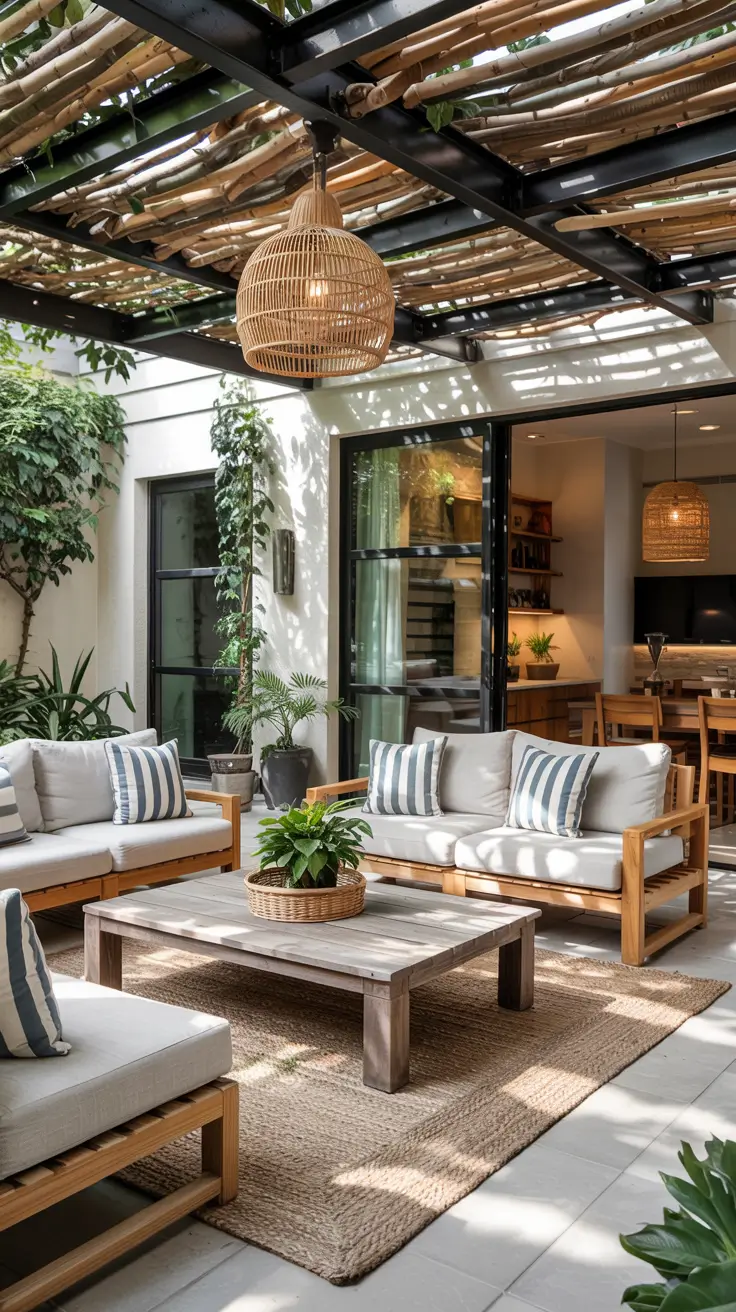
From experience, the missing element is often flexibility. As House Beautiful suggests, layouts should evolve with seasons. I always recommend movable furniture and adaptable shading systems to keep the space functional year-round.
Furniture Choices For An Indoor–Outdoor Living Room
When I design an indoor outdoor living room, furniture becomes the bridge between comfort and durability. In 2026, the focus is on pieces that visually belong indoors but are resilient enough for changing temperatures and open-air exposure. I always aim for a cohesive look where seating, tables, and accents feel intentional rather than adapted as an afterthought.
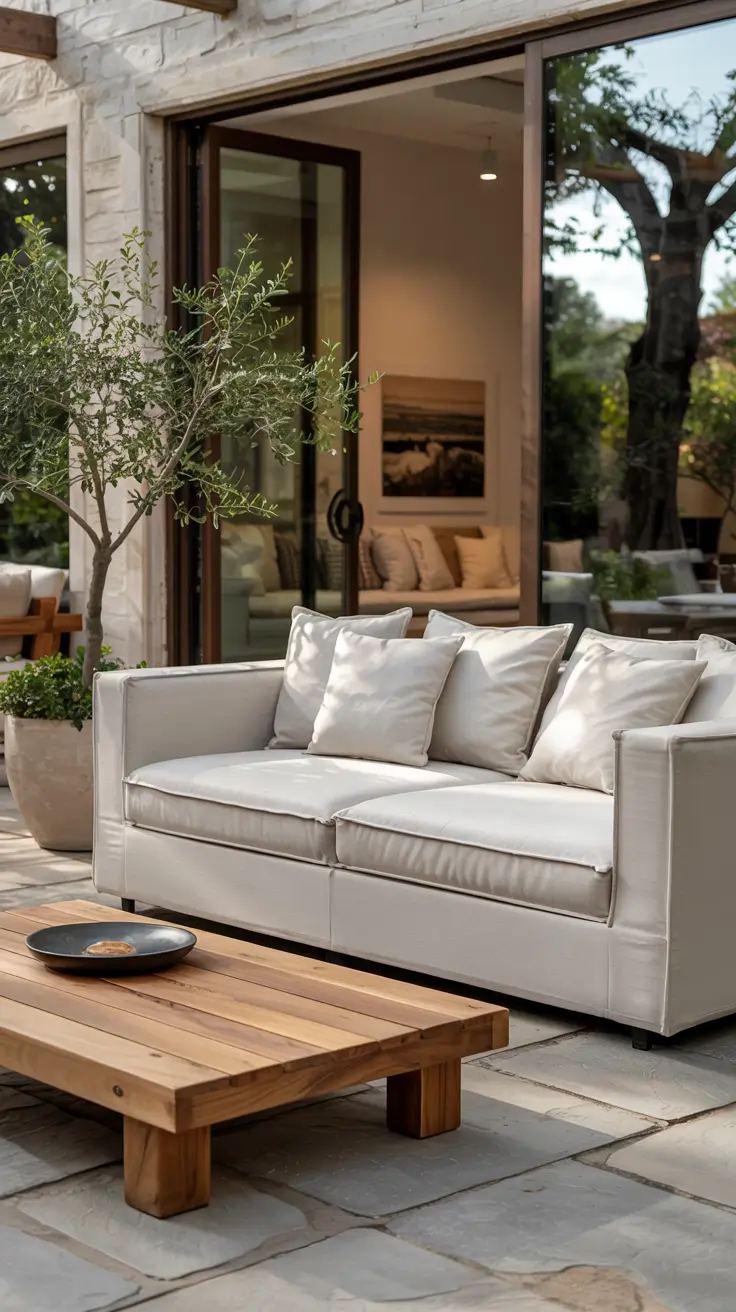
I prefer indoor outdoor living room furniture made from treated wood, powder-coated metal, performance fabrics, and stone surfaces. Modular sofas, low lounge chairs, and lightweight coffee tables allow the space to shift easily between daily living and entertaining. Rugs, cushions, and side tables help soften the environment and make it feel livable, not staged.
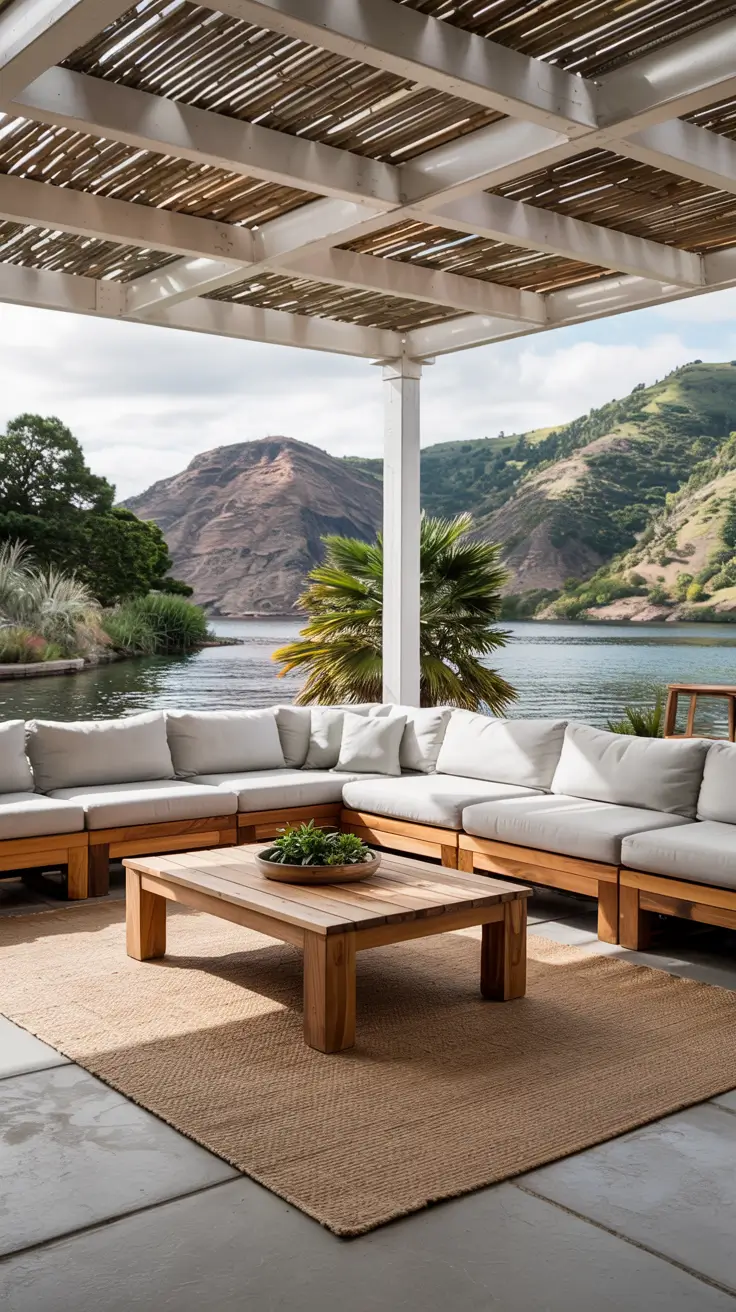
From my experience, designers at West Elm and CB2 often emphasize longevity over trends, and that advice holds true here. What’s often missing is proper storage — I always recommend built-in benches or concealed cabinets to protect accessories when weather changes.
Rugs That Anchor Indoor–Outdoor Living Spaces
Rugs play a surprisingly important role in defining zones within an indoor/outdoor living room. I use them to visually anchor seating areas and to signal where the interior ends and the outdoor lounge begins, without disrupting the overall Flow of the space.
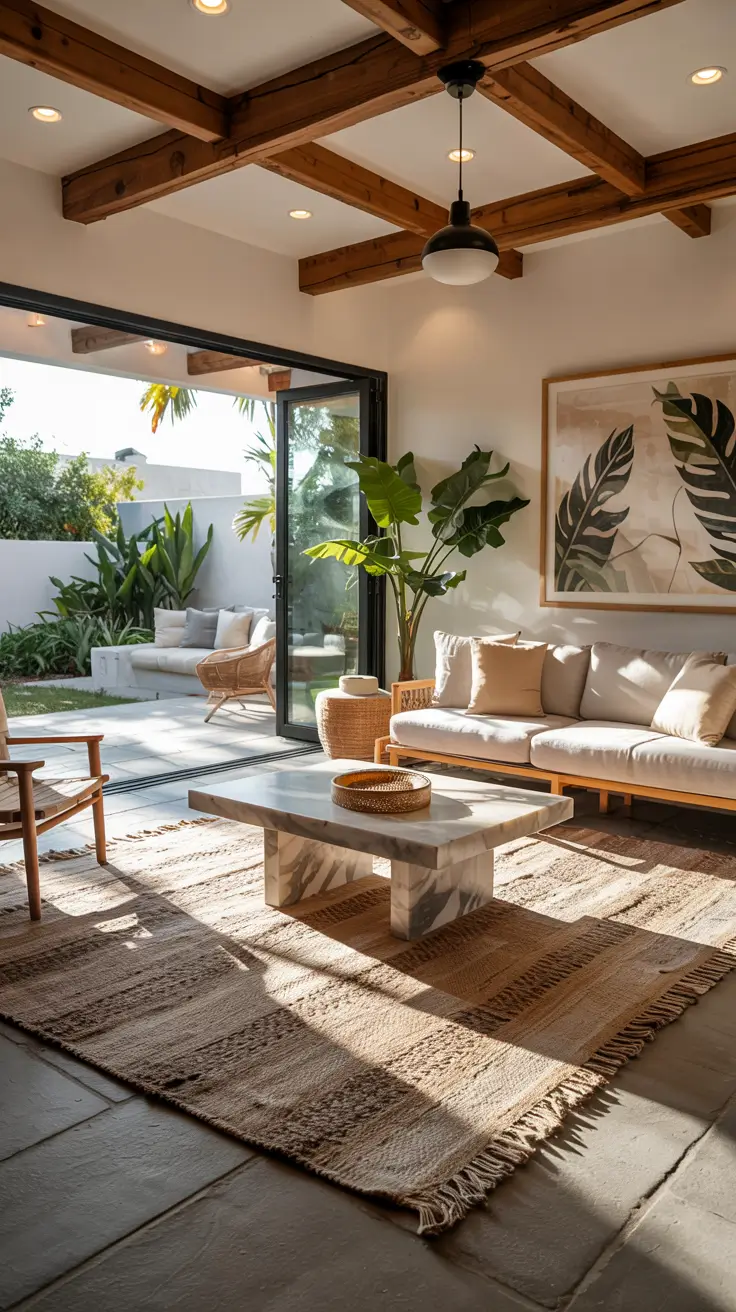
I choose flatweave or performance rugs that can handle moisture and sun exposure while still feeling soft underfoot. Neutral tones with subtle texture work best, especially when paired with natural flooring like stone or concrete. Rugs also help reduce echo, making open layouts feel warmer and more intimate.
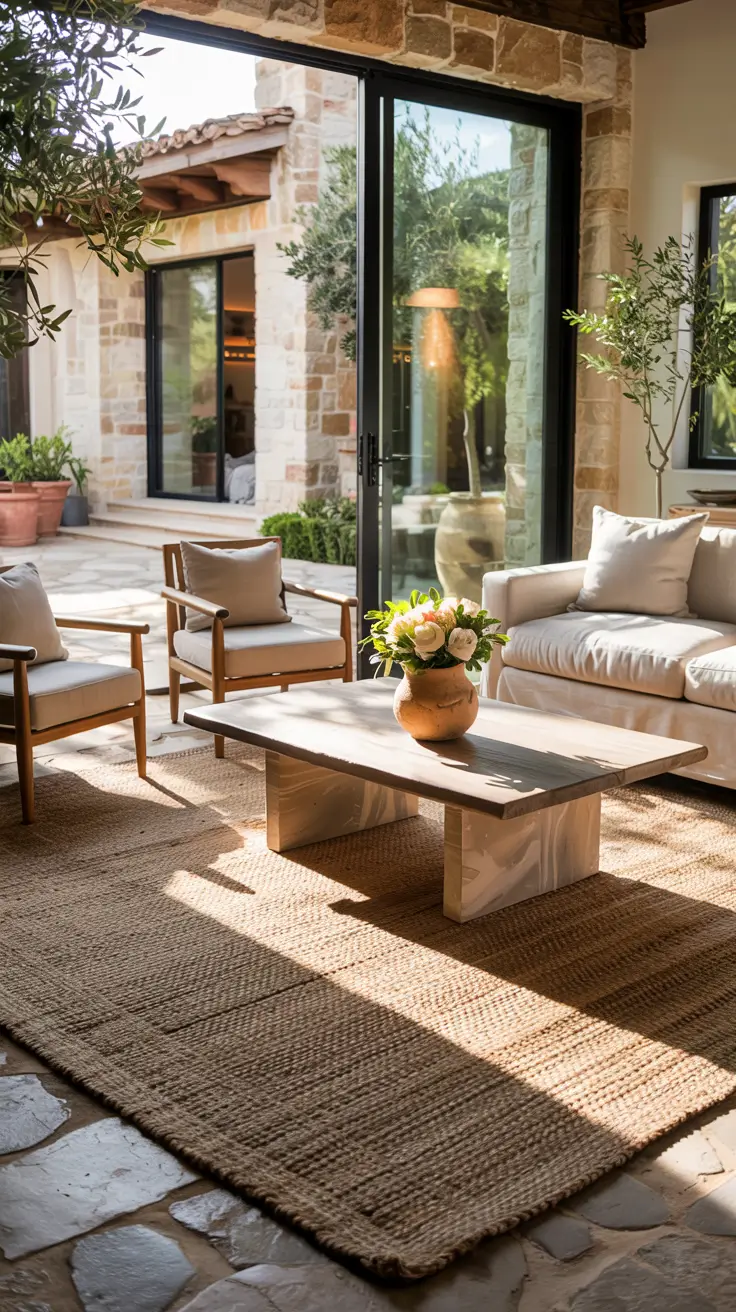
Personally, I’ve seen how a well-placed rug can completely change how a space is used. According to House Beautiful, layering outdoor rugs is becoming a major trend, and I agree — what’s often missing is scale. Rugs should be large enough to sit under all key furniture pieces, not float awkwardly in the center.
Indoor–Outdoor Living Room Fireplace As A Visual Centerpiece
An indoor outdoor living room fireplace instantly grounds the space and creates a natural focal point. I design fireplaces not just as heat sources but as architectural anchors that visually connect indoor and outdoor zones.
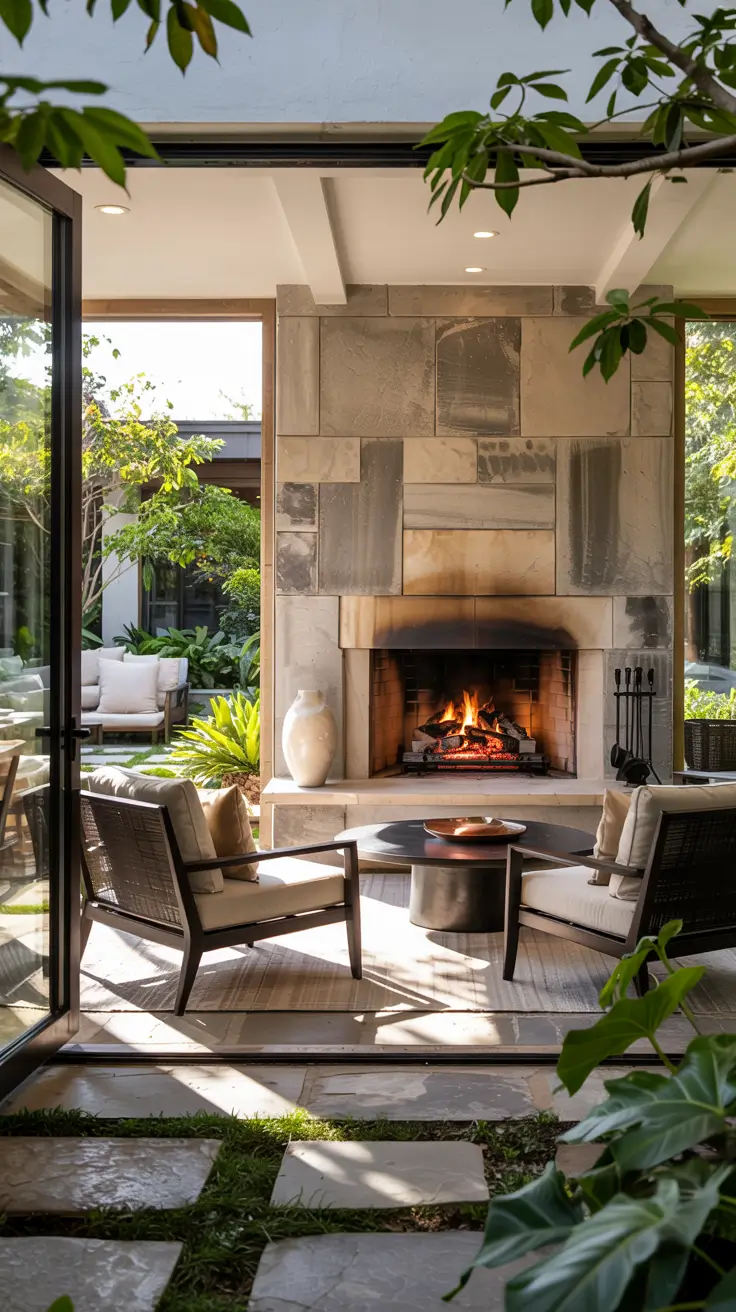
I gravitate toward linear gas fireplaces or sculptural stone surrounds that feel equally appropriate inside and outside. Placed strategically, a Fireplace draws people together and encourages year-round use, even in cooler climates. Materials like concrete, travertine, or textured plaster keep the look modern and timeless.
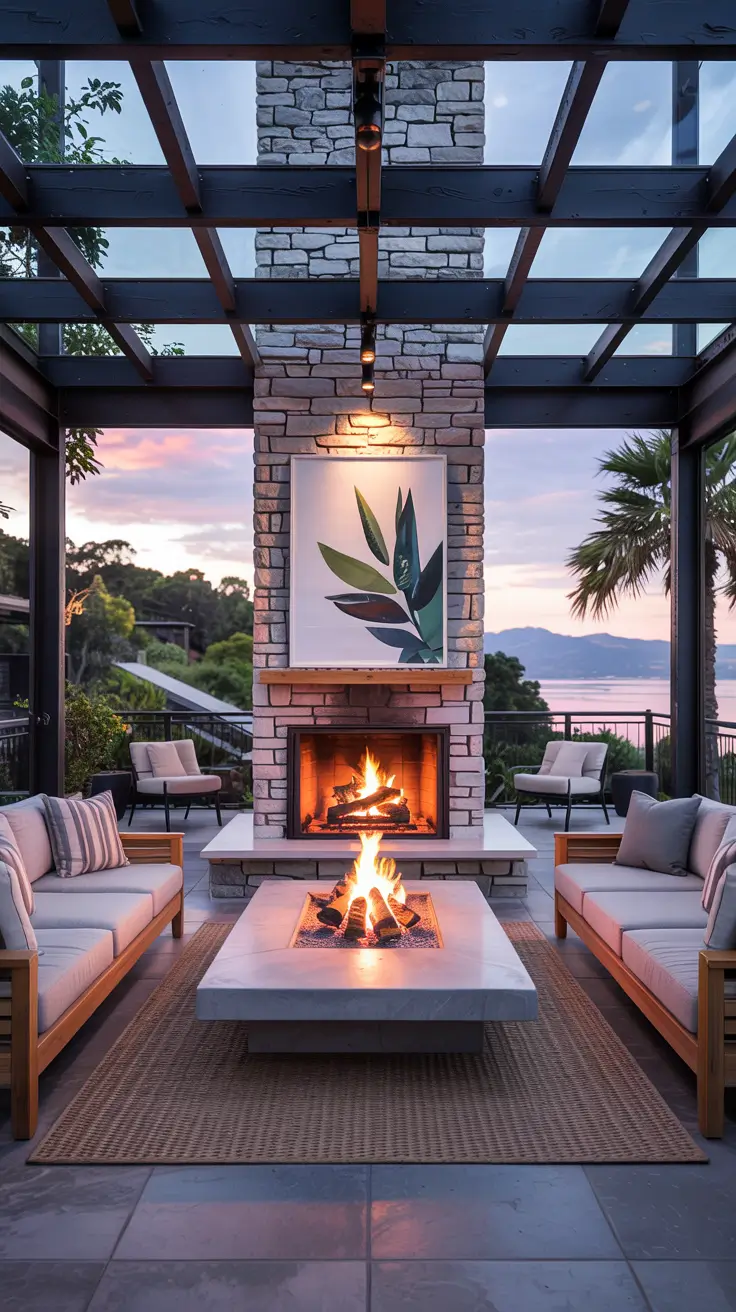
From my perspective, designers featured in Architectural Digest often highlight fireplaces as emotional centers of a home, and I’ve seen that firsthand. What’s sometimes missing is seating orientation — I always plan furniture to face the fireplace from both sides for balance and comfort.
Double Sided Fireplace Ideas For Indoor–Outdoor Living
A Double sided fireplace is one of my favorite features for blurring boundaries between spaces. It allows a single design element to serve both the interior living room and the exterior patio or terrace.
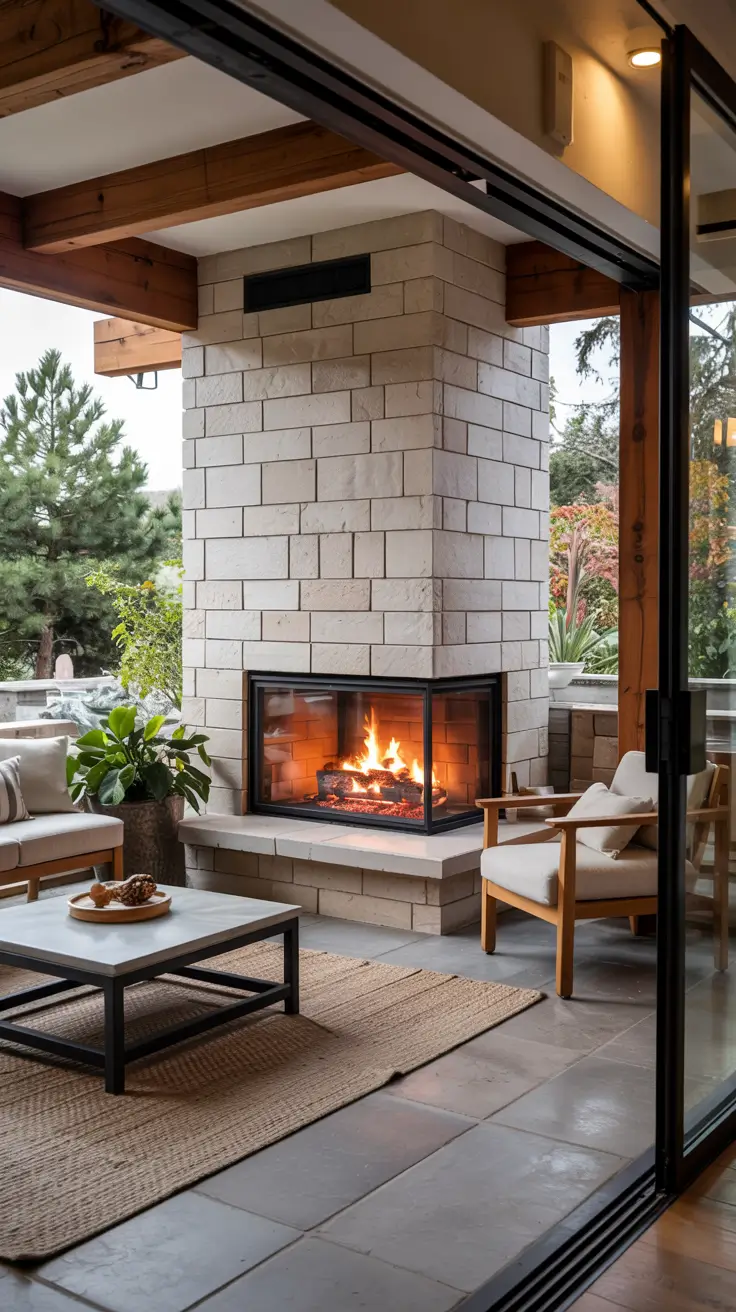
I usually integrate these fireplaces into partial walls or structural dividers, ensuring sightlines remain open. Clean-lined frames and neutral finishes keep the design cohesive, while glass enclosures maintain safety without visual interruption.
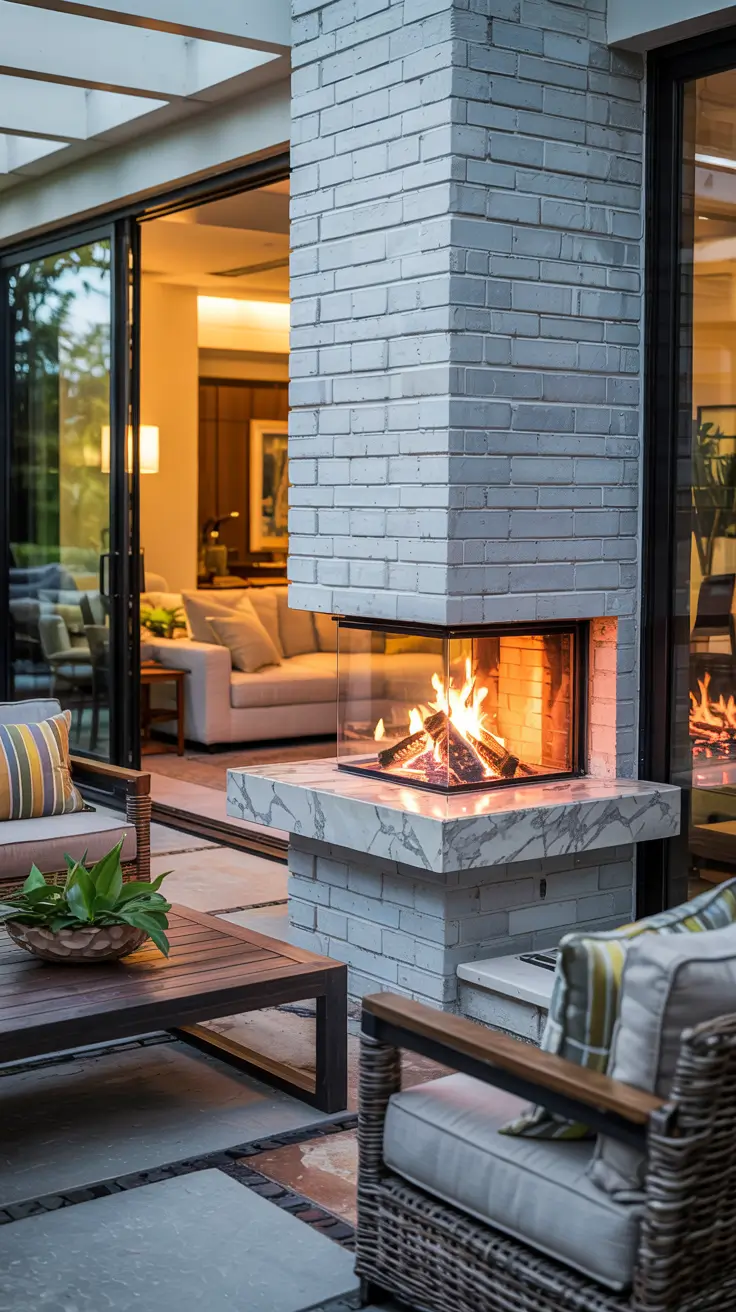
In my experience, this feature elevates even modest homes. Designers at Dwell often recommend double-sided fireplaces for maximizing square footage impact, and I agree. What’s often overlooked is ventilation planning — proper airflow ensures comfort on both sides without compromising performance.
Indoor–Outdoor Living Room Open To Patio Spaces
Designing an indoor-outdoor living room open to patio areas is all about alignment. I focus on matching floor levels, consistent materials, and wide openings that allow the patio to feel like a natural extension of the living space.
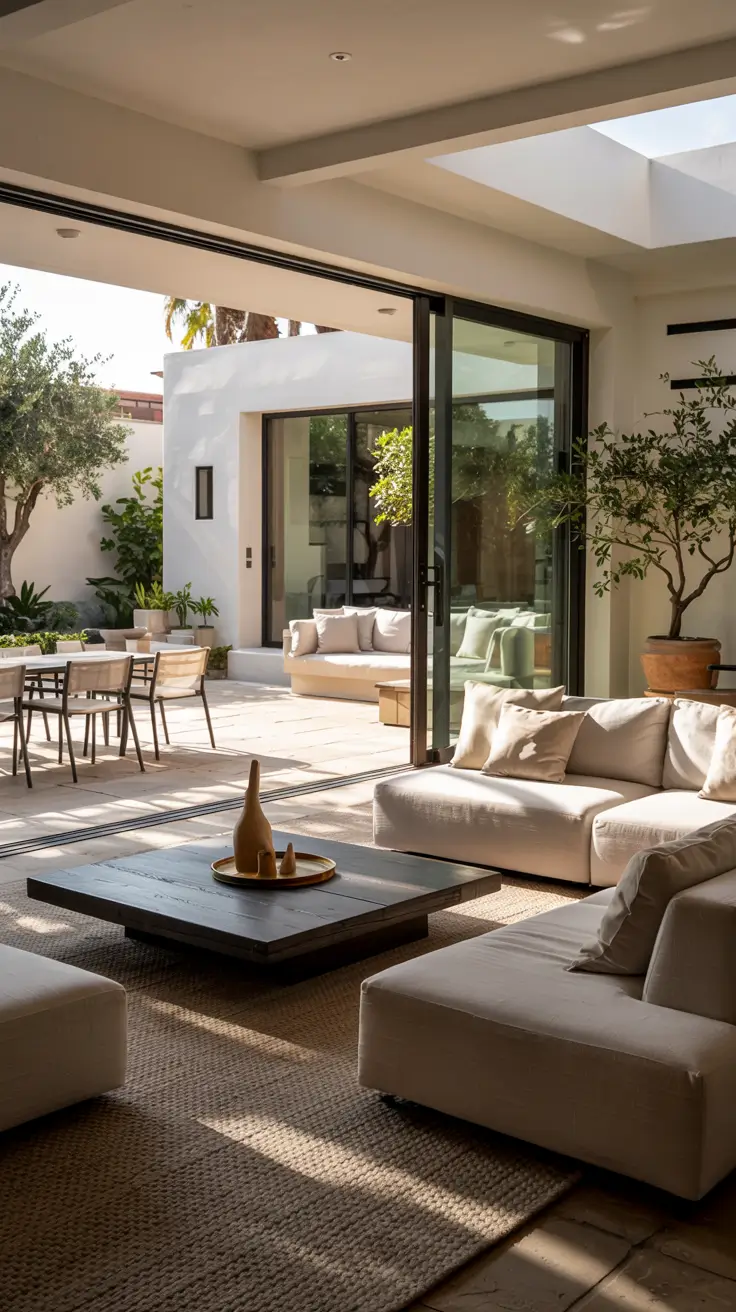
Furniture selection matters here — I often mirror seating arrangements indoors and outdoors to create visual rhythm. This approach encourages people to move freely between zones, making the patio feel like part of everyday life rather than a special-occasion area.
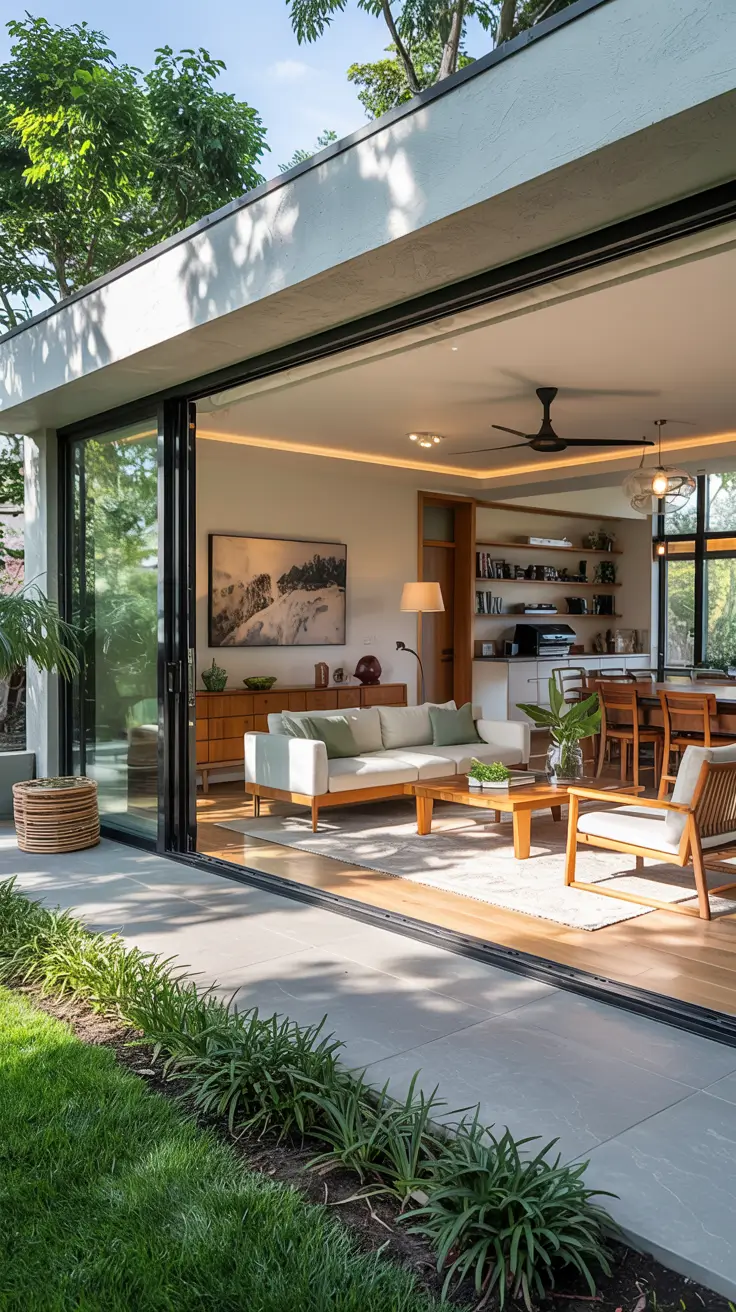
Personally, I’ve found that patios work best when they’re shaded and layered. As Better Homes & Gardens often notes, outdoor comfort depends on protection from sun and wind — what’s sometimes missing is overhead coverage, which I always prioritize in planning.
Living Rooms Open To The Garden In 2026 Homes
A living room open to garden spaces brings a sense of calm that’s hard to replicate. I design these rooms to frame greenery as a living backdrop, using large openings and minimal visual barriers.
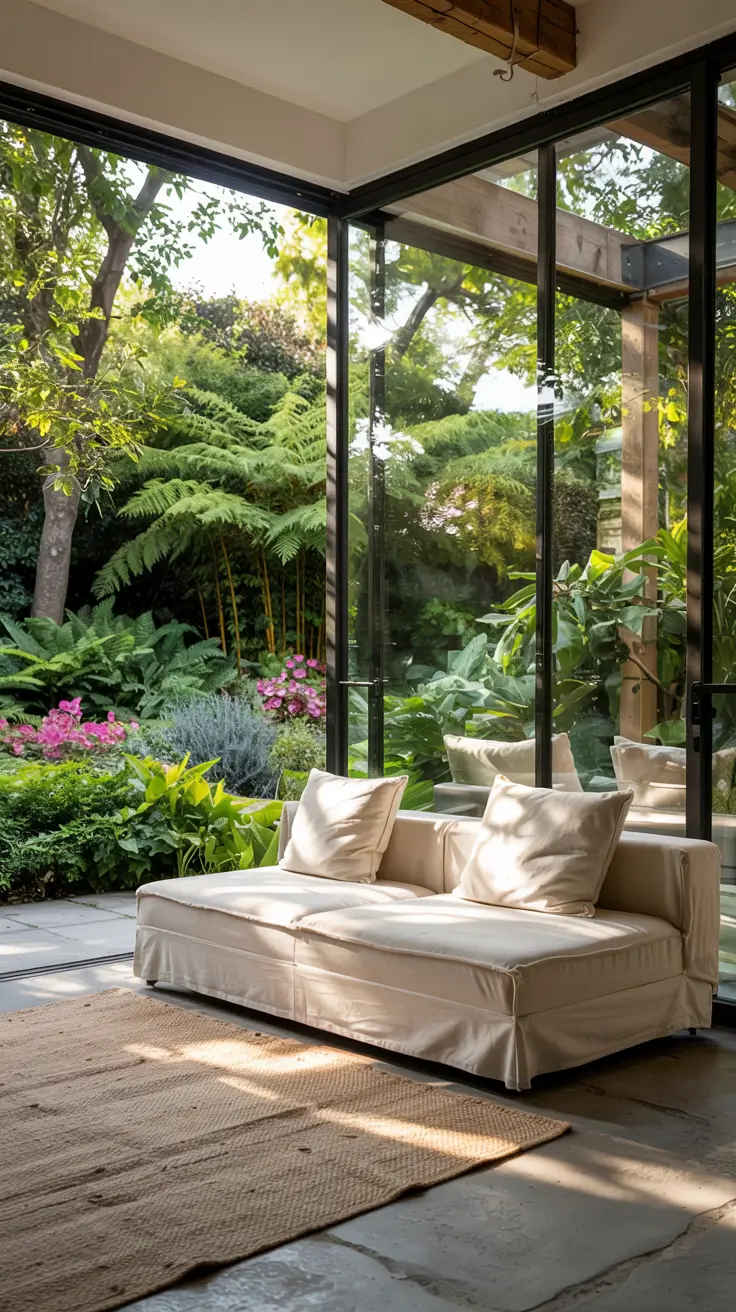
I keep furniture low and unobtrusive, allowing the garden to remain the star. Natural finishes, soft textiles, and neutral tones help the interior blend seamlessly with the outdoor environment. This approach reinforces the Indoor/outdoor connection without feeling forced.
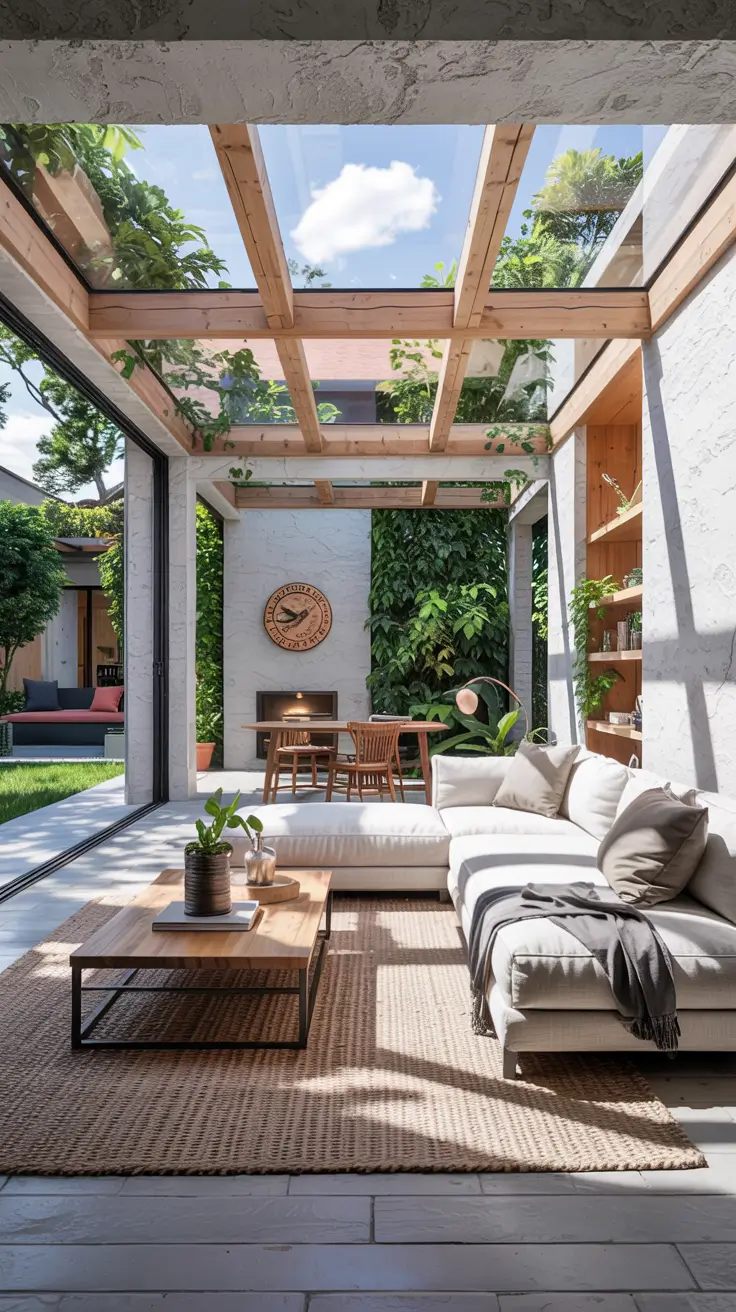
From my experience, designers like Kelly Wearstler often emphasize the psychological benefits of nature in design. What’s often missing is nighttime integration — thoughtful garden lighting ensures the view remains just as compelling after dark.
Indoor–Outdoor Living Room Deck Designs For Everyday Use
An indoor outdoor living room deck should feel like a functional living area, not just a transitional surface. I design decks with durability and comfort in mind, ensuring they can handle daily use without constant maintenance.
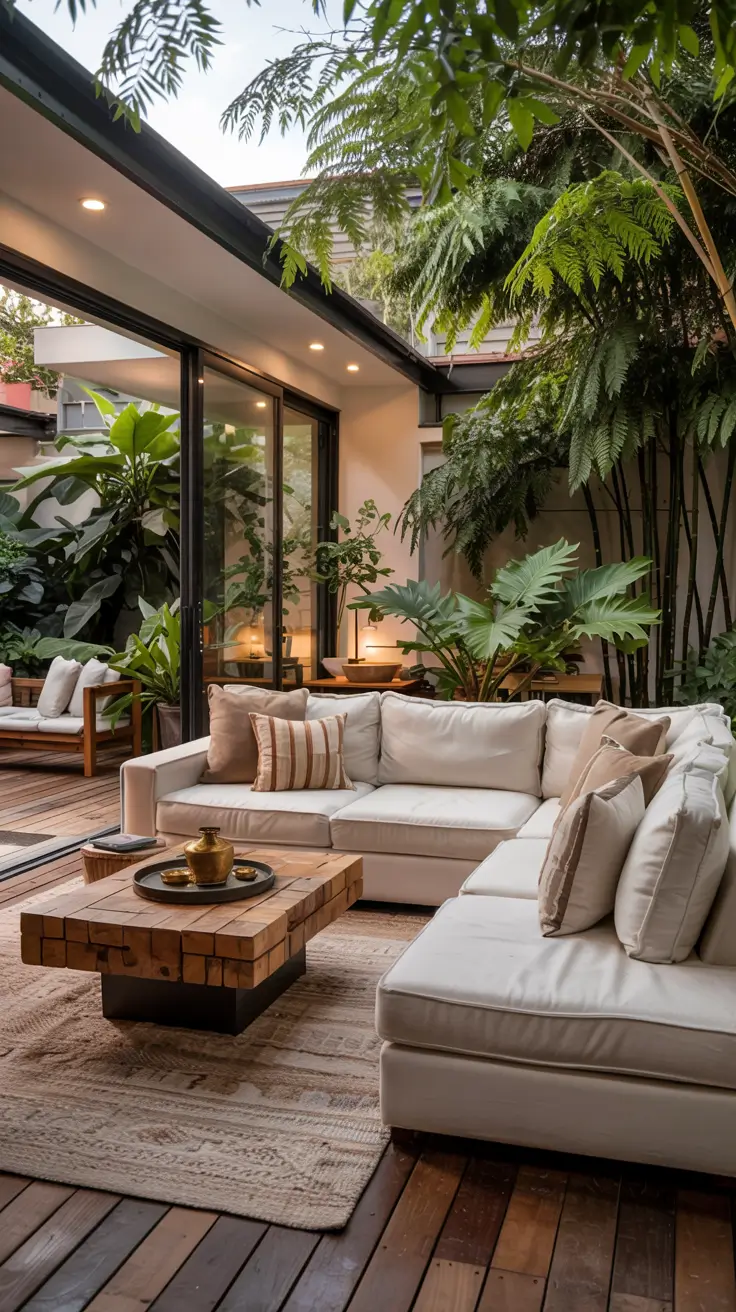
I favor composite decking or sealed hardwoods paired with comfortable seating, side tables, and integrated lighting. When the deck is treated as a true extension of the living room, it naturally becomes part of the home’s rhythm.
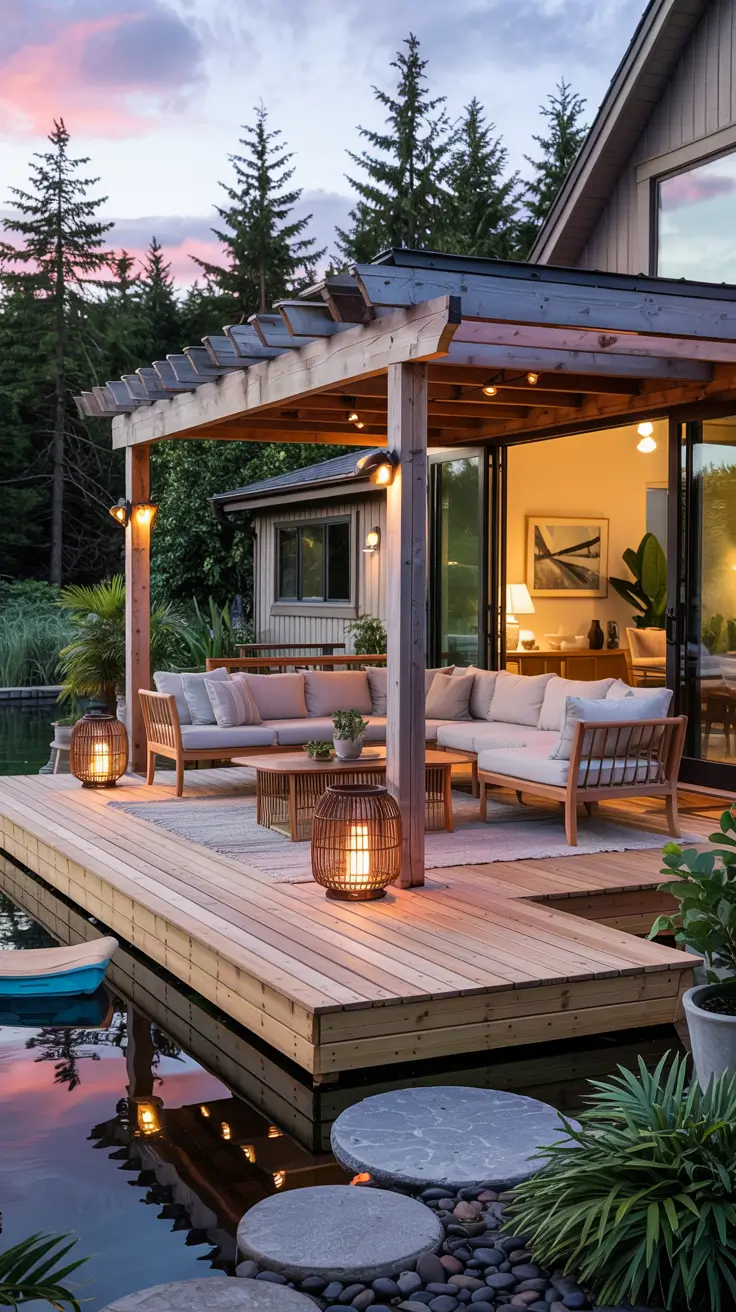
In my own projects, I’ve noticed that decks succeed when they’re clearly furnished and defined. According to Sunset Magazine, outdoor rooms should mirror indoor comfort, and I agree — what’s often missing is power access for lighting or heating, which I always plan early.
Balcony-Based Indoor–Outdoor Living Room Ideas
An indoor outdoor living room balcony changes how small and mid-sized homes function. I design these spaces to feel intentional rather than improvised, treating the balcony as a true extension of the living room instead of an afterthought. In 2026, balconies are no longer decorative — they’re livable.
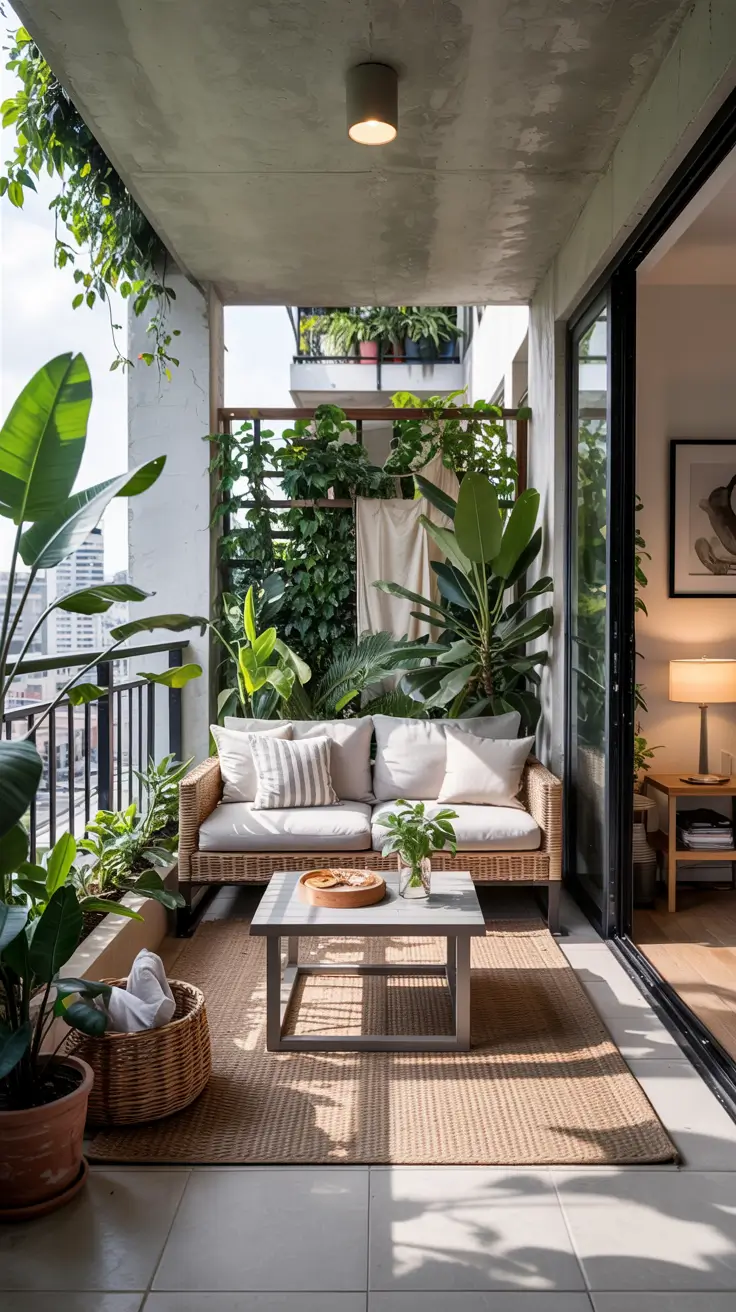
I focus on compact yet comfortable furniture, slim-profile lounge chairs, built-in benches, and foldable tables. Weather-resistant textiles and layered lighting help the balcony feel warm and usable from morning to evening. Visual continuity between the interior and Balcony flooring strengthens the connection.
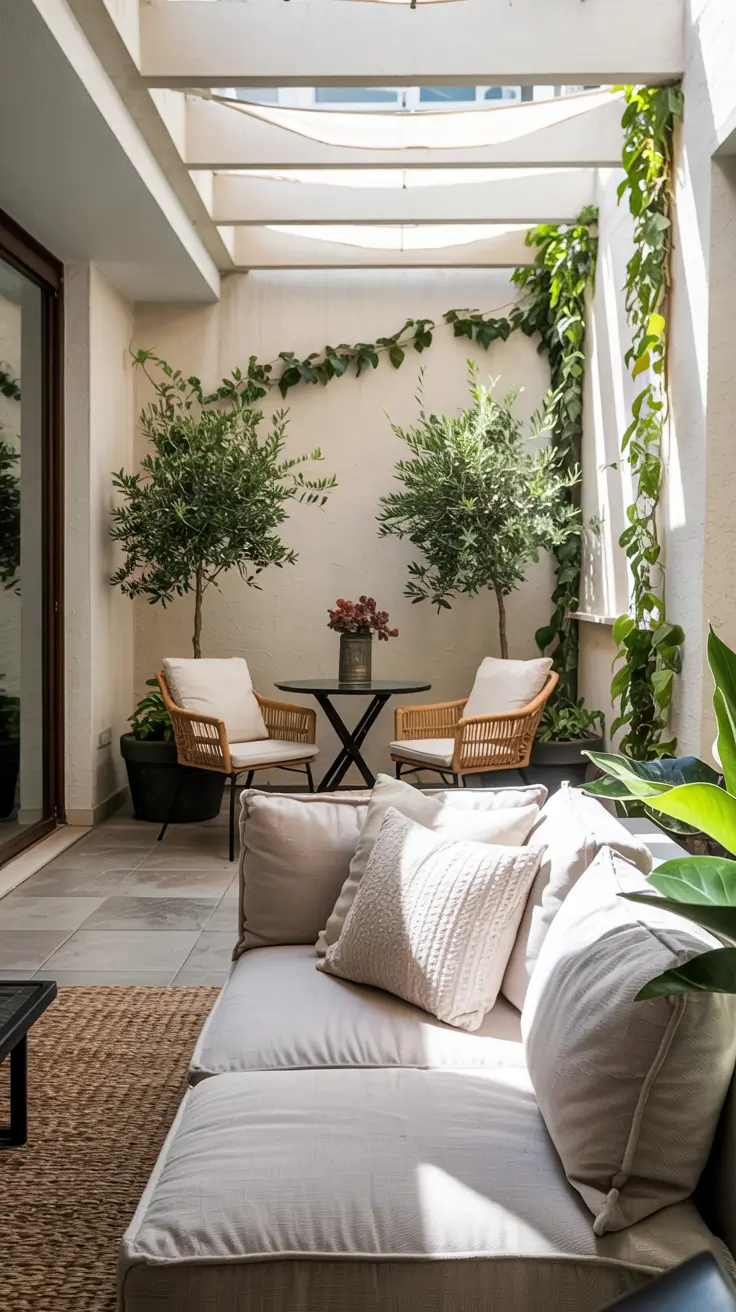
From my experience, designers featured in Dezeen often highlight vertical greenery for balcony spaces, and I agree. What’s often missing is privacy — adding slatted screens or planters improves comfort without closing the space off.
Indoor–Outdoor Living Room Balcony Layouts For Small Spaces
Designing balcony layouts for limited square footage requires precision. I treat every inch as functional, ensuring that circulation, seating, and visual openness coexist. A well-planned indoor outdoor living room layout can make even the smallest balcony feel generous.
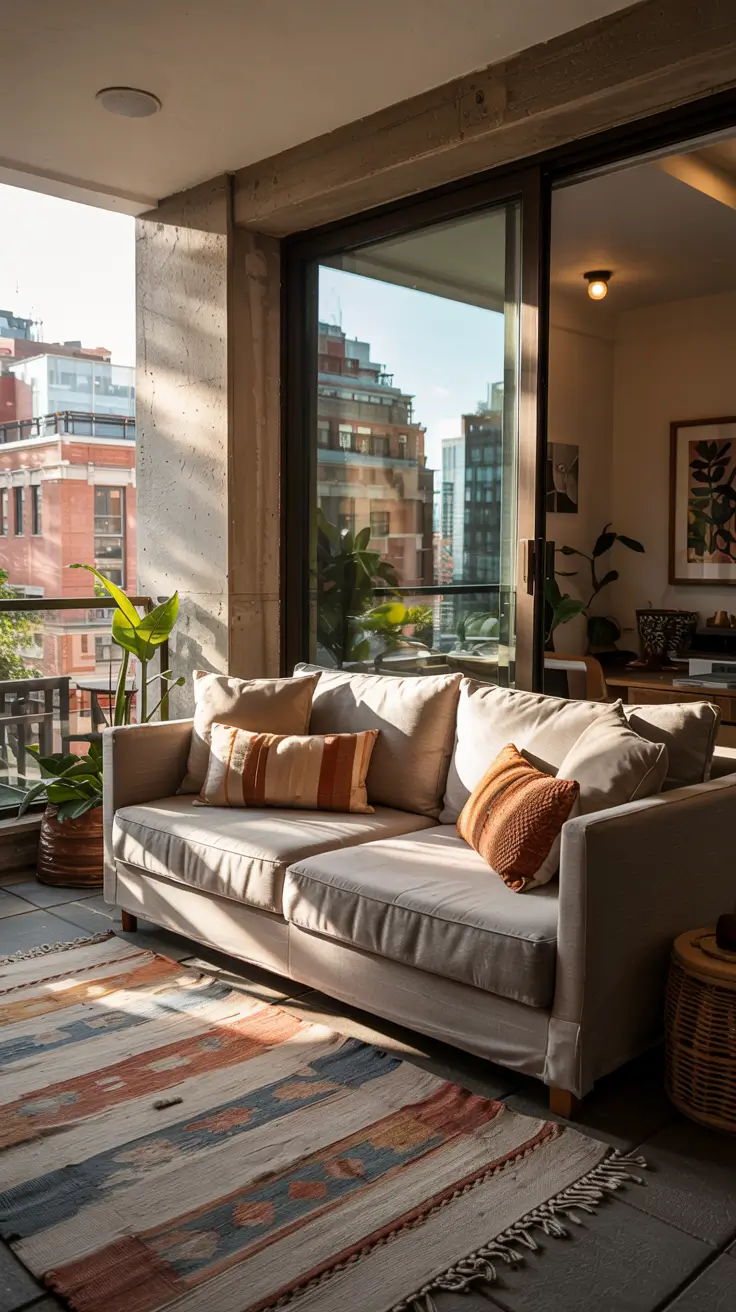
I use modular seating, wall-mounted elements, and lightweight furniture that can be easily rearranged. Rugs and lighting help define zones, while mirrors or glass railings visually expand the space.
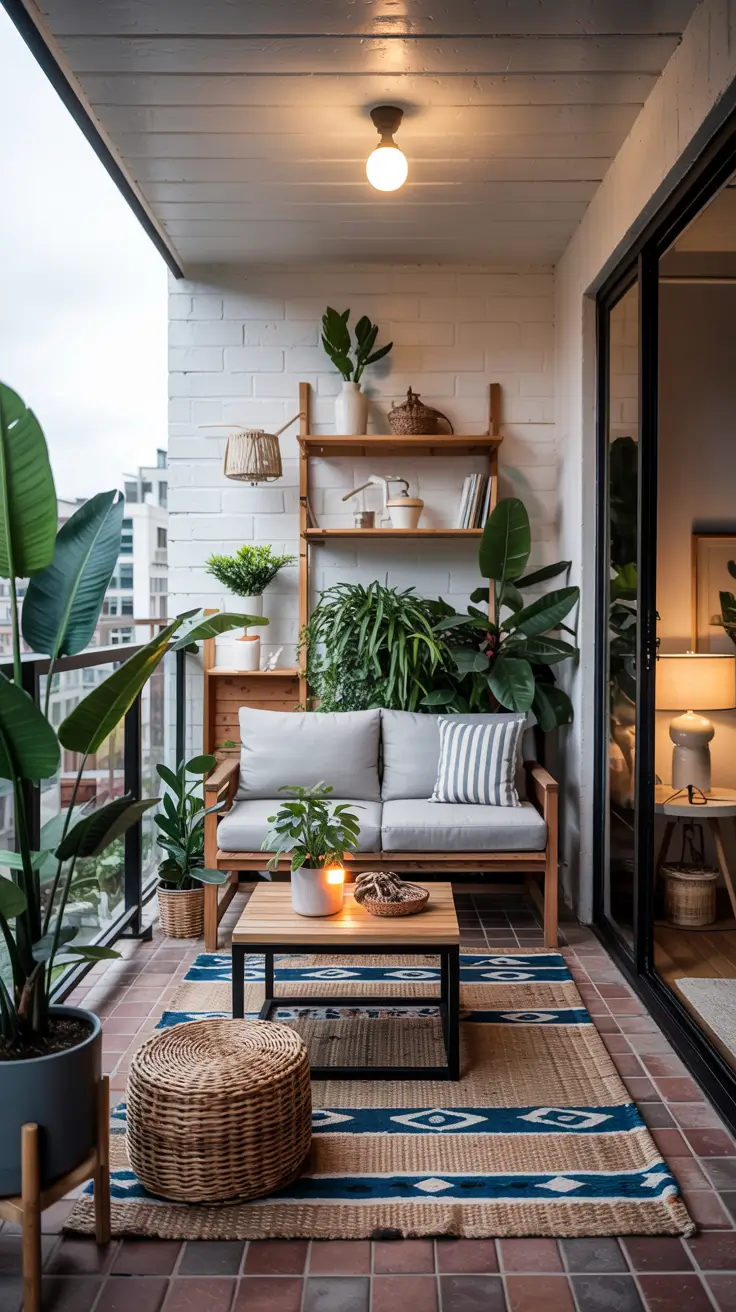
Personally, I’ve found that the biggest challenge is clutter. Better Homes & Gardens often recommend editing accessories in small spaces, and I agree — what’s often missing is concealed storage, which I always prioritize in balcony designs.
Indoor–Outdoor Living Room Apartment Solutions That Feel Expansive
An indoor outdoor living room apartment setup demands smart design decisions. I focus on maximizing openness without compromising privacy or comfort. Large openings, consistent materials, and clear sightlines help apartments feel larger and brighter.
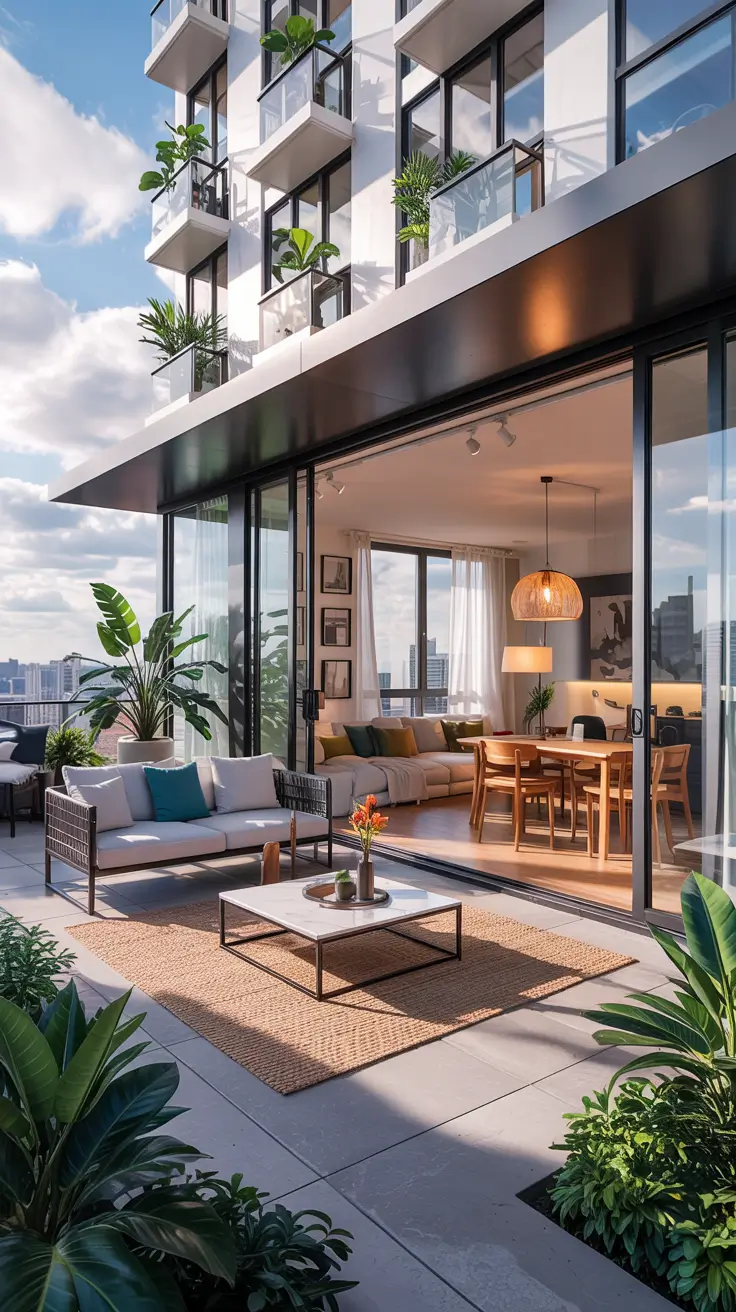
Furniture must serve multiple purposes — seating that doubles as storage, nesting tables, and adaptable layouts. I also rely heavily on Glass wall concepts where possible to maintain visual continuity.
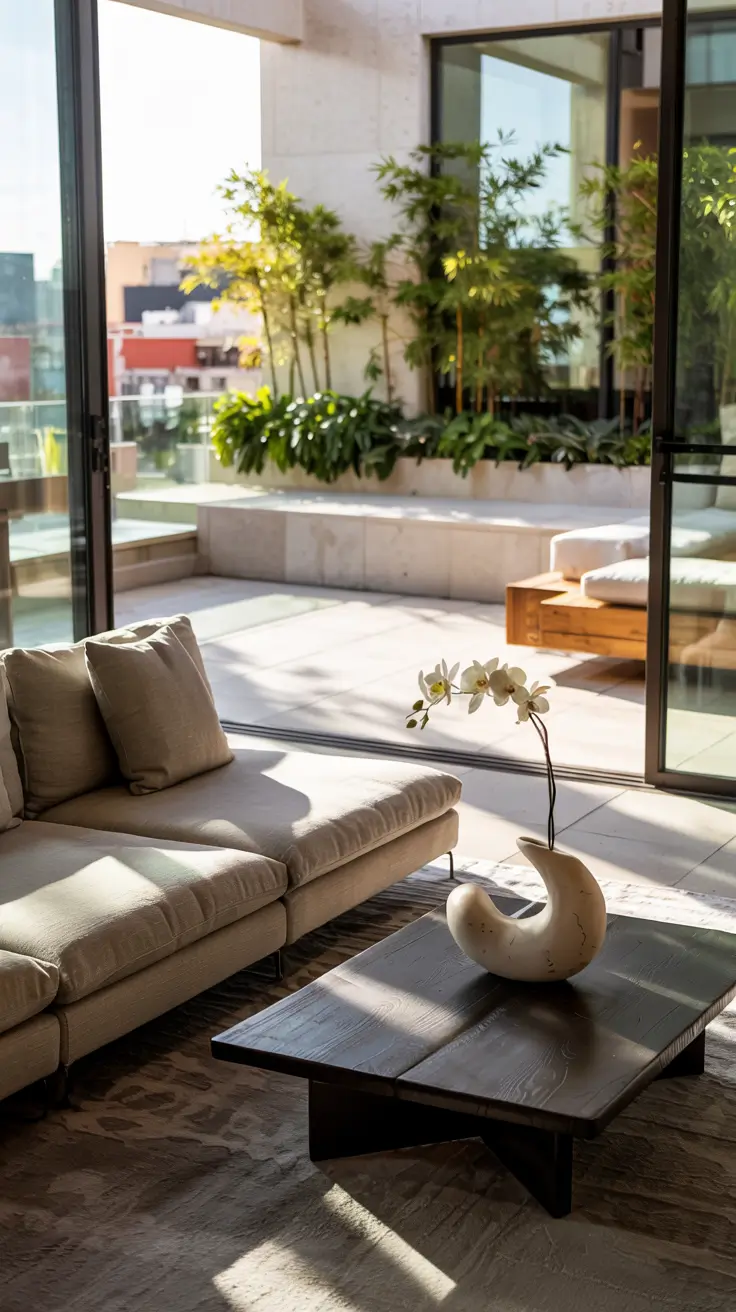
From my perspective, Apartment Therapy often emphasizes light as the most valuable asset in apartment design. What’s sometimes missing is sound control — I always recommend soft finishes and textiles to balance acoustics in open layouts.
Design Tricks For Indoor–Outdoor Living In Apartments
When working with apartments, I rely on subtle Design strategies rather than structural changes. Sliding partitions, consistent flooring, and coordinated color palettes create the illusion of openness and connection.
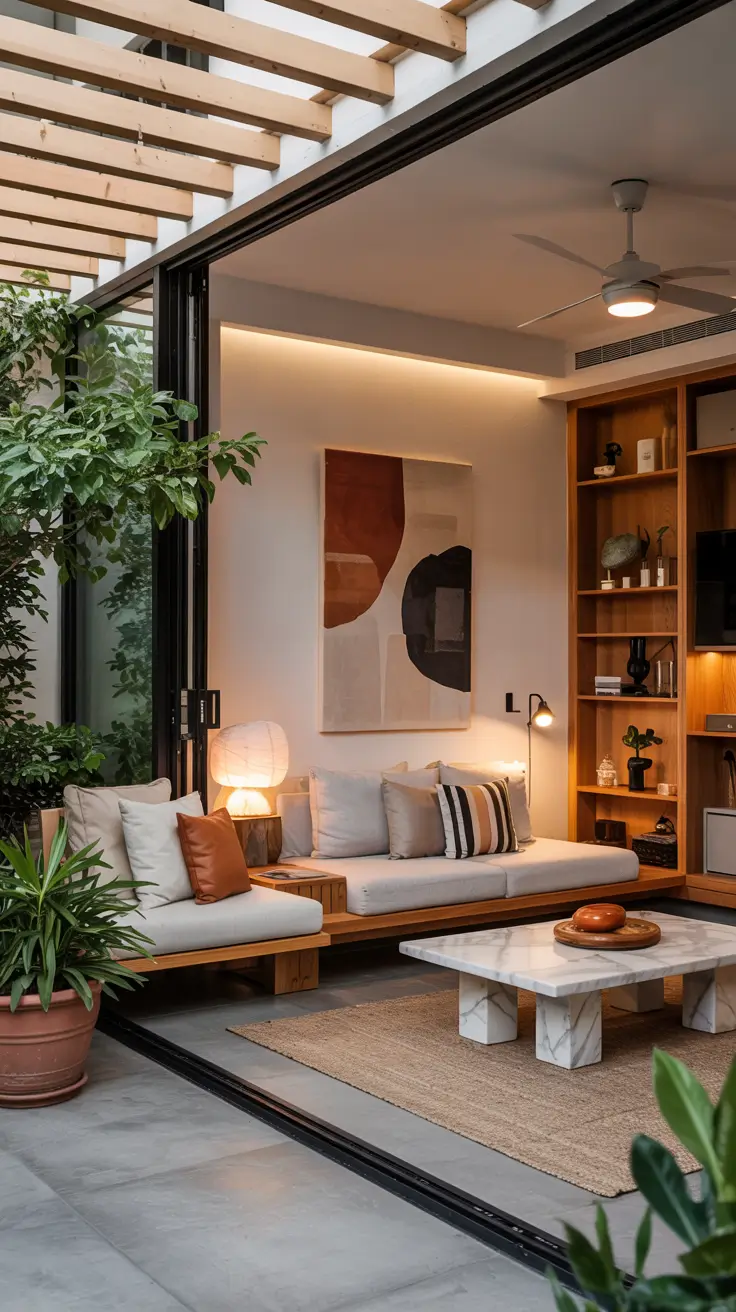
I integrate Sliding doors or retractable panels whenever possible, even internally, to enhance flexibility. Furniture with clean lines and minimal visual weight helps maintain flow.
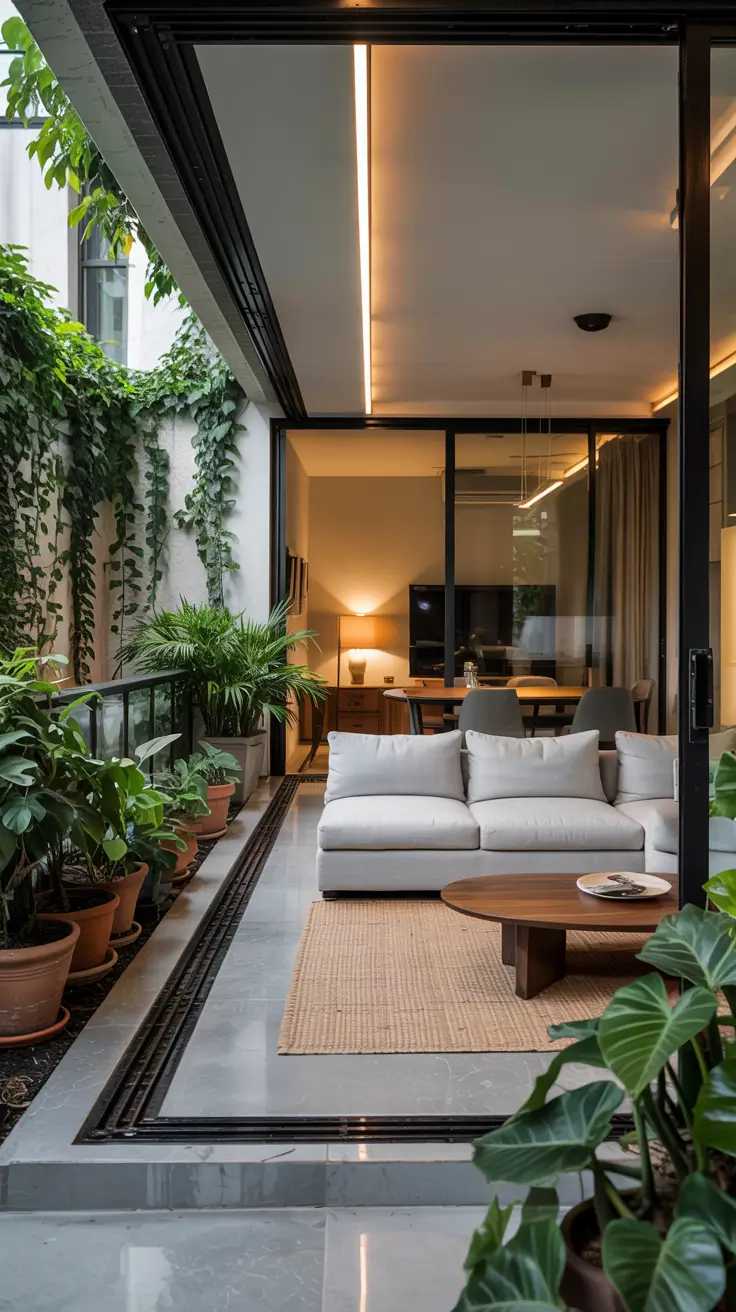
In my experience, interior designers like Bobby Berk often stress adaptability in small homes. What’s often missing is lighting versatility — layered lighting allows the space to shift from functional to atmospheric with ease.
Modern Indoor–Outdoor Living Room Style For 2026
A Modern indoor-outdoor living room in 2026 is defined by restraint and intention. I focus on clean lines, natural materials, and a muted color palette that allows light and architecture to lead.
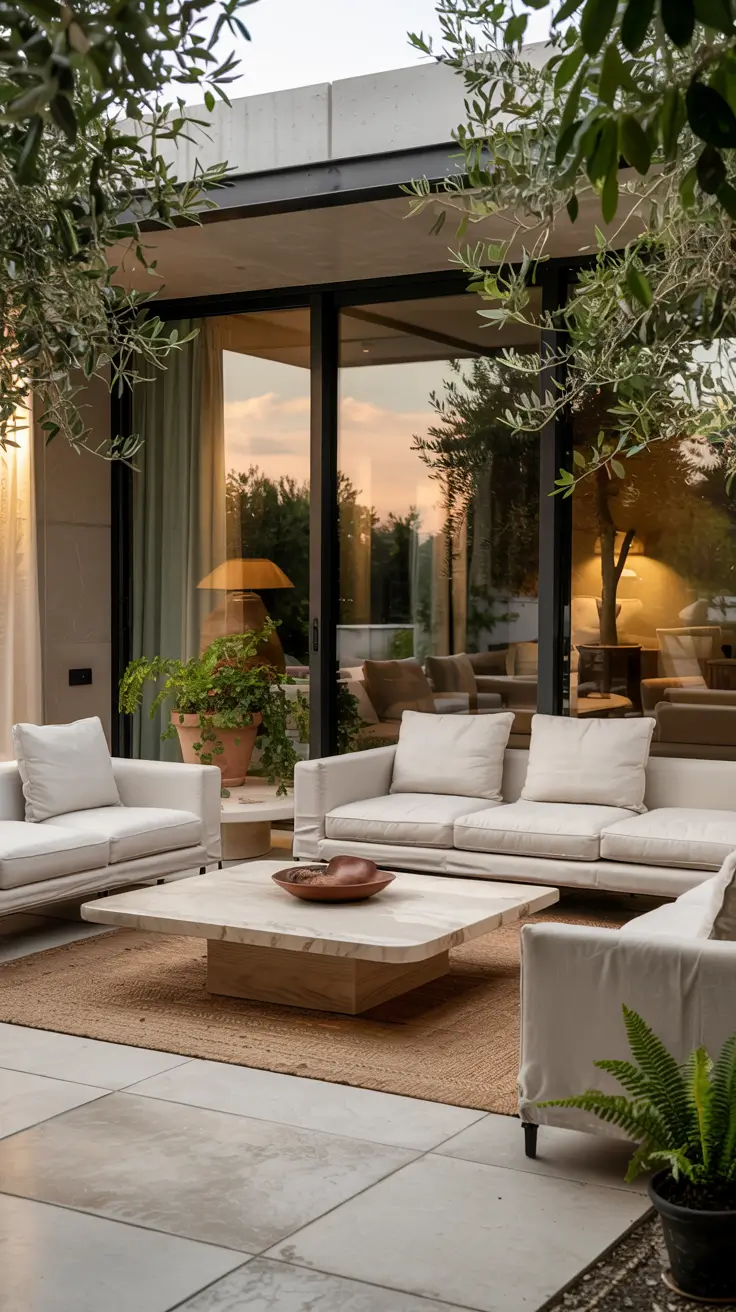
Furniture is low-profile, often modular, with an emphasis on comfort without excess. Stone, wood, and metal finishes repeat across zones, reinforcing continuity.
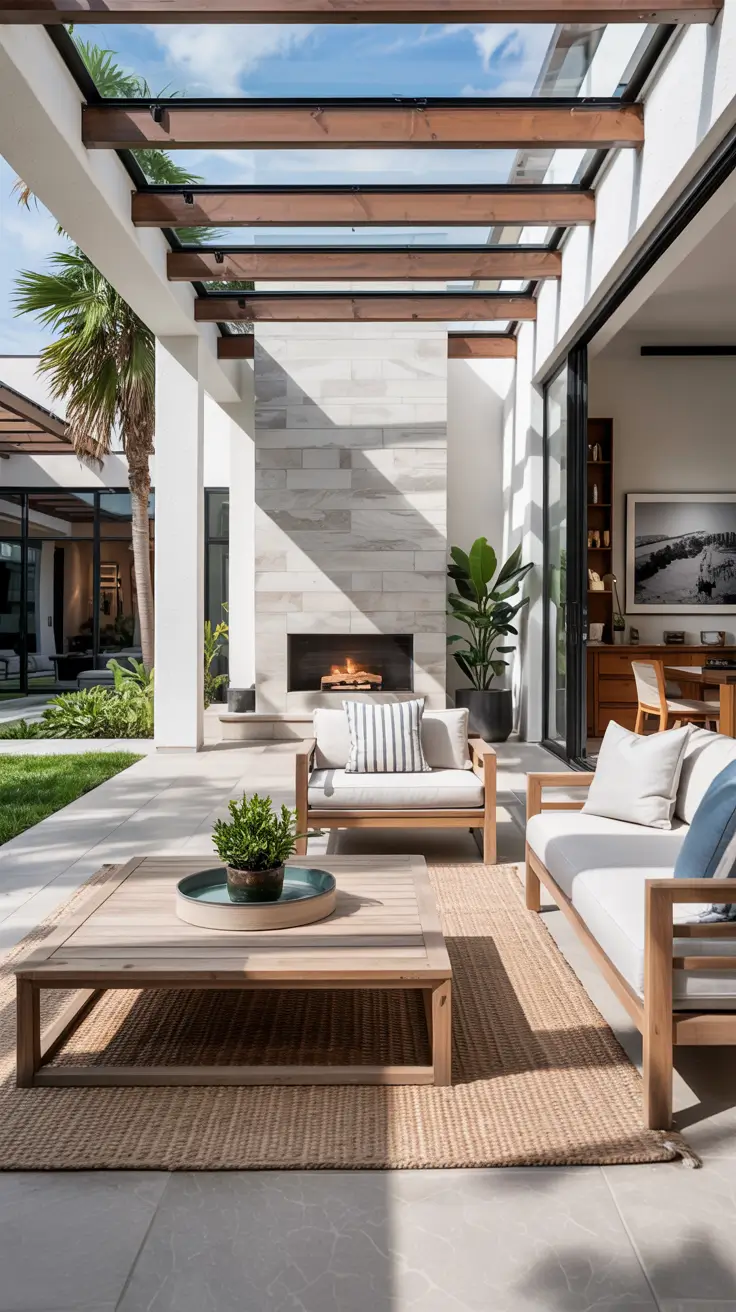
Personally, I see modern style as timeless rather than trendy. As noted by Architectural Digest, modern spaces succeed when they prioritize function — what’s often missing is warmth, which I add through texture and soft lighting.
Indoor–Outdoor Mediterranean Living Room Inspiration
Indoor-outdoor mediterranean living rooms bring warmth, texture, and a sense of place. I design these spaces with plaster walls, arched openings, and earthy tones that connect seamlessly to terraces or gardens.
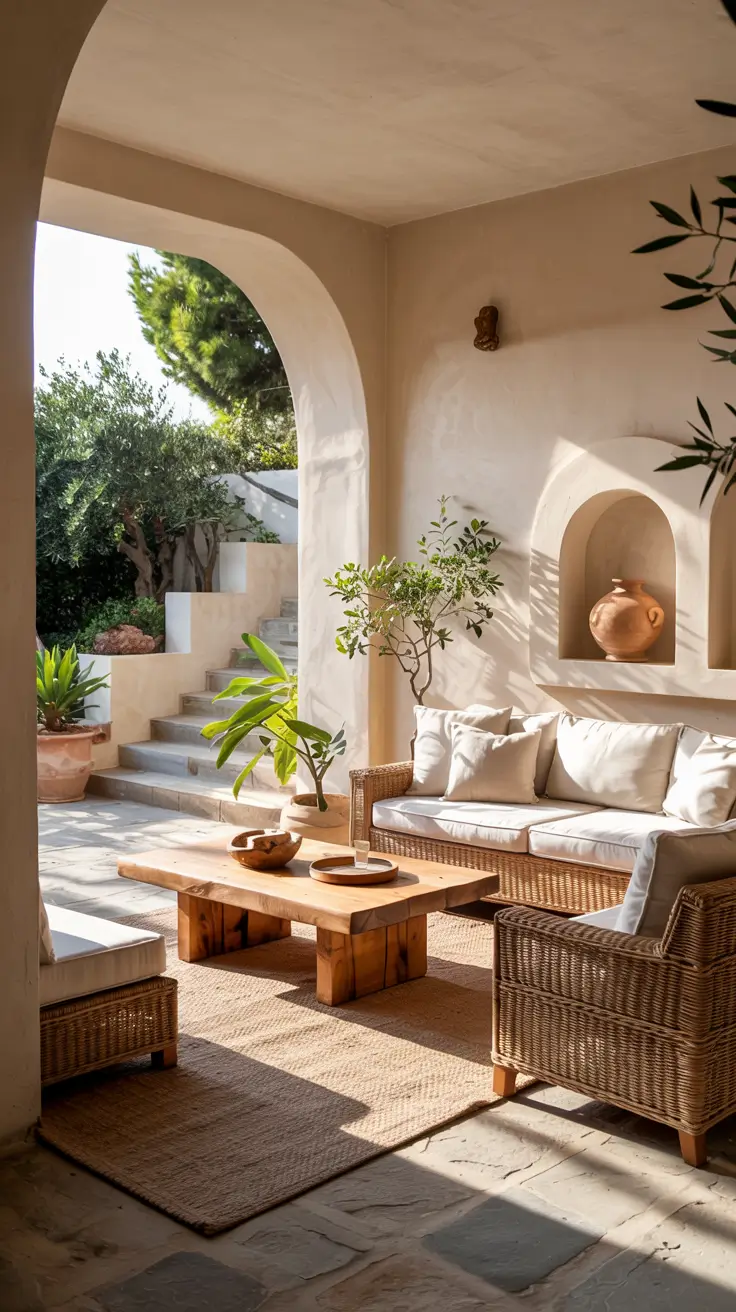
Furniture is relaxed yet structured — woven chairs, stone tables, and layered textiles create an inviting atmosphere. Natural light and airflow are central to the design.
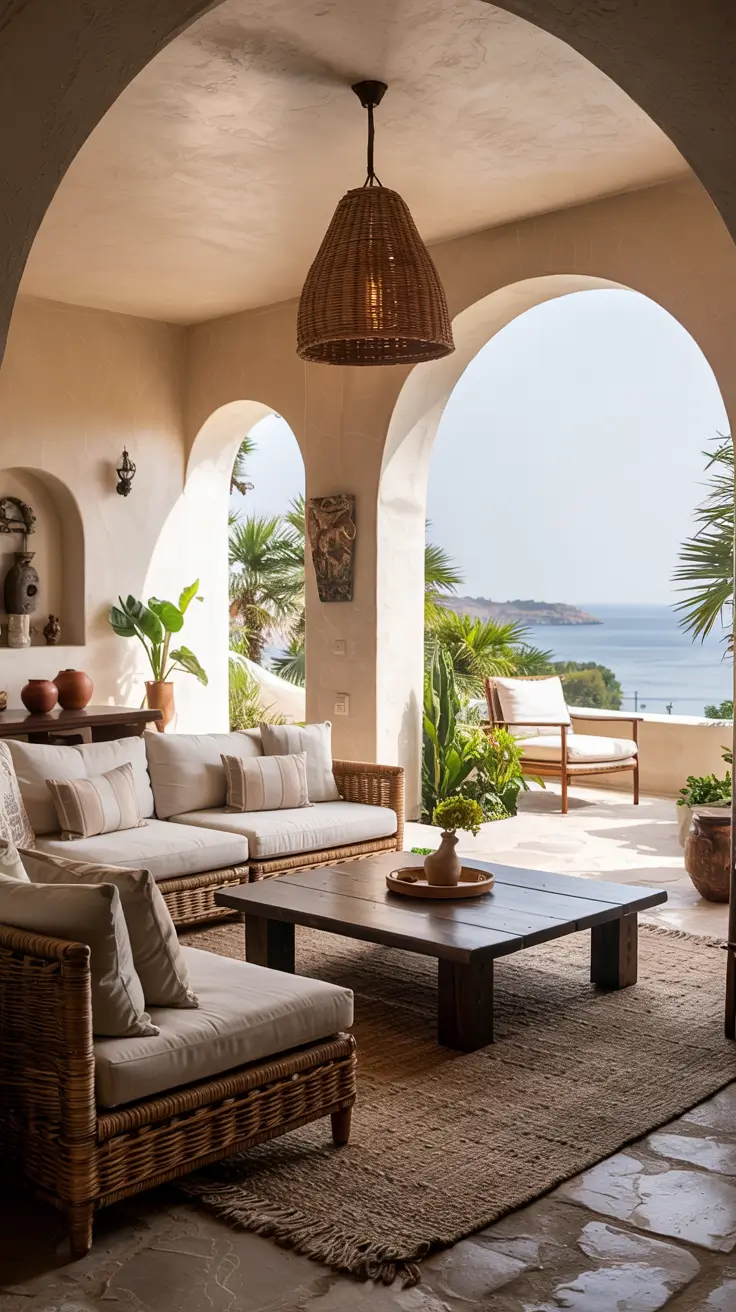
From my experience, Mediterranean interiors thrive on imperfection. Designers featured in Veranda often highlight handcrafted elements, and I agree — what’s often missing is shade, which I address through pergolas or fabric canopies.
Indoor–Outdoor Flow In Coastal Modern Living Rooms
Indoor-outdoor flow in coastal modern living rooms is about ease and lightness. I design these spaces to feel open and relaxed, using soft neutrals, natural textures, and expansive openings.
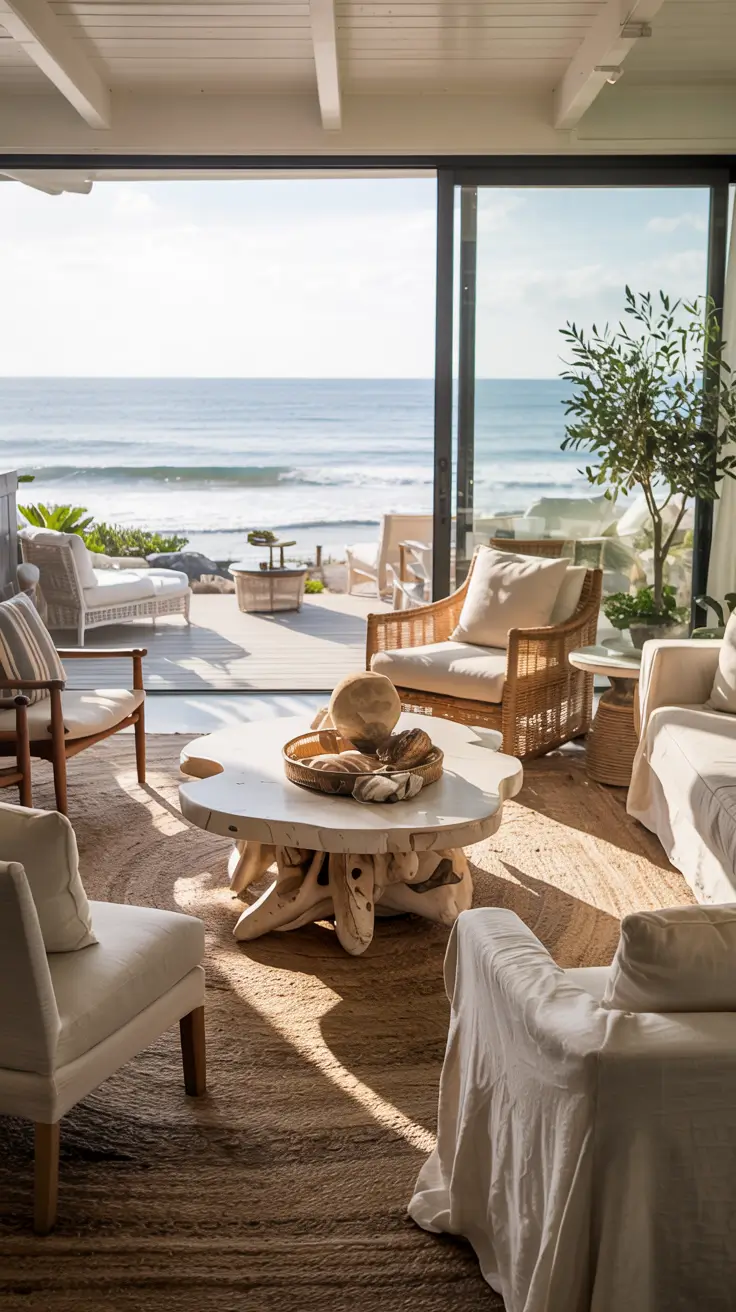
Furniture is comfortable and unfussy, often upholstered in performance fabrics suited to coastal climates. Large openings to decks or patios reinforce the connection to the outdoors.
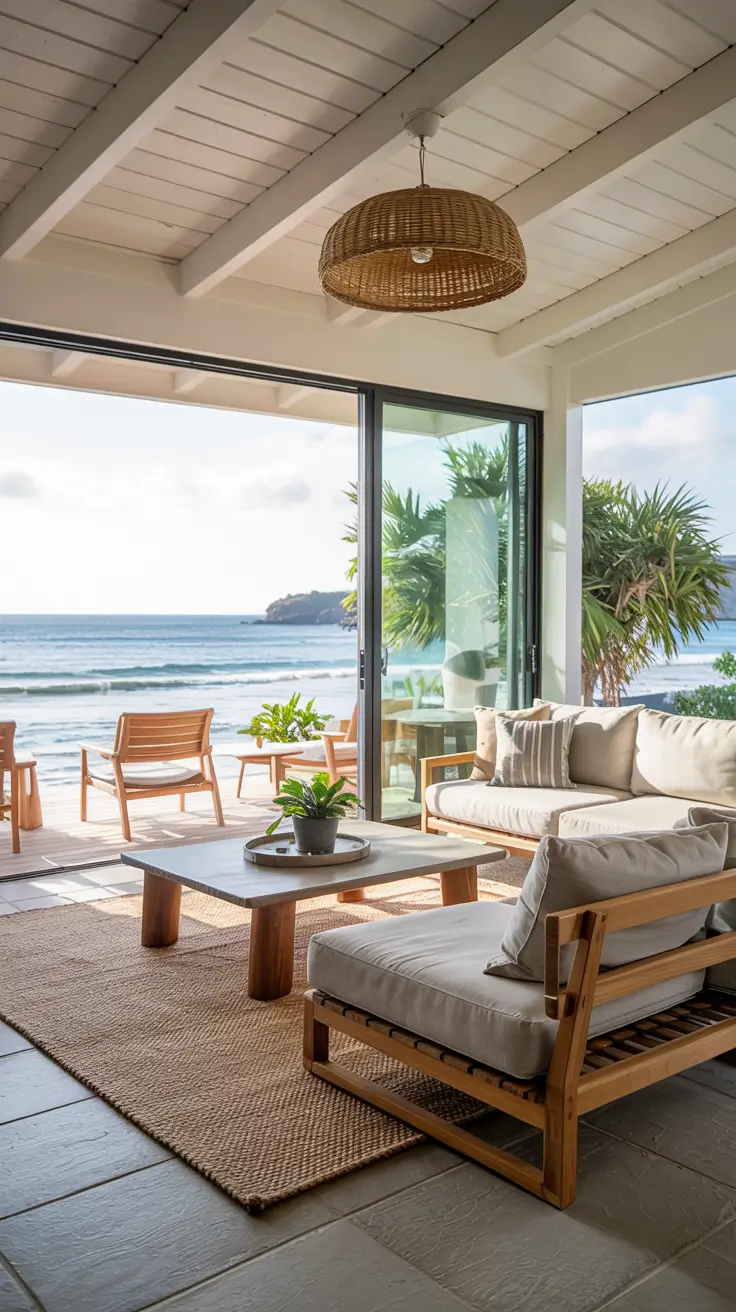
In my opinion, coastal modern works best when it avoids clichés. As Sunset Magazine often notes, authenticity matters — what’s sometimes missing is durability, which I ensure through material choices that withstand salt air and sun.
Tropical Indoor–Outdoor Living Room Ideas That Feel Like A Retreat
A Tropical indoor-outdoor living room should feel like an escape rather than a styled space. I design these interiors to encourage relaxation, using lush greenery, filtered light, and open layouts that invite the outdoors inside. In 2026, tropical spaces focus less on theme and more on atmosphere.
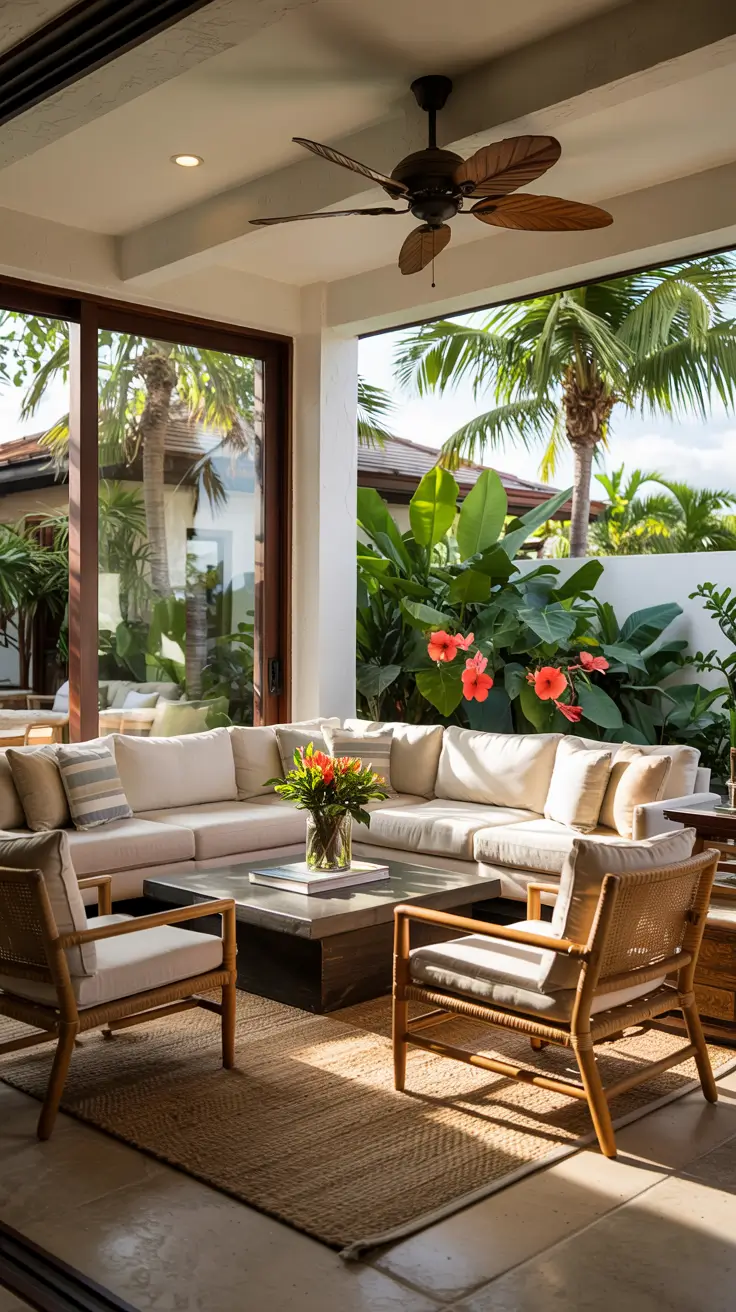
I choose breathable materials such as rattan, teak, and linen, paired with deep seating and ceiling fans to enhance comfort. Large openings, often open to patio, allow air and light to move freely, reinforcing the retreat-like feeling.
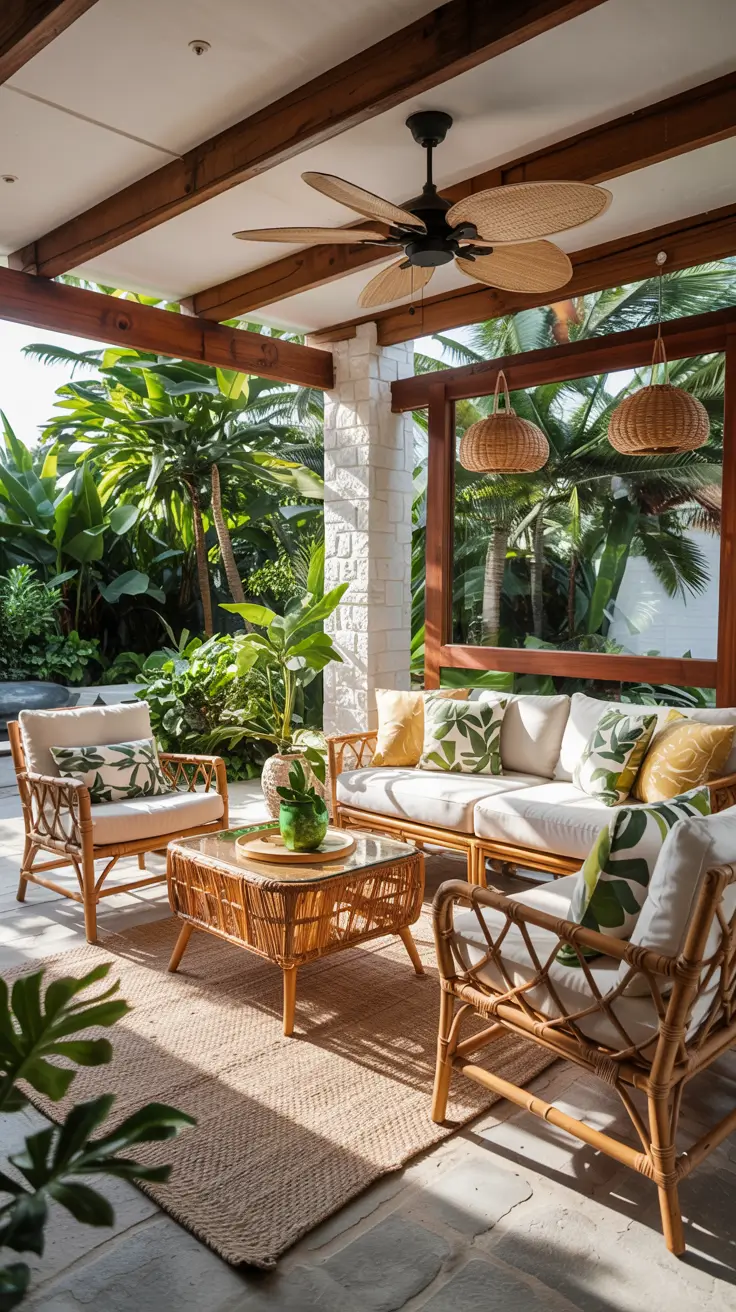
From my experience, designers featured in Elle Decor often emphasize restraint in tropical design. What’s sometimes missing is balance — I always recommend grounding the look with neutral flooring and simple forms to avoid visual overload.
Indoor–Outdoor Living Room Tropical Materials And Colors
Materials and color palettes define the success of an indoor outdoor living room tropical concept. I work with warm woods, textured stone, woven fibers, and soft neutrals layered with muted greens and sandy tones.
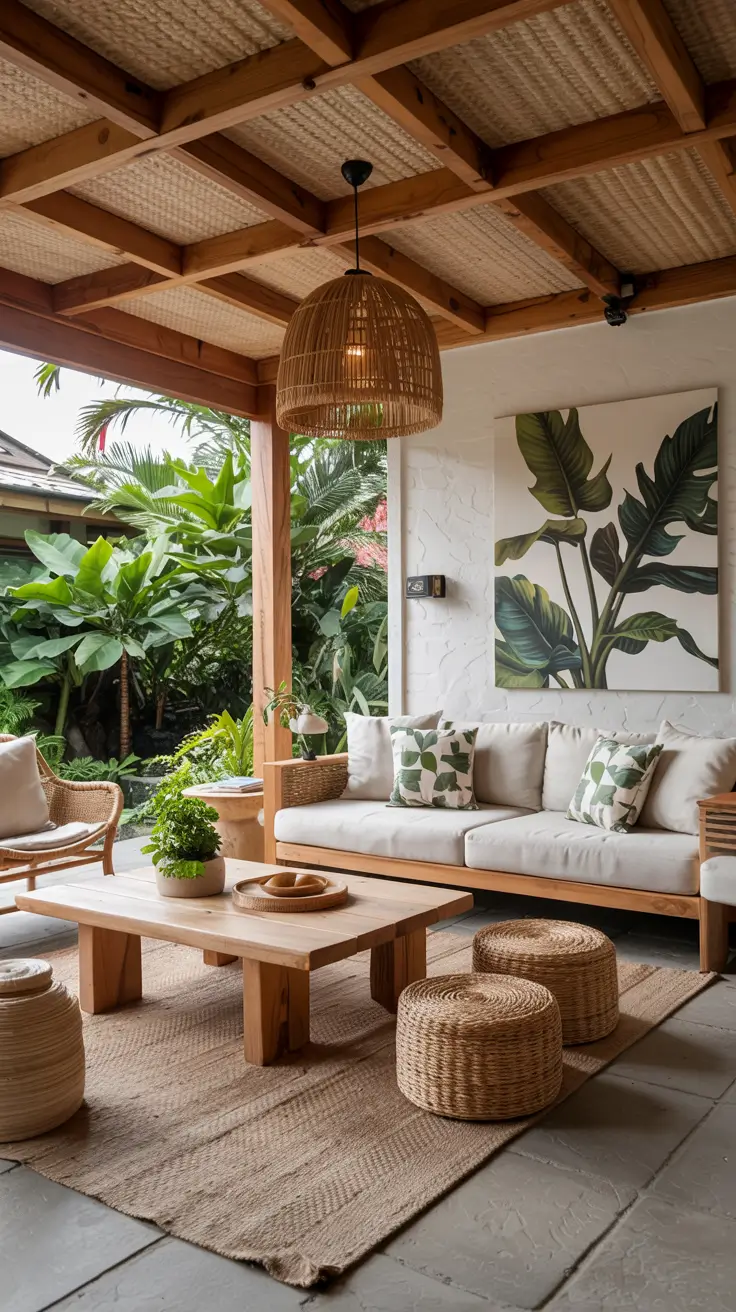
Furniture remains simple, letting materials take center stage. I avoid high-gloss finishes, opting instead for matte surfaces that feel organic and timeless. This approach supports the Indoor/outdoor connection without overwhelming the senses.
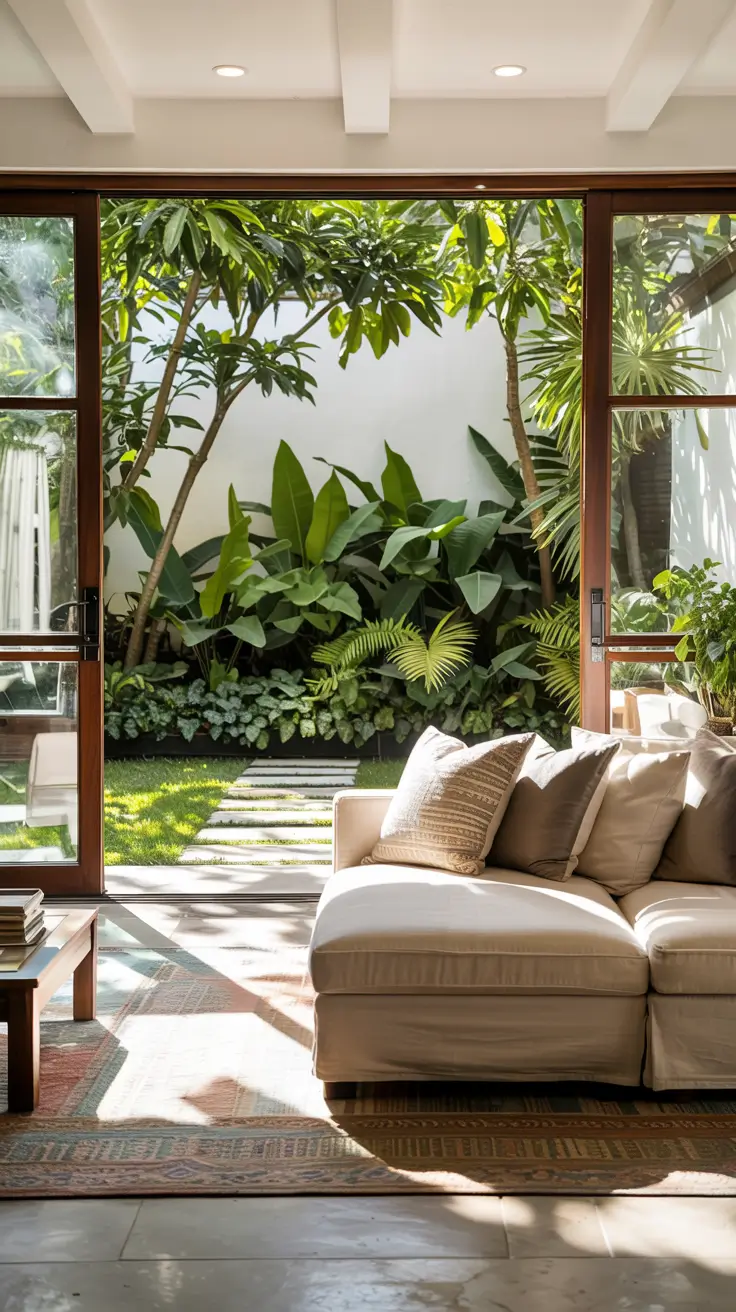
Personally, I’ve found that tropical interiors age beautifully when materials are allowed to patina. According to Dwell, authenticity in material choice creates longevity — what’s often missing is proper sealing and maintenance planning, which I always include.
Indoor–Outdoor Living Room Furniture Built For Both Worlds
Selecting the right Furniture is essential for spaces that blur boundaries. I look for pieces that feel refined indoors but are engineered to perform outdoors. This duality defines modern Indoor-outdoor ideas.
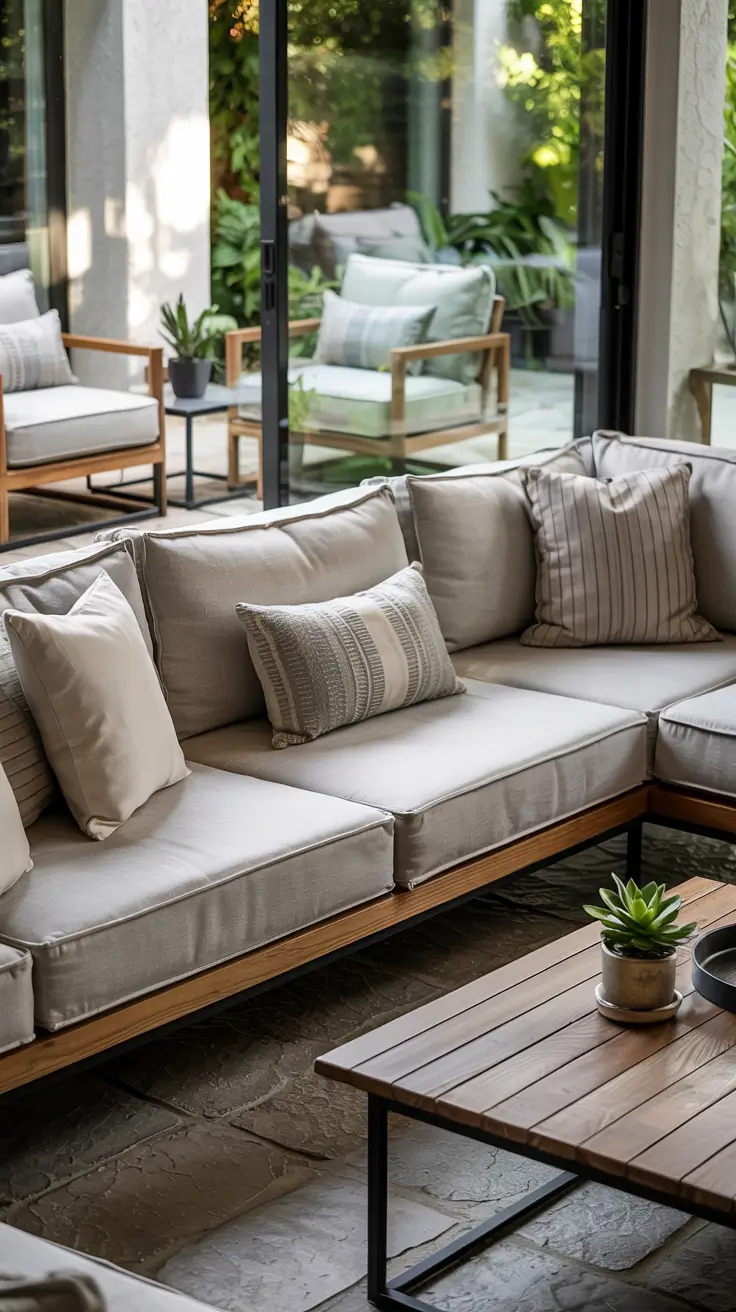
I prioritize performance fabrics, solid frames, and modular systems that adapt easily. Sofas, lounge chairs, and dining elements should transition effortlessly between interior and exterior zones without visual disruption.
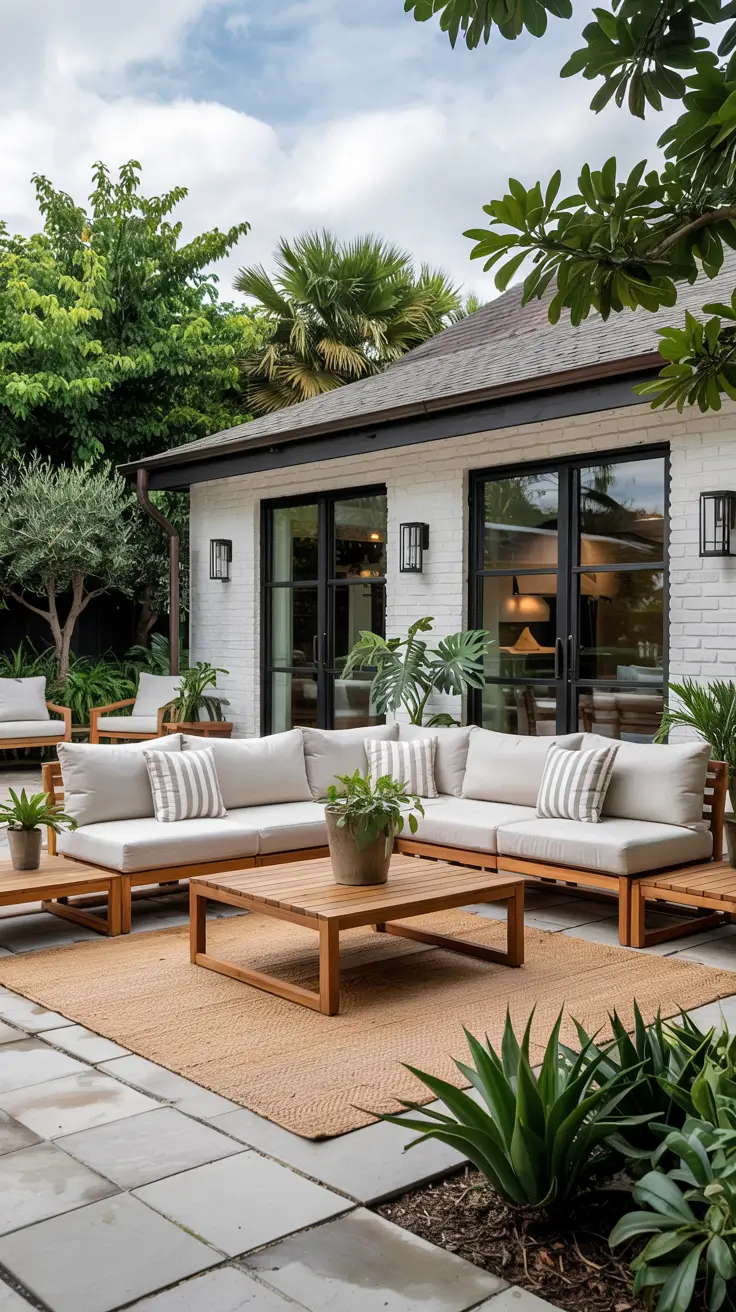
From my perspective, brands like RH and Restoration Hardware have set a strong standard here. What’s sometimes missing is flexibility — I always recommend lightweight pieces that can be repositioned as seasons change.
Indoor–Outdoor Living Room Design With Sliding Doors
Indoor outdoor living room sliding doors are central to creating openness. I design these doors as architectural features, ensuring they enhance rather than dominate the space.
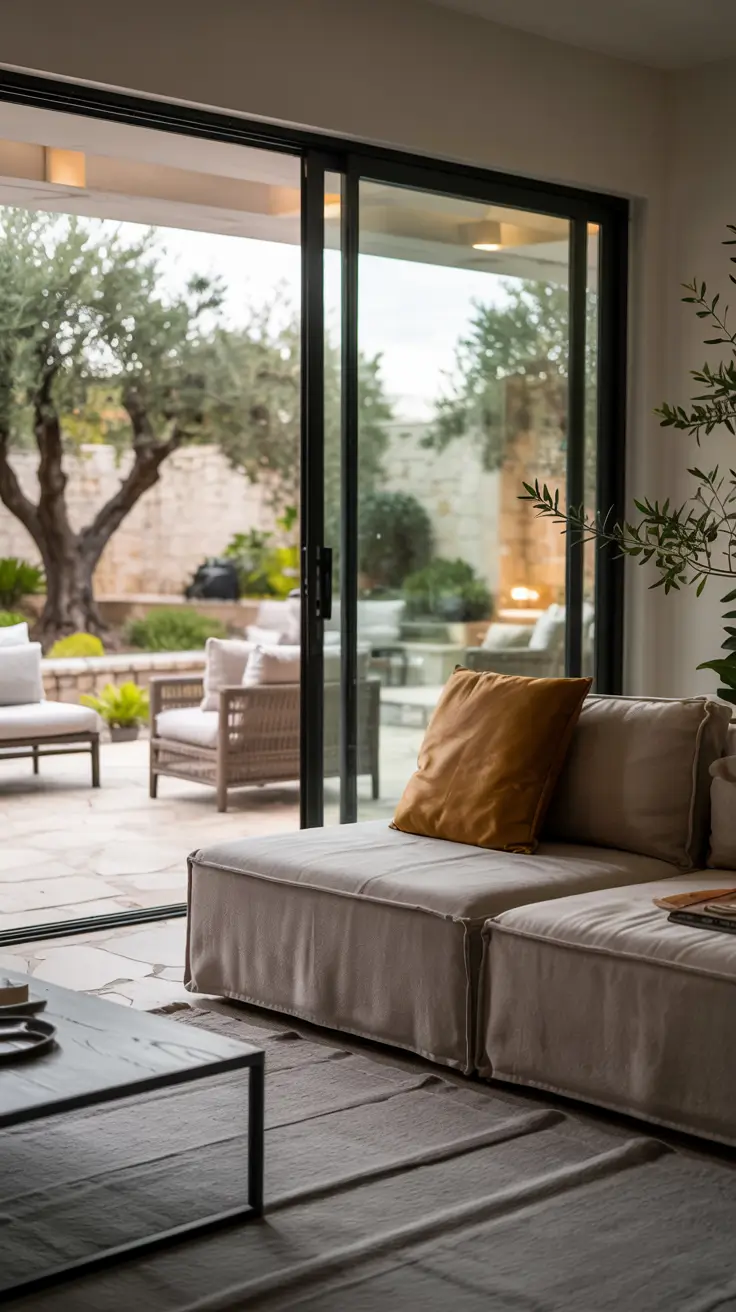
I favor large panels with minimal frames, allowing uninterrupted views and smooth transitions. When paired with consistent flooring, Sliding doors visually erase boundaries and strengthen spatial flow.
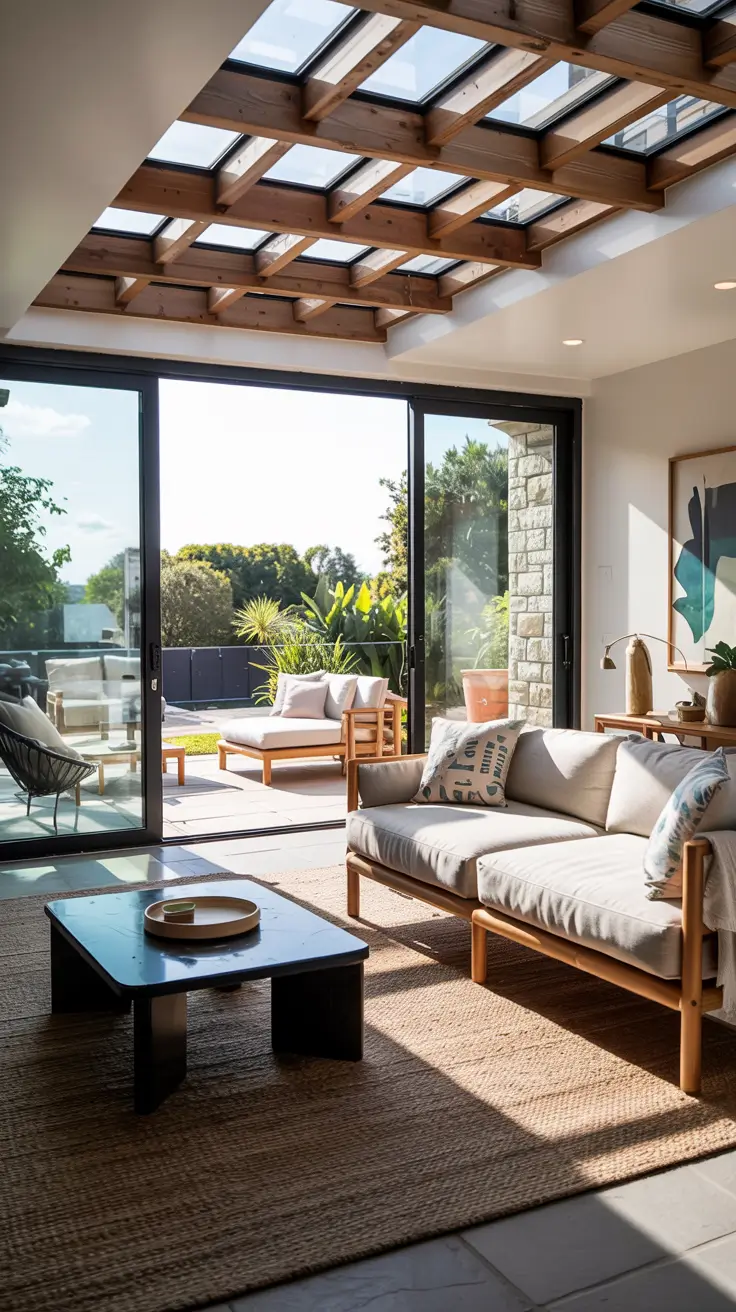
In my experience, high-quality hardware makes all the difference. Architectural Digest often highlights precision engineering in modern homes, and I agree — what’s often missing is thermal planning, which I always address early.
Indoor–Outdoor Living Room Layouts For Open-Plan Homes
Open-plan homes benefit greatly from a thoughtful Layout. I design indoor-outdoor living rooms to guide movement naturally, using furniture placement and lighting rather than walls.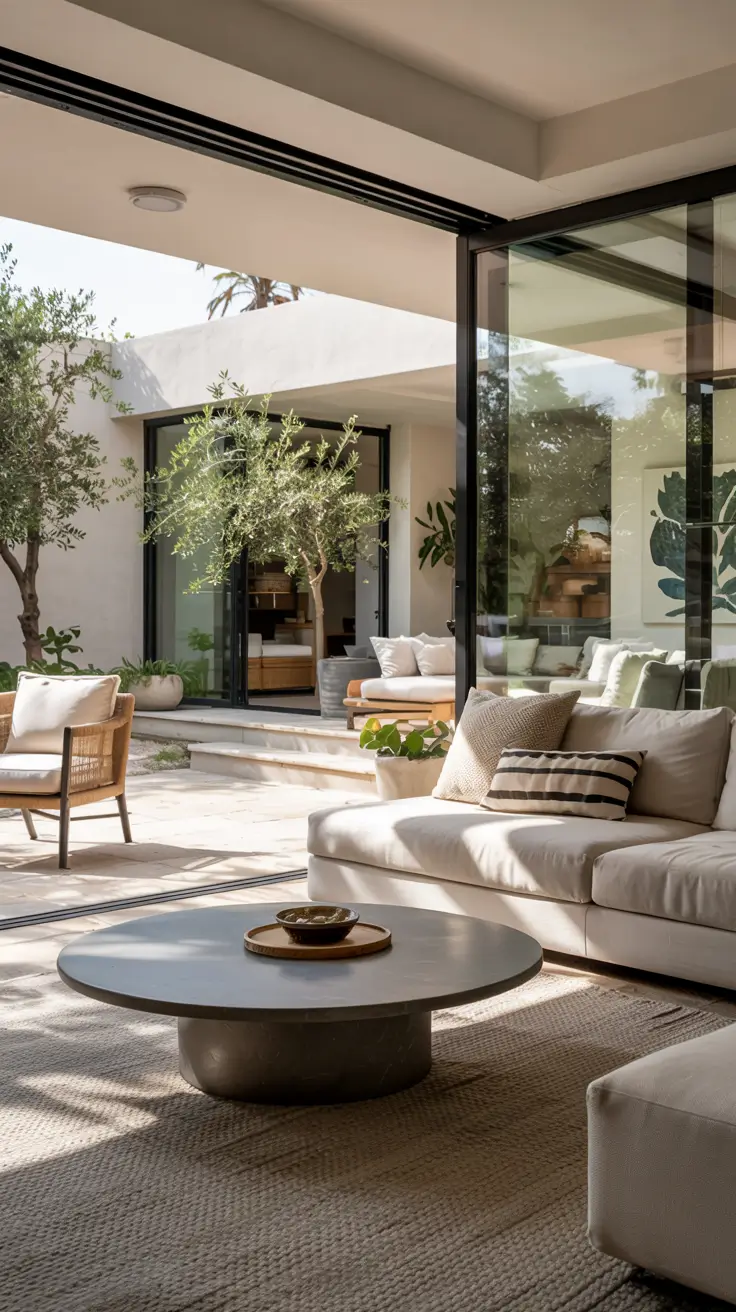
I define zones subtly — seating areas, walkways, and outdoor connections — ensuring the space remains flexible. This approach works particularly well in homes open to patio or deck environments.
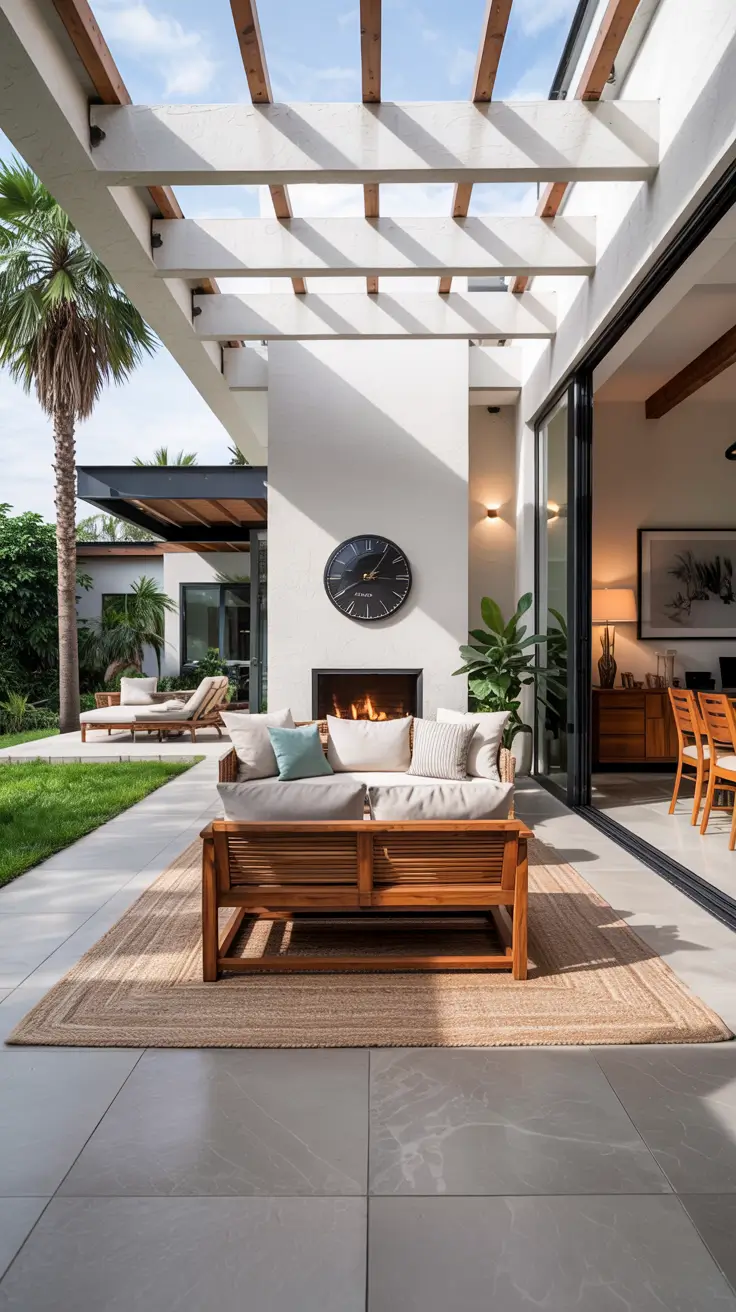
From my experience, flow improves when layouts are adaptable. House Beautiful often suggests modular planning, and I agree — what’s sometimes missing is future-proofing, which I build into every design.
Conclusion
Indoor-outdoor living rooms in 2026 are more than a design trend — they’re a response to how we live today. By focusing on flow, comfort, and thoughtful connections to the outdoors, these spaces create homes that feel open, intentional, and deeply personal. I’d love to hear how you imagine your own indoor-outdoor living room — share your thoughts or experiences in the comments and let the conversation continue.